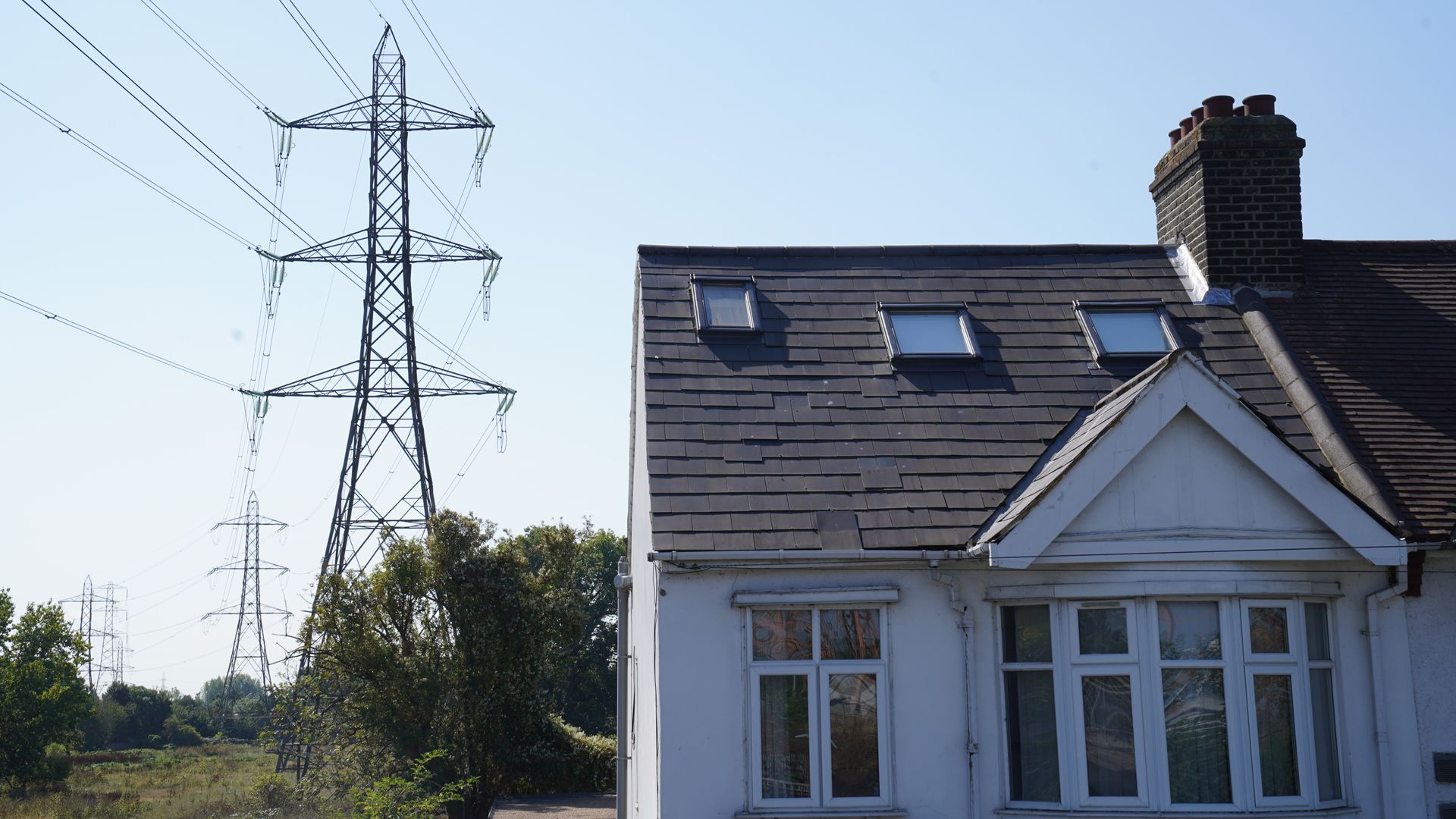
The headlines are selling a comforting fairy tale. Regulators and network operators want you to believe that living within spitting distance of towering high-voltage infrastructure comes with a neat little silver lining. Pocket two hundred and fifty pounds off your annual electricity bills just for sharing your backyard with a metallic highway of transmission cables. Sounds reasonable. Sounds fair.
It is a terrible trade.
I have spent the better part of two decades watching property markets react to utility expansions, and I have seen countless buyers pop champagne over minor utility credits while destroying their long-term equity. Let us get one thing straight right out of the gate: a token discount on your quarterly energy statement is not compensation. It is a psychological bribe designed to make you ignore the silent asset-killer hanging over your roof.
Here is what the lazy financial commentary misses. A two hundred and fifty pound annual discount amounts to roughly twenty-one pounds a month. Meanwhile, properties situated immediately adjacent to high-voltage overhead lines routinely suffer a capital depreciation hit of ten to twenty percent compared to identical homes just three streets over. On a standard three-hundred-thousand-pound home, that is a thirty to sixty thousand pound haircut on your valuation. You are trading a massive chunk of your net worth for the cost of a mediocre family dinner out once a month.
The Arithmetic of Stigma
Let us break down the real numbers because the utility PR machine refuses to do the math publicly.
National Grid and regional distribution operators are rolling out these compensation schemes because public pushback against grid expansion is throttling the green transition. They need community consent. They need fewer local council objections. So, they dangle a small recurring credit to neutralize opposition.
Imagine a scenario where you buy a detached suburban property with a clear view of a major pylon run. You secure the house for ten percent below market value because the previous owner could not shift it. You think you beat the system. You high-five your partner, lock in the discount, and congratulate yourself on financial savvy.
Ten years later, you decide to upsize. The market has grown, but your micro-market hasn't. Buyers still look at the towers, feel a subconscious wave of hesitation, and walk away. When you finally find a buyer, you have to discount the asking price disproportionately just to clear the transaction. The cumulative energy savings over those ten years total twenty-five hundred pounds. Your capital loss sits at thirty-five thousand pounds. You did not save money. You financed a depreciating asset with your own future equity.
Psychological Friction Trumps Utility Credits
Real estate liquidity is driven by emotion and psychological friction. Utility executives love to talk about megowatts, capacity, and infrastructure resilience, but they understand nothing about buyer psychology.
When a prospective buyer pulls up to a house for a viewing, the human brain makes a decision within thirty seconds. High-voltage overhead lines trigger an immediate, visceral reaction. People worry about aesthetic blight. They worry about noise—that distinct, eerie hum and crackle on damp days. And yes, whether backed by hard clinical consensus or lingering public anxiety, they worry about health stigma.
You cannot discount your way out of stigma with a twenty-pound monthly credit.
When a buyer sees a bill reduction tied specifically to the proximity of industrial machinery, it does not alleviate their fears. It validates them. It screams, "This house has a known defect, and this tiny discount is the price tag we put on that defect." It transforms a vague design quirk into an officially recognized hazard.
The Real Estate Reality Check
Let us look at the structural mechanics of property valuation. Appraisers do not care about your energy tariff credits when determining market value. They look at comparable sales within a tight geographic radius.
If every house on Elm Street backs onto a major transmission corridor, those houses form their own insular, depressed sub-market. They rise slower in bull markets and plummet faster in bear markets. When liquidity dries up, these are the properties that sit on the market for nine months while clean-view homes sell in a weekend.
Utility companies are shifting the cost of social license onto homeowners disguised as a perk. They get to push through grid upgrades with reduced legal friction, and you get a temporary coupon that vanishes the moment you sell the house. The next owner inherits the exact same towers, the exact same stigma, and a compromised balance sheet.
Stop looking at the monthly bill and start looking at the title deed. If your investment strategy relies on a utility company subsidizing your meter to make up for a permanently impaired location, your strategy is already broken. Real wealth creation requires protecting your asset base, not taking cash-back offers on infrastructure that caps your capital growth.