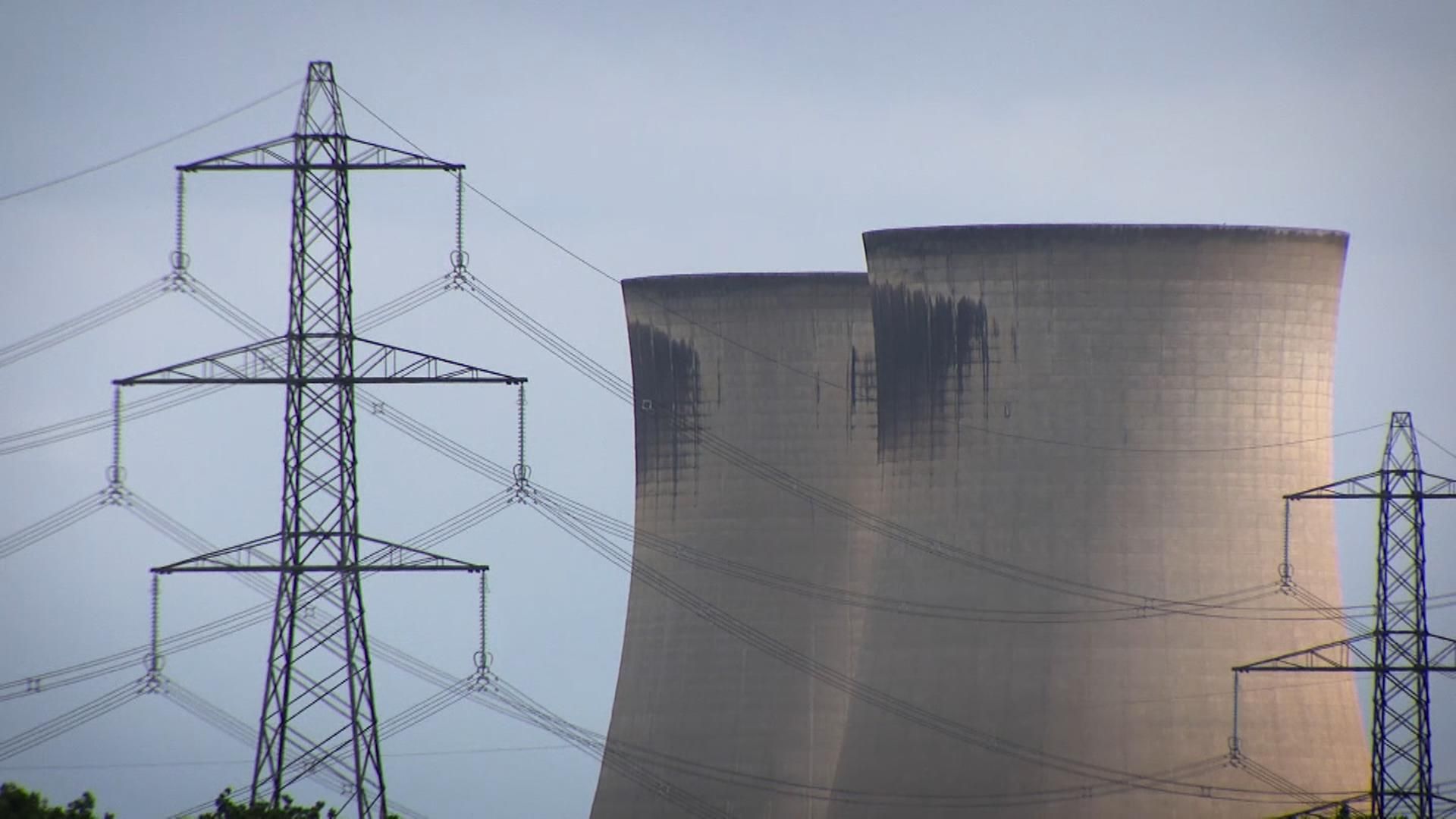
Proposals to turn a former power station in North Yorkshire into an AI data centre promise to rescue stranded industrial land and feed Britain's hunger for compute. The reality is far messier. Heavy grid connections, cooling water limits, and local transmission bottlenecks turn an obvious real estate play into an engineering and financial stress test.
For decades, North Yorkshire sat near the beating heart of British thermal generation. Massive coal-fired plants along the Aire and Ouse valleys fed industrial hubs and urban homes until decarbonisation policies, aging boilers, and shifting economics forced closures and conversions. Now, developers looking for gigawatt-scale power access are circling decommissioned or transitioning power sites across the region. On paper, the pitch looks irresistible. A site already connected to high-voltage transmission lines meets an industry desperate for continuous electricity to train and run artificial intelligence models. Meanwhile, you can find other events here: Measuring the Zeptoverse Why Standard Scale Comparisons Fail.
In practice, owning a patch of industrial land near a legacy substation does not automatically hand a developer a working AI data centre. Anyone who has watched industrial megaprojects stall over the last twenty years knows that brochures move faster than transformers.
Legacy Grid Connections Rarely Mean Instant Compute
Developers love to talk about grid connection advantages at former power stations. They point to existing pylons, switchyards, and rights of way as proof that they can bypass years of queue delays. To see the bigger picture, check out the recent analysis by CNET.
Sometimes that works. Often it does not.
A power station was built to push electricity outward into the transmission network. A hyperscale data centre pulls massive, steady load inward, hour after hour, day after day. Even when high-voltage lines already run past the perimeter fence, the local substation equipment, switchgear, and regional network reinforcement needed to support hundreds of megawatts of continuous data load may require substantial upgrades.
Queue Reality Meets Network Physics
Across Great Britain, grid connection queues have become infamous for stretching years into the future. Having a historical link to the network helps only if the physical capacity and thermal limits on surrounding circuits match what the new load demands.
Electricity does not care about a developer's pitch deck. If regional transmission corridors are already congested or constrained during peak periods, bringing a giant AI data centre online without network reinforcement can trigger curtailment conditions, phased energisation schedules, or hefty reinforcement bills.
Consider a hypothetical example to see how quickly the math shifts. Suppose a developer acquires a former generating site in North Yorkshire with an existing high-voltage footprint and plans a 200-megawatt AI campus in two phases. Phase one gets an early energisation date of 50 megawatts because existing transformers can handle that increment without major regional rebuilds. Phase two, meant to quadruple capacity, gets pushed back until broader transmission upgrades clear. Suddenly the financial model built on rapid scale faces a multi-year revenue gap.
That gap is where speculative land plays collide with infrastructure reality.
AI Racks Change Everything About Cooling and Water
Traditional enterprise server rooms were forgiving. An AI data centre packed with high-density graphics processing units is not.
Modern AI training clusters push rack power densities far beyond legacy cloud facilities. More watts in a smaller footprint means intense, concentrated heat. If you cannot get that heat out efficiently, hardware throttles, reliability drops, and operating costs climb.
Closed Loops Versus Evaporative Thirst
Former power stations sit near rivers, canals, or cooling infrastructure for a reason. Thermal generation required vast amounts of water for steam cycles and heat rejection.
That heritage creates an obvious temptation. Reuse the industrial site, tap nearby water resources, and cool the servers.
Yet water is no longer an afterthought in infrastructure planning. Regulators, environmental agencies, and local communities scrutinise large industrial abstractions closely, especially during drier spells when river flows drop and agricultural or ecological pressures rise. Many modern operators favour closed-loop liquid cooling or direct-to-chip systems precisely to reduce ongoing water draw, though those designs come with higher upfront capital costs and tighter maintenance tolerances.
Air cooling avoids heavy water consumption in some climates, but running massive fan arrays in warmer conditions or at high densities carries its own energy penalty. Every megawatt spent rejecting heat is a megawatt not doing useful compute work.
Local Jobs Sound Great Until You Count the Headcount
Every major industrial announcement in North Yorkshire carries a familiar political and economic subtext. Replacing lost heavy-industry employment.
Coal and power generation once anchored entire communities with skilled, well-paid roles and deep supply chains. When a plant closes, the local economy feels the shock for years. Hearing that a new AI data centre is planned on former power station land naturally sparks hope that high-tech jobs are arriving to fill the void.
Here is the uncomfortable truth from the data centre sector. Once construction wraps up, AI data centres do not employ thousands of permanent operators.
A massive facility might require a few dozen to a couple of hundred full-time staff across site engineering, electrical maintenance, security, and facilities management. The biggest employment surge happens during civil engineering, structural steelwork, electrical installation, and specialist commissioning. Those jobs are real and valuable, especially for regional contractors, yet they are temporary phases rather than permanent industrial anchors.
Skills and Supply Chains Beyond the Fence
If local leaders treat a data centre as a direct one-for-one replacement for legacy power plant headcount, they are setting themselves up for disappointment. The real long-term value for North Yorkshire depends on whether adjacent skills programmes, grid engineering apprenticeships, and regional technical services grow alongside the build.
Without that groundwork, much of the high-value technical equipment—servers, liquid cooling manifolds, specialised switchgear—will still be imported from global supply chains, leaving local businesses mostly with construction, logistics, and basic support work.
Noise, Land Use, and the Planning Gauntlet
Turning a former power station into a modern AI data centre is not just a technical puzzle. It is a test of local consent.
Former power sites often carry heavy industrial legacies. Ground contamination, demolition debris, asbestos management, and old foundations can turn site preparation into a slow, expensive remediation exercise before a single foundation pier is poured for a server hall.
Then come the neighbours. Large data centres run continuously. Backup generators—often diesel or alternative standby systems tested regularly and kept ready for grid disturbances—raise questions about emissions, air quality, and low-frequency noise. Cooling plant and substations can generate steady hums that carry further across flat or open terrain than developers expect.
Why Speed Promises Collide With Local Scrutiny
AI moves at software speed. Planning committees and environmental assessments do not.
Developers pitching rapid deployment often underestimate how thoroughly local councils, environmental bodies, and residents examine large energy-intensive developments. Questions around flood risk near waterways, visual impact on surrounding countryside, cumulative strain on local roads during heavy haulage, and long-term decommissioning obligations all demand serious answers.
A proposal that treats local consultation as a box-ticking exercise usually gets bogged down in revisions and delays. One that addresses noise limits, water stewardship, and grid impact openly from day one stands a much better chance of surviving scrutiny.
The Power Mix Question Nobody Can Dodge
Building an AI data centre at a former power station highlights one of the sharpest ironies in modern energy policy. A site built to generate power is being repurposed to consume staggering amounts of it.
Even if the data centre itself has zero direct emissions from server operations, the electricity feeding it comes from the wider grid. At any given hour, that power is a blend of wind, solar, nuclear, interconnectors, and gas generation.
Baseload Demands and Price Signals
AI workloads are notoriously power-hungry and often less flexible than people assume. While some inference tasks can be shifted or scheduled, training massive models requires sustained, uninterrupted compute runs.
When thousands of GPUs draw steady power over weeks or months, they tighten supply-demand balance on the system. That can put upward pressure on wholesale electricity prices during tight periods unless matched by genuinely new generation and storage capacity, rather than simply claiming existing clean power on paper through accounting certificates.
For industrial and residential consumers alike, the central question is straightforward. Does a large new AI data centre help fund and stabilise grid upgrades that benefit everyone, or does it compete for scarce capacity and push costs higher?
What Separates Serious Projects From Speculative Land Plays
Not every announced AI data centre at a former power station will get built in the form first sketched out. Some are genuine industrial commitments backed by patient capital, realistic power timelines, and deep engineering partnerships. Others are early-stage options designed to test market appetite or attract strategic partners.
Watch a few concrete indicators when assessing any North Yorkshire proposal:
- Firm energisation milestones tied to actual substation and transmission work, rather than vague promises of existing grid access.
- Transparent cooling and water plans detailing how high-density rack heat will be managed without straining local water resources.
- Honest local economic framing that distinguishes short-term construction employment from permanent site staffing and skills development.
- Credible power procurement showing how sustained electricity demand aligns with real generation and grid reinforcement rather than wishful thinking.
Former power stations in North Yorkshire have already lived through one great industrial transition as coal gave way to cleaner energy and shifting markets. Repurposing one for an AI data centre could become a smart second act—provided the engineering, grid reality, and local trade-offs are built to hold weight long after the press releases fade. Audit the grid connection agreement and water plan before believing the headline megawatt number.