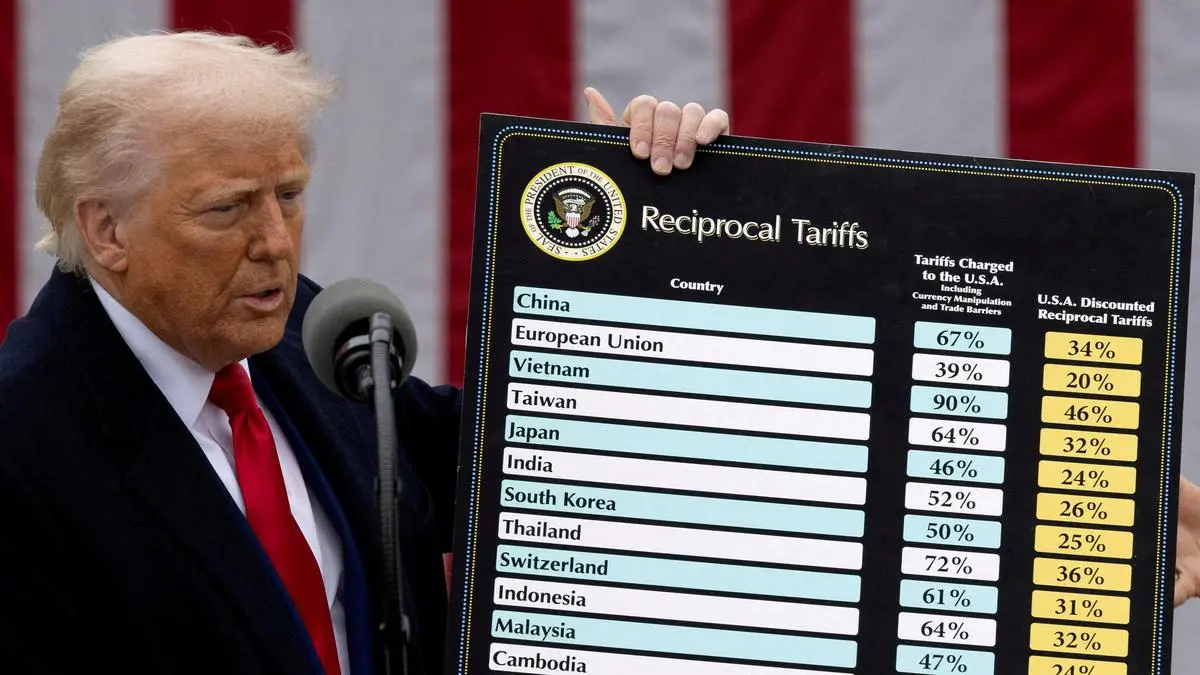
The structural breakdown of rules-based multilateral commerce has transformed trade policy from an exercise in welfare maximization into an instrument of raw statecraft. The recent escalation between Washington and Brussels over automobile tariffs illustrates a fundamental asymmetry in executive speed and legislative inertia. To analyze why the European Union is scrambling to eliminate import duties on American industrial and agricultural goods, one must dissect the game-theoretic constraints operating on both sides of the Atlantic.
The underlying conflict stems from the July 2025 political framework negotiated at Turnberry, Scotland. That agreement established a conditional equilibrium: the United States would cap tariffs on European Union goods at 15 percent, while Brussels would eliminate duties on American industrial products and grant preferential market access to specific agricultural goods.
A sudden threat from Washington to raise the auto tariff ceiling to 25 percent has disrupted this fragile balance. This move exposes a structural friction within the European Union’s dual-executive decision apparatus, forcing a choice between economic capitulation and systemic trade escalation.
The Institutional Velocity Gap
The primary operational failure of the European Union's trade defense mechanism lies in its institutional velocity. The United States executive branch exercises highly concentrated, unilateral authority over trade architecture through statutory mechanisms. These include Section 232 of the Trade Expansion Act of 1962 for national security protections and Section 301 of the Trade Act of 1974 for unfair trade practices.
This legal architecture allows the White House to alter tariff schedules nearly instantaneously via executive order. This capability was demonstrated when Washington bypassed the statutory limits of the International Emergency Economic Powers Act (IEEPA)—recently curtailed by judicial review—by shifting to national security justifications.
In stark contrast, the European Union operates under a distributed, multi-tiered legislative process known as the "trilogue." Even after the European Commission drafts and the European Parliament passes preliminary trade regulations, final implementation requires formal reconciliation across three separate institutional bodies:
- The European Commission: The technocratic executive branch that drafts proposals and conducts negotiations.
- The European Parliament: The directly elected legislative body prone to ideological holds and domestic political grandstanding.
- The European Council: The body representing the member state governments, whose priorities frequently diverge based on domestic industrial exposure.
This multi-tiered structure creates a profound timing vulnerability. Ten months after the Turnberry framework was agreed upon, the European Union has failed to codify the tariff cuts into law. The delay stems from domestic European friction over unrelated geopolitical disputes, alongside legislative demands for aggressive enforcement mechanisms.
The United States executive recognizes this legislative bottleneck and uses tight deadlines to exploit it. By setting a hard target date, Washington forces the European Union into an compressed decision window. This neutralizes Brussels’ traditional strategy of regulatory delay.
The Asymmetric Payoff Matrix
The strategic calculation driving the European Union’s current concessions can be modeled through a classic payoff matrix under asymmetric economic exposure.
                                 United States Action

                         Maintain 15% Cap        Escalate to 25% Auto Tariff
                       +-----------------------+-----------------------+
   Execute Cuts        |  EU: Status Quo       |  EU: Severe Deficit   |
   (Capitulation)      |  US: Market Access    |  US: Production Shift |
European               +-----------------------+-----------------------+
Union Action           |  EU: Retaliation Risk |  EU: Auto Collapse    |
   Delay / Safeguards  |  US: Zero Gains       |  US: Trade War        |
                       +-----------------------+-----------------------+
For the European Union, the automotive sector represents a critical vulnerability in its industrial base. The sector drives significant employment, research and development spending, and industrial capital expenditure, particularly in Germany. A 25 percent tariff on vehicles exported to the United States changes the microeconomics of the transatlantic auto trade.
The financial burden of these duties falls heavily on the domestic importing subsidiaries of European manufacturers. This pressure forces parent entities to subsidize these branches to protect market share, an arrangement that becomes financially unsustainable over time.
A 25 percent tariff effectively acts as a capital sorting mechanism. It renders direct exportation from Europe uncompetitive and forces manufacturing capacity to relocate to the United States. This aligns with Washington's explicitly stated goal of accelerating production localization.
The European Union's retaliatory toolkit offers no equivalent leverage. Under its anti-coercion regulations, the European Union can deploy counter-tariffs on a specific list of American goods, such as bourbon, motorcycles, and agricultural commodities. However, the macroeconomic impact of these counter-measures is highly asymmetric.
The European automotive export market to the United States represents a high-value industrial concentration. The targeted American exports, by contrast, consist largely of lower-margin commodities and discretionary consumer items.
The European Parliament's proposed legislative safeguards illustrate the internal friction generated by this asymmetry:
- The Sunrise Clause: Stipulates that the European Union will only lower its import duties after Washington legally binds its own tariff reductions. This mechanism aims to prevent a scenario where Brussels unilaterally lowers barriers only for the United States to maintain its duties.
- The Suspension Mechanism: Provides an expedited path to reinstate European tariffs if Washington violates the core tenets of the trade deal.
- The Sunset Clause: Imposes a hard expiration date on European concessions, requiring a thorough impact assessment before renewal.
While these safeguards protect regulatory autonomy in theory, they create a operational paradox. Introducing friction into the legislative text increases the probability that Washington will reject the deal and trigger higher auto tariffs.
The European Council, which represents individual member states, recognizes this risk. Consequently, it opposes the Parliament's stringent safeguards, preferring immediate compliance to protect key domestic industries from tariff hikes.
The Breakdown of Complex Interdependence
The current transatlantic friction reflects a broader structural shift in global trade: the decline of complex interdependence theory. This theory, which shaped early 21st-century economic policy, argued that deep supply chain integration and digital connectivity would make economic warfare too costly for major powers to sustain. Instead, contemporary trade policy increasingly uses economic leverage to reshape industrial capacity for national security advantages.
The ongoing legal disputes over global tariffs highlight the fragile nature of modern trade agreements. When the United States Supreme Court restricted certain emergency executive tariff powers, it did not lead to a return to World Trade Organization (WTO) standards. Instead, the executive branch adapted by utilizing alternative statutory authorities, such as Section 232 national security investigations.
This institutional adaptability means trade agreements operate as temporary arrangements rather than permanent treaties. For corporate supply chain strategists, this shifts the primary risk metric from traditional tariff schedules to regulatory policy volatility.
Tactical Playbook for Supply Chain Allocation
To navigate this environment of high policy volatility, multinational enterprise leaders must move away from static sourcing models. They should transition to dynamic operational frameworks designed to mitigate tariff risks.
Implement Dual-Sourcing and Tariffs-at-Risk Frameworks
Organizations must audit their bills of materials to isolate components subject to geopolitical friction. If an industrial supply chain relies on single-source inputs originating within the European Union for assembly in the United States, managers should execute a dual-sourcing strategy. This involves qualifying secondary suppliers within the United States-Mexico-Canada Agreement (USMCA) region to leverage stable tariff protections.
Optimize Customs Valuation and Utilization of Special Procedures
Companies should utilize alternative customs strategies to reduce the impact of ad valorem duties. This includes the "first sale rule," which allows importers to declare the customs value of a good based on the price paid in an earlier arms-length transaction among supply chain intermediaries, rather than the final export price.
Additionally, firms should expand their use of Foreign Trade Zones (FTZs) and bonded warehouses. These mechanisms defer duty payments and allow for inverted tariff optimization, where components are assembled into finished goods carrying lower tariff rates before entering commerce.
Operationalize Production Shifting Thresholds
Industrial manufacturers must calculate the exact cost threshold where localized production in the United States becomes more capital-efficient than paying high export tariffs. If the long-term cost of a 25 percent ad valorem duty exceeds the capital expenditure required to establish domestic manufacturing capacity, companies should begin transitioning to localized assembly operations. This strategy addresses the structural pressures driving current trade policies.
The European Union's likely decision to remove import duties on American goods demonstrates that structural market access is increasingly determined by asymmetric executive power. By choosing immediate capitulation over prolonged legislative debate, Brussels confirms that protecting its core industrial sectors outweighs its commitment to reciprocal trade terms. Supply chain planners must accept that trade policy is no longer governed by stable, rules-based institutions, but by rapid, transactional adjustments to national economic power.