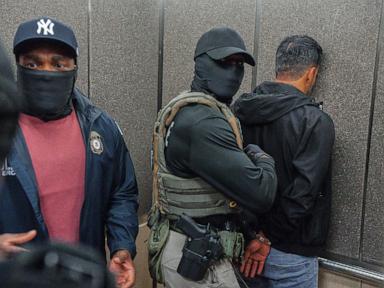
Political rhetoric paints a very specific picture of immigration enforcement. You have probably heard the talking points a thousand times. The narrative claims immigration authorities are laser-focused on rounding up dangerous, violent threats to clear them out of American neighborhoods. It sounds organized, strategic, and reassuring.
But government data tells a completely different story.
When you look past the press releases and look at the actual numbers tracking U.S. Immigration and Customs Enforcement (ICE) operations, the reality is stark. The vast majority of people sitting in immigration detention facilities are not dangerous felons. In fact, only 3% of individuals detained by ICE during a recent 14-month stretch had a violent felony conviction on their record.
If that number shocks you, it should. It completely upends the public perception of how immigration enforcement resources are being used.
Dropping the Illusion of the Violent Threat
We don't have to guess about these numbers. Internal Department of Homeland Security (DHS) documents and data compiled by the Transactional Records Access Clearinghouse (TRAC) at Syracuse University outline exactly who is being swept into the system.
Look at the broad view of the current detained population. On any given day, tens of thousands of people are held in ICE custody across the country, with heavy concentrations in states like Texas and Louisiana. TRAC data regularly reveals that roughly 70% to 74% of the people held in these facilities have absolutely no criminal conviction whatsoever.
Let that sink in. Nearly three out of every four detainees have clean criminal records.
The people who do have convictions on their record aren't usually the high-profile, dangerous offenders you see on the evening news either. The vast majority of those convictions are for minor, nonviolent offenses. We are talking about traffic violations, driving under the influence, minor fraud, or simple immigration violations like unauthorized entry or overstaying a visa.
The federal government often lumps people with pending criminal charges into their "criminal" statistics to inflate the numbers. But as any defense attorney or high school civics student will tell you, a charge is not a conviction. In the American legal system, you are supposed to be innocent until proven guilty. Arresting and detaining individuals before they ever get their day in a criminal court bypasses due process entirely.
The High Cost of Catching Easy Targets
Why is there such a massive gap between what politicians say and what ICE actually does? It mostly comes down to logistics, budgets, and quotas.
Tracking down, investigating, and apprehending a sophisticated, violent criminal takes an immense amount of time, intelligence work, and physical risk. It requires deep coordination with local police departments and thousands of man-hours. On the flip side, arresting someone who lacks legal status but has an otherwise clean record—someone showing up for a routine immigration check-in, driving to work, or living quietly in an apartment complex—is incredibly easy.
When an administration demands high arrest numbers to show it is being "tough on the border," the system responds by going after the lowest-hanging fruit.
This creates a massive opportunity cost. ICE operates on a multi-billion-dollar budget funded by taxpayers. Every bed filled by a migrant with a clean record or a simple traffic ticket is a bed that costs money to maintain. Instead of dedicating elite federal law enforcement assets to tracking down genuine threats, the system bogs itself down managing a massive, nonviolent civil detention apparatus.
Catholic immigration advocates and non-profit organizations have been shouting into the void about this for a long time. The data confirms what they see on the ground every day. Sweeping up hundreds of thousands of individuals who could easily and safely live in their communities while their civil immigration cases wind through the courts doesn't make anyone safer. It just tears families apart and drains public funds.
How to Read Past the Political Spin
If you want to understand the reality of immigration enforcement, you have to learn how to spot the accounting tricks used in government press releases.
When official statements claim that a high percentage of arrests involve "individuals charged or convicted of a crime," they are intentionally blurring the lines. They want you to visualize violent offenders. What they aren't telling you is that they are counting a broken taillight, a decades-old misdemeanor, or the civil act of crossing the border without permission as part of that scary-sounding statistic.
The reality is clear. The massive dragnet of immigration detention isn't targeted or precise. It is a wide, indiscriminate net that captures ordinary people trying to build lives, while the actual violent offenders make up a microscopic sliver of the operation.
If you want to track this yourself, stop listening to politicians and start looking at the raw data. Check the updated reports from TRAC Syracuse or independent policy analyses from groups like the Cato Institute. They look at the actual case-by-case court and custody records. The numbers don't lie, even when the politicians do. Learn the difference between a civil immigration violation and a violent felony, and don't let strategic phrasing distort your understanding of what is actually happening at the border and in our cities.


