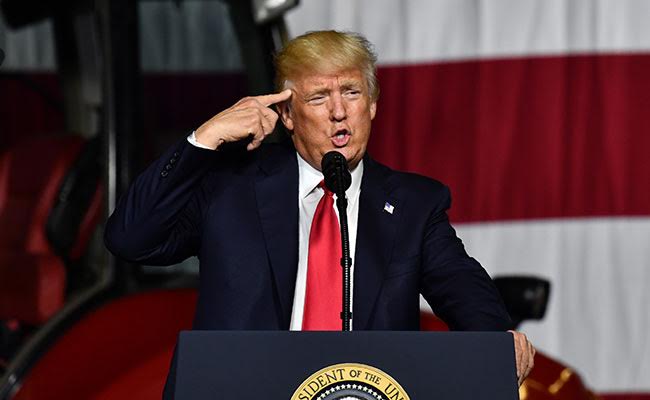
Donald Trump just declared a partnership with Venezuela that he claims is the biggest oil arrangement ever. The administration states that the U.S. has locked down majority control over a staggering 65 billion barrels of proven crude reserves. If you look past the political noise, this move alters the entire energy map. Energy markets are twitchy, domestic fuel prices sting, and Washington needed a massive swing. This is that swing.
The Reality Behind the 65 Billion Barrel Claim
Let's look at the actual mechanics of what Washington and Caracas agreed to. According to White House officials, the framework creates a massive joint venture giving the United States an effective 55 percent share of output from key Venezuelan fields. Interim President Delcy Rodríguez and her administration have handed out long-term operational rights to develop these assets.
We aren't talking about tiny exploration blocks here. This involves 17 major oil fields tucked away in the Orinoco belt and beyond. Venezuela sits on roughly 303 billion barrels of total crude—the largest proven stash on the planet. Yet, years of economic collapse, crumbling infrastructure, and biting sanctions left that wealth trapped in the ground. Production plummeted to a fraction of its historical output. This deal tries to bypass years of red tape by bringing heavy private capital straight into the equation.
Why Washington Desperately Needed This Deal Now
Domestic pressures forced the administration's hand. Energy costs have stayed stubbornly high, and the U.S. Strategic Petroleum Reserve dropped below 300 million barrels after continuous drawdowns. Meanwhile, conflict and tension in the Middle East choked critical transit lanes like the Strait of Hormuz, cutting off vital global supplies.
Washington needed a secure, hemisphere-close source of heavy crude that doesn't rely on volatile overseas shipping corridors. Venezuelan oil fits Gulf Coast refineries perfectly. Those facilities were originally built to process heavy crude, and losing access to reliable heavy grades years ago forced them to scramble for alternatives. Gaining direct access to billions of barrels right in America's backyard changes the logistical equation overnight.
What This Means for Your Gas Tank and Investors
Trump claims this will drastically drop fuel costs and double American reserves on paper. Energy analysts urge caution on the timeline, though. Reviving Venezuelan oilfields requires billions of dollars in fresh steel, drilling rigs, and pipeline reconstruction. You can't flip a switch and pump millions of barrels overnight when the infrastructure has rusted away for decades.
Even so, the capital is moving fast. Secretary of State Marco Rubio and other officials project nearly 100 billion dollars in private investments heading straight into Venezuela's oil sector. For Caracas, the deal promises billions in tax revenues and an economic lifeline. For American energy firms, it opens up massive development rights that were entirely off-limits just a year ago.
Critics argue the legality of handing over sovereign resource control under current conditions violates local constitutional safeguards. Expect plenty of court battles and political pushback from regional opposition groups. But money and power usually carve their own paths through legal hurdles. Keep a close eye on Gulf Coast refinery inputs over the next six months to see how fast this heavy crude actually starts moving north.