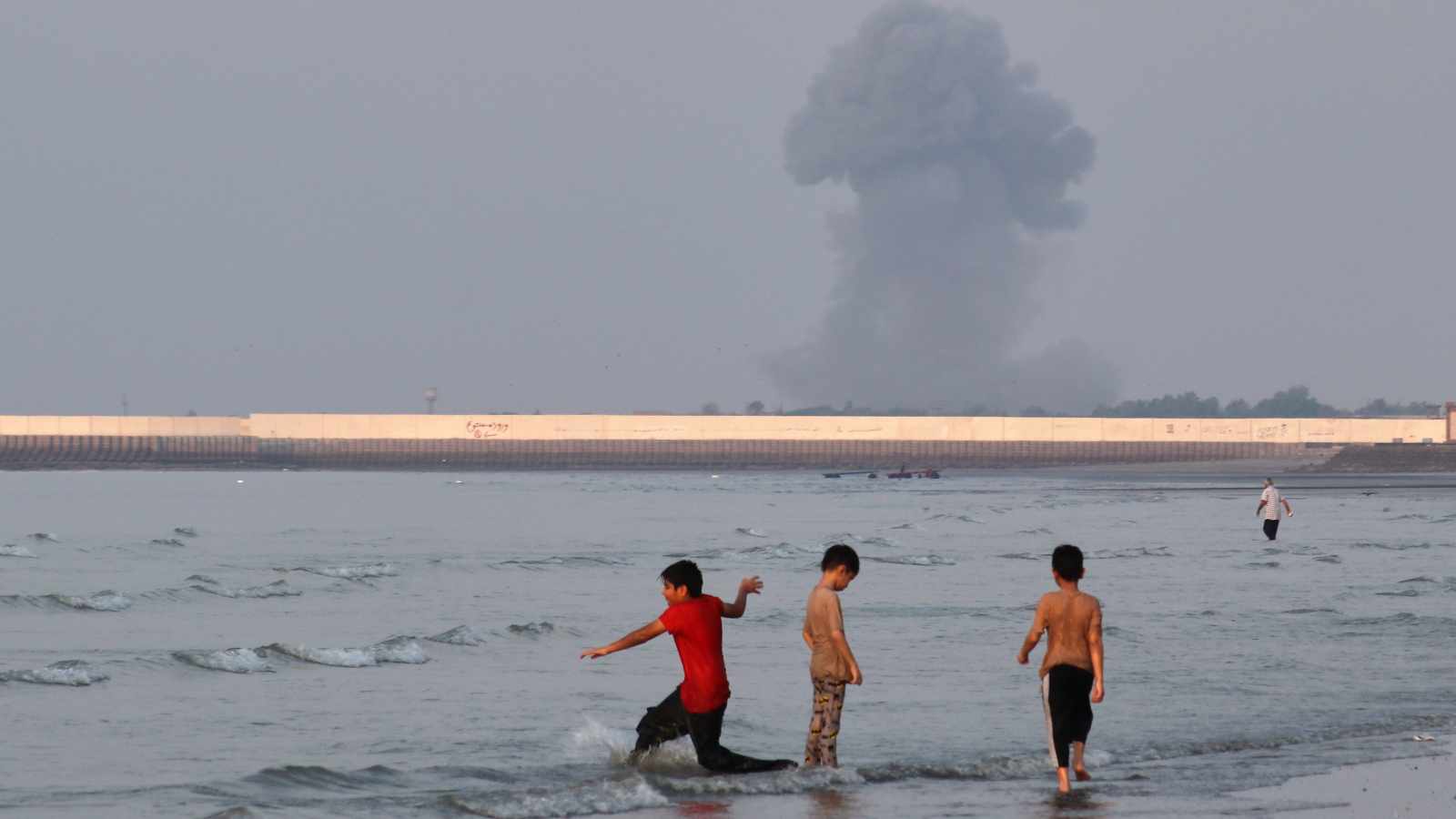
The fragile peace in the Persian Gulf just went up in smoke. After a brief, shaky pause that barely lasted three weeks, President Donald Trump declared the June ceasefire agreement officially over. On July 13, 2026, Trump announced the reinstatement of a full US naval blockade against Iranian shipping. But he didn't stop there. In a move that shocked allies and adversaries alike, Trump declared that the US is now "THE GUARDIAN OF THE HORMUZ STRAIT" and intends to charge a massive 20% toll on all commercial cargo passing through the world's most critical energy choke point.
It is a radical, dangerous escalation. By trying to turn the US Navy into a maritime toll collector, the administration is rewriting decades of global maritime law. If you think this will bring stability to global energy markets, you are sorely mistaken. It is already doing the exact opposite.
The Versailles Peace Mirage
The June agreement signed by Trump and Iranian President Masoud Pezeshkian at the Palace of Versailles looked good on paper. It was supposed to grant a 60-day window to negotiate a permanent end to the war that began in late February.
It didn't last.
Behind the scenes, the memorandum of understanding was far too vague. While the US agreed to lift its initial blockade of Iranian ports, the core underlying tensions remained entirely unresolved. The peace began unraveling in early July. By July 7, the US military resumed active operations against Iranian targets after the Islamic Revolutionary Guard Corps targeted neutral commercial vessels.
Trump formally notified Congress of the resumed hostilities on July 10. In his notification, he argued that US forces were conducting defensive strikes against Iranian missile batteries, air defenses, and maritime command centers. The Iranian state media countered by reporting massive explosions near Bandar Abbas and Chabahar. The cycle of retaliation is spinning out of control again.
The Twenty Percent Toll is a Legal and Practical Disaster
Under international law, the Strait of Hormuz is an international strait. This means ships have the right of transit passage, free from interference or taxation by coastal states. The US has spent the last eighty years defending this exact principle.
Now, Trump has flipped the script.
By demanding a 20% levy on cargo to reimburse the US for "providing safety and security," the administration is setting a bizarre precedent. If the US can charge a toll for patrolling a waterway, what stops other nations from doing the same in their own spheres of influence?
Consider the sheer scale of the math. A 20% surcharge on crude oil passing through the strait adds roughly $16 to the cost of a single barrel of oil, based on mid-2026 prices. For a single supertanker carrying two million barrels of crude, that is an astronomical $32 million toll. Shipping companies already face soaring insurance premiums, which have multiplied since the conflict started. Adding a heavy American tax on top of that is a recipe for maritime chaos.
Iran's response was telling. Foreign Minister Abbas Araghchi did not just threaten retaliation. He actually mocked the proposal online, posting that while safe passage should indeed be compensated, "20% is of course too much. We will be fair." When your adversary starts haggling with you over the price of an illegal toll, you know your foreign policy has entered uncharted territory.
Oil Spikes and Markets Shudder
Energy markets do not like uncertainty. They like war even less.
Following the announcement, Brent crude oil prices leaped nearly 10% to settle above $83 a barrel. This is the highest level in a month, completely erasing the market progress made during June's brief diplomatic pause.
Recent Oil Price Trajectory (Brent Crude per Barrel)
- Pre-war baseline (Early Feb 2026): ~$72
- Peak escalation (March/April 2026): ~$120
- Post-ceasefire low (Late June 2026): ~$71
- July 13 escalation: ~$83.30
The financial pain is spreading quickly. On Wall Street, the S&P 500 fell nearly 1% while the Nasdaq Composite slid 1.6%. Airlines and cruise operators saw their shares plunge due to fears of rising fuel costs. Bond yields rose sharply, indicating growing concern over persistent inflation.
The global economy cannot afford another prolonged energy crisis. About a fifth of the world's liquefied natural gas and a quarter of its seaborne oil pass through the Strait of Hormuz. Asian economies, particularly China, Japan, and South Korea, are especially vulnerable, as they rely heavily on Gulf crude. South Korea's Kospi index already took an 8% dive following the news.
A Constitutional Crisis Brews in Washington
This escalation is not just a international conflict. It is also a domestic political battle.
Trump's decision to resume military operations without congressional authorization has triggered a fierce battle over war powers. Both the House and the Senate have previously voted to direct the administration to end military operations against Iran unless Congress explicitly declares war.
The administration insists the president has the constitutional authority to act as commander-in-chief to protect American assets and international shipping. Critics argue that launching offensive strikes and imposing a naval blockade are acts of war that require legislative approval.
To make matters more volatile, Trump openly declared that he has 1,000 missiles "locked and loaded" to target Iran if the regime attempts to act on threats against his life. He claimed he has authorized the military to destroy any and all areas of Iran under a one-year directive. This rhetoric has deeply alarmed moderate lawmakers, who fear the US is being dragged into a massive, unauthorized ground war.
Navigating the Dangerous Weeks Ahead
If you are a business owner, investor, or consumer, you need to prepare for a volatile summer. The "dual blockade" scenario is back. The US is actively blocking ships from entering or leaving Iranian ports, while Iran is using speedboats, sea mines, and drone strikes to disrupt general shipping through the strait.
Do not expect oil prices to stabilize anytime soon. The Strategic Petroleum Reserve is already heavily depleted from earlier rounds of the conflict, meaning the US has very little buffer left to protect consumers from pain at the pump.
If you have exposure to energy-sensitive sectors like transportation, manufacturing, or retail, it is time to hedge your risks. Diversify your supply chains away from Middle Eastern transits where possible, and brace for higher-for-longer interest rates as central banks try to fight this new wave of geopolitical inflation.