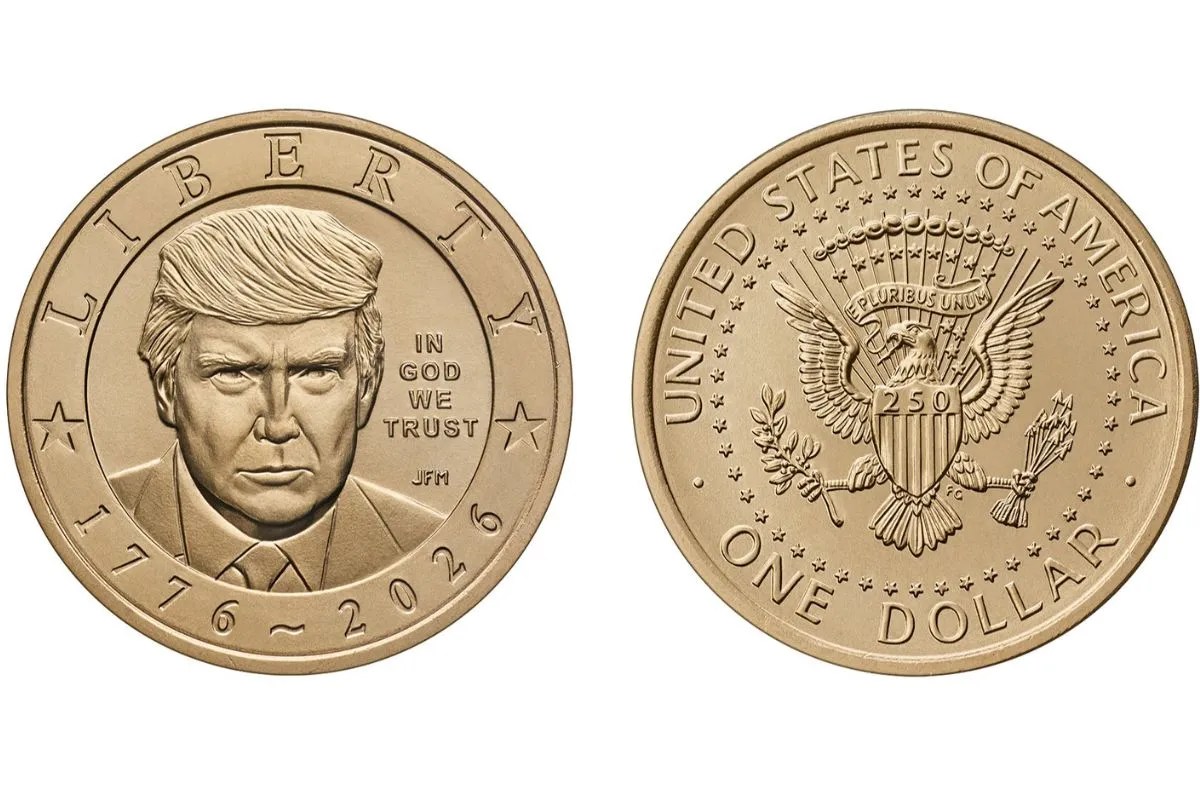
The media is having another collective meltdown over a piece of shiny metal.
If you have scanned the headlines recently, you have likely seen the breathless coverage of a "$1 gold coin" featuring Donald Trump’s face. Mainstream outlets are frantically debating the "symbolism," the "political implications," and whether this is a bold campaign statement or a gaudy piece of populist propaganda.
They are asking all the wrong questions.
While journalists waste ink arguing over the political aesthetics of a gold-plated token, they are completely missing the actual story. This isn't a debate about American currency standards or political decorum. It is a stark, hilarious demonstration of how easily the public is blinded by the word "gold" and how little the average person understands about the intersection of numismatics, marketing, and real intrinsic value.
Let us dismantle the noise and look at the cold, hard math of the situation.
The Fake Debate: Is it "Real" Currency?
The lazy consensus across the media is to treat this release as some sort of unprecedented assault on the US dollar. Pundits are clutching their pearls, wondering if this "coin" undermines the Federal Reserve or serves as a rogue form of alternative tender.
Let us stop right there.
In the world of minting, there is a massive, legally defined chasm between legal tender and commemorative medallions.
- Legal Tender: Issued by a sovereign government, backed by a central bank, and designated to pay debts. If the US Mint did not strike it with a face value backed by Congress, it is not a dollar.
- Commemorative Medallions: Private mintings designed to capture a moment in pop culture or politics. They are essentially metallic posters.
To debate whether a privately produced Trump "gold coin" threatens the US dollar is like debating whether a Disney collector's pin threatens the sovereignty of the Euro. It is a non-issue manufactured for clicks.
More importantly, the outrage machine ignores the absolute basics of metallurgy.
The Chemistry of the Con: Gold-Plated vs. Gold Bullion
When the average consumer hears "gold coin," their brain instantly associates it with Fort Knox, central bank reserves, and survivalist vaults. The creators of these memorabilia pieces count on this exact cognitive shortcut.
Let us do some basic math that the mainstream coverage conveniently avoided.
True gold bullion coins—like the American Gold Eagle or the Canadian Maple Leaf—contain actual physical gold content, typically measured in troy ounces ($31.103\text{ grams}$). At current market rates, a single ounce of pure gold trades for thousands of dollars.
Now, look at the "$1 gold coin" being peddled to collectors.
These items are almost always gold-plated or clad. This means the core of the coin is composed of cheap base metals—usually copper, zinc, or nickel—and covered in a microscopic layer of gold chemical plating.
How microscopic?
Typically, gold plating on novelty coins is less than $0.5\text{ microns}$ thick. To put that in perspective:
- A human hair is about $70\text{ microns}$ wide.
- The gold layer on these coins is roughly $1/140\text{th}$ the thickness of a single strand of hair.
If you melted down one thousand of these commemorative "gold" coins, you would not end up with a valuable bar of precious metal. You would end up with a bucket of melted copper and about three cents worth of gold dust.
I have watched amateur investors sink thousands of dollars of their hard-earned savings into "limited edition" political coins, thinking they were building a hedge against inflation. They weren't buying a financial life raft; they were buying overpriced paperweights. The real winners are the private mints that buy copper for pennies, spray it with a whisper of gold, slap a polarizing face on it, and sell it at a $2,000%$ markup.
The Illumination of "Collector Value"
The second defense of these novelty coins is always: "But it is a limited edition! The collector value will skyrocket!"
This is the ultimate siren song of the collectibles market, and it is almost always a lie.
True numismatic value (the value of rare coins) is driven by three strict metrics: scarcity, historical significance, and organic demand.
Numismatic Value = (Scarcity × Organic Demand) / Survival Rate
When a private company mints hundreds of thousands of a commemorative coin and markets it heavily on late-night television or partisan social media feeds, they are artificializing the market.
- There is no scarcity: They will mint as many as the public is willing to buy.
- There is no organic demand: The demand is highly emotional, tied to a specific political cycle. Once that cycle passes, the liquid market for the item completely evaporates.
- The survival rate is 100%: Unlike rare historical coins that were lost, melted, or damaged over centuries, every single person who buys a Trump gold coin is going to keep it wrapped in plastic in a drawer. Thirty years from now, the market will be flooded with pristine, untouched copies that nobody wants to buy.
If you want to test this theory, try taking a commemorative political coin from ten or twenty years ago to a reputable local coin dealer. Ask them what they will pay for it.
They will offer you the melt value of the base copper. If you are lucky, they might give you fifty cents just to get you out of their shop.
The Real Value Proposition: Emotional Arbitrage
If these coins are functionally worthless as financial assets, why do they sell so well?
Because the sellers are not in the precious metals business. They are in the identity business.
For the buyer, spending money on a Trump coin is not an investment in gold; it is an investment in their own identity. It is a physical manifestation of their political allegiance, a conversation starter, or a middle finger to the establishment.
There is nothing wrong with buying political memorabilia if you view it purely as entertainment. If you spend $19.99 on a coin because you want to put it on your desk and laugh or smile, go for it. People spend far more on useless plastic toys, concert t-shirts, and digital video game skins every single day.
The deception occurs when these novelty items are wrapped in the language of financial security. When advertisements hint that these coins are "wealth preservation tools" or "hedges against a collapsing economy," they are actively exploiting the financially illiterate.
Stop Asking if the Coin is Good or Bad
The media wants you to argue about the politics of the face on the coin. They want you to get angry or get patriotic.
Ignore the theater.
Instead, look at the mechanics of the transaction. The "$1 Trump Gold Coin" controversy is not a story about a politician. It is a mirror reflecting a society that does not understand the difference between price and value, between a metal and a plating, and between an investment and a souvenir.
If you want to support a political cause, write a donation check. If you want to invest in gold, buy physical bullion from a certified sovereign mint, or purchase an ETF backed by physical bars.
But if you buy a copper disc sprayed with a micron of gold because you think it will fund your retirement, you aren't fighting the establishment—you are just funding the very people who exploit your lack of financial education.
Put the credit card away. Use your brain instead.