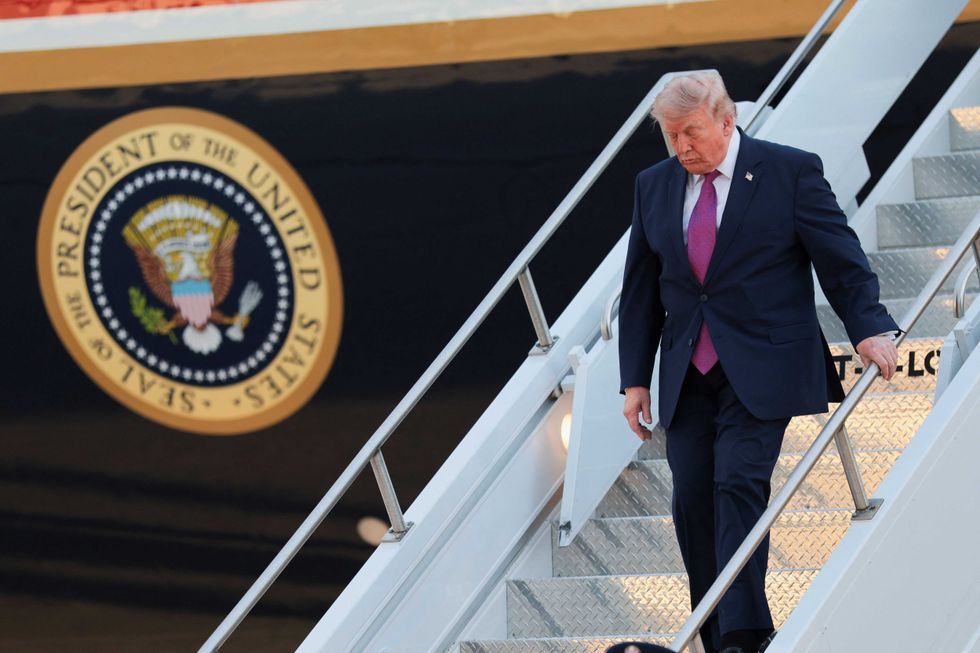
Treating international alliances as paid protection contracts rather than mutual security commitments converts high-trust strategic assets into volatile spot-market negotiations. Because the competitor reference provides only a headline without full body text or a URL, any claim about what specific insider claims appeared inside that piece remains an educated hypothesis rather than a verified textual fact. What can be evaluated rigorously is the underlying strategic argument implied by the premise: that a singular governing theory drives Donald Trump's foreign policy in 2025 and 2026, and that this theory produces severe global friction.
In strategic analysis, single-theory explanations of statecraft rarely survive contact with complex systems. Multiple operational drivers interact simultaneously across trade tariffs, hemispheric security, burden-sharing demands, and bilateral bargaining. Treating one doctrine as the sole causal engine oversimplifies state behavior, yet examining the transactional and sovereign-first logic central to the administration's posture reveals clear structural trade-offs between short-term bargaining leverage and long-term institutional stability.
Mapping the Competing Logic and Analytical Gaps
Headline-driven commentary on foreign policy typically relies on three shortcuts: attributing complex geopolitical shifts to a single psychological or ideological master key, labeling policy friction a "blunder" without specifying who bears the cost and over what time horizon, and treating diplomatic norm-breaking as automatic strategic failure.
A rigorous consultant framework separates known facts from educated hypotheses:
- Known facts: Policy documents and executive actions across 2025 and 2026 emphasize nation-state primacy, tariff-backed commercial diplomacy, stricter border and hemispheric enforcement, and higher defense spending expectations from allies.
- Known facts: Counter-measures by rival and trading states—including retaliatory tariffs, regulatory pushback, supply-chain diversification, and grey-zone coercion—raise friction across global commerce and security.
- Educated hypotheses: Whether these moves constitute a coherent long-term grand strategy, an ad-hoc collection of bilateral deals, or a net loss in strategic influence depends on how allies price U.S. reliability over the next five to ten years.
Calling a policy a "historic blunder" confuses first-order tactical wins with second-order systemic costs. A tariff threat or defense-spending ultimatum can extract immediate concessions on paper while degrading the predictability that underpins intelligence sharing, basing access, and coalition logistics during a crisis.
The Three Pillars of Transactional Statecraft
Rather than viewing the administration's approach through a single label, practitioners can model its operational core across three structural pillars.
Pillar One: Bilateral Leverage Over Multilateral Rules
Multilateral institutions reduce transaction costs by standardizing rules across many actors at once. Bilateral bargaining shifts the focus to asymmetric power, where the larger market or military force holds stronger immediate leverage over an individual counterpart.
The operational trade-off is scale versus speed. Negotiating one-on-one allows rapid pressure and tailored concessions, but negotiating dozens of separate arrangements simultaneously strains diplomatic bandwidth and invites partners to coordinate counter-offers behind closed doors.
Pillar Two: Conditional Commitments and Burden Shifting
Traditional alliance theory treats credible commitment as a fixed investment: allies accept U.S. leadership because security guarantees remain steady across political cycles. Transactional doctrine treats commitments as conditional on measurable contributions, such as higher defense budgets or favorable trade terms.
When commitments become conditional, allies face a classic principal-agent dilemma. If a partner doubts whether protection will arrive on time without a fresh payment or political concession, that partner begins hedging—building regional side-deals, diversifying arms procurement, or accommodating rivals to reduce exposure.
Pillar Three: Hemispheric Consolidation and Selective Engagement
Prioritizing immediate border security, western hemisphere influence, and targeted deterrence concentrates finite state capacity on high-salience threats. In game-theoretic terms, this resembles a portfolio reallocation away from broad global public goods toward concentrated domestic and regional priorities.
The risk lies in simultaneity and spillover. Regional crises rarely stay neatly separated; pressure in one theater can pull naval, diplomatic, or economic attention away from another, giving adversaries room to test boundaries in grey zones.
The Cost Function of Global Friction
To evaluate whether a foreign policy move helps or harms strategic position, analysts should track a cost function rather than rely on single news cycles. Every major diplomatic or economic pressure move generates four measurable cost streams:
- Direct retaliation costs: Counter-tariffs, export controls, or regulatory barriers imposed by targeted states on domestic exporters and supply chains.
- Compliance and enforcement costs: Administrative, legal, and monitoring burdens required to police exemptions, rules of origin, and bilateral agreements.
- Credibility erosion costs: Higher risk premiums priced in by allies when estimating whether U.S. assurances hold under pressure.
- Coalition coordination costs: Extra time and concessions needed later to assemble multi-country coalitions for sanctions, maritime security, or crisis response.
A policy produces a net gain only when the extracted concession exceeds the sum of these four cost streams over the relevant planning horizon. When short-term concessions are small or easily reversed while credibility and coalition costs compound, the net return turns negative even if initial headlines sound triumphant.
Consider a standard commercial negotiation analogy. A supplier with a dominant market share can raise prices sharply and demand stricter payment terms from a buyer. In quarter one, margin expands. By quarter four, if the buyer qualifies a secondary supplier or redesigns around the part, the supplier loses volume and pricing power. Statecraft follows a similar dynamic, except sovereign actors also weigh military deterrence and diplomatic alignment alongside price.
Cause-and-Effect Chains Standard Commentary Misses
Standard political commentary often stops at the announcement: a leader issues a demand, allies complain, and pundits declare victory or disaster. Strategic analysis traces the causal chain three steps further.
Step 1: Pressure Triggers Hedging, Not Just Compliance
When a dominant power signals that protection is transactional, smaller and mid-sized states rarely choose pure submission or total rupture. Most choose strategic hedging—maintaining security ties with Washington while expanding economic or diplomatic insurance elsewhere. Over time, hedging shrinks the dominant power's exclusive leverage.
Step 2: Fragmentation Raises Adversary Opportunity
As alignment loosens among traditional partners, rivals face lower coordination penalties when probing gray areas—such as cyber operations, maritime harassment, or economic coercion. An adversary does not need formal alliances to benefit from friction among its competitors; bilateral divisions alone create openings.
Step 3: Rebuilding Trust Costs More Than Preserving It
Trust behaves like capital formation, not an on-off switch. Preserving baseline predictability requires steady execution, whereas restoring confidence after sharp reversals requires repeated, costly follow-through over multiple administrations.
Operational Playbook for Decision-Makers
Whether a reader is an executive managing cross-border exposure, a policy analyst, or an informed citizen tracking global affairs, disciplined evaluation requires a structured workflow rather than reactive commentary.
Step 1: Decompose the Claim into Mechanism and Evidence
Separate the headline thesis from the causal mechanism. Ask what specific lever was pulled—tariffs, defense-spending pressure, diplomatic ultimatum, or hemispheric enforcement—and identify which actors have the incentive and capacity to retaliate or adapt.
Step 2: Map Winner, Loser, and Hedger Payoffs
List the affected parties and estimate how each responds in the near term (zero to twelve months) versus the medium term (one to five years). Pay special attention to swing states and mid-sized allies, whose quiet alignment shifts often matter more than public rhetoric.
Step 3: Stress-Test Against Three Scenarios
Evaluate the policy across three operating environments:
- Baseline continuation: Pressure persists, partners negotiate incremental bilateral carve-outs, and global trade fragments into competing blocs.
- Escalation shock: Retaliation spirals across key commodities, shipping lanes, or financial channels, driving up inflation and supply bottlenecks.
- De-escalation reset: Negotiated settlements freeze disputes into formal bilateral pacts, lowering acute friction while keeping higher baseline tariffs or burden-sharing floors.
Step 4: Audit Limitations and Blind Spots
Every analytical framework has failure modes. A transactional model can underestimate ideological or domestic-political constraints inside partner governments that prevent leaders from accepting public concessions. Conversely, a pure institutional model can overestimate how much allies value abstract rules when facing immediate domestic economic or security pressures. Combining both lenses prevents blind spots in either direction.
Strategic Recommendation for Navigating Geopolitical Volatility
For organizations and decision-makers operating across exposed jurisdictions, the highest-value move is to build modular optionality before a crisis forces a binary choice. Audit supply chains, funding channels, and regulatory dependencies for single-country concentration; establish pre-vetted secondary suppliers or regional operating partners; and separate short-term tactical negotiations from long-term structural commitments so a sudden policy shift does not paralyze core operations.