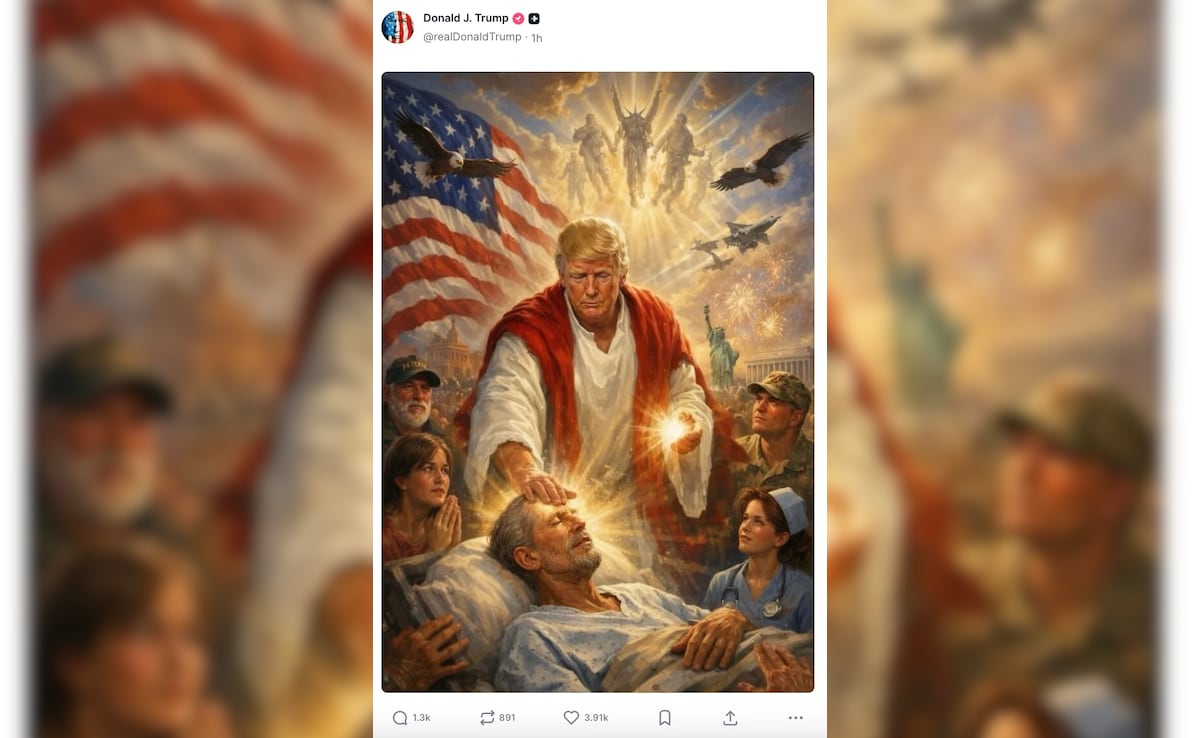
Donald Trump just reminded everyone that even for him, there’s a line you shouldn't cross. On Sunday night, the president hopped onto Truth Social and shared an AI-generated image that didn't just hint at religious themes—it leaned into them with a sledgehammer. The post featured Trump dressed in flowing robes, looking remarkably like Jesus Christ, performing a healing miracle on a sick man. By Monday morning, the post was gone.
It wasn't just the usual critics who were upset this time. The backlash came from inside the house. Some of his most loyal religious supporters called it "outrageous blasphemy." When you lose the people who usually defend your every move, you know you've stepped in it.
The Image That Broke Truth Social
The AI-generated picture wasn't subtle. It showed Trump in a white robe and red sash, bathed in divine light. He was touching the forehead of a man in a hospital bed, apparently healing him. The background was a chaotic mix of MAGA-coded symbolism: American flags, soaring eagles, fighter jets, and even a demonic figure with horns looming in the shadows.
If it sounds like a lot, that's because it was. This isn't the first time Trump has flirted with messianic imagery. Back in 2023, he shared a courtroom sketch from a fan that showed Jesus sitting next to him at the defense table. But this new AI creation went a step further by basically replacing the deity with the politician.
The Backlash from the Religious Right
What makes this deletion interesting isn't just the photo itself, but who forced his hand. Usually, Trump ignores the "fake news" media and doubles down. This time, he couldn't.
- Riley Gaines, a frequent speaker at Trump rallies, posted that she couldn't understand why he would share something so disrespectful. She flat-out told him that "God shall not be mocked."
- Megan Basham, a prominent conservative commentator, called it "outrageous blasphemy" and demanded he ask for forgiveness from God.
- Marjorie Taylor Greene even weighed in before the post vanished, saying she denounced the imagery and was "praying against it."
When your own base starts using words like "Antichrist" to describe your social media feed, the campaign staff tends to hit the delete button pretty fast.
The Pope Leo Factor
The timing of this post wasn't an accident. Trump is currently in a heated public feud with Pope Leo XIV, the first American-born pontiff. The Pope has been vocal about his concerns regarding the U.S.-Israeli conflict with Iran, calling for an "off-ramp" and arguing that faith shouldn't be used to justify war.
Trump didn't take that well. He spent the weekend trashing the Pope on social media, calling him "WEAK on crime" and "terrible for foreign policy." He even joked that Pope Leo only got the job because of his American background to "deal with" the Trump administration.
The "Jesus" photo felt like a direct middle finger to the Vatican. It was as if Trump was trying to say he didn't need the Pope’s blessing because he had a direct line to the divine—or that he was the divine figure himself.
It Was Just a Doctor According to Trump
When reporters caught up with him at Joint Base Andrews, the president had a classic Trumpian explanation. He didn't apologize. He didn't even admit it was supposed to be Jesus.
"I thought it was me as a doctor," he told journalists. He claimed the image was about him "making people better," adding that he does, in fact, "make people a lot better."
Vice President JD Vance tried to do some damage control too, calling the post "a joke" on Fox News. He suggested that people just didn't get Trump’s sense of humor and that the Vatican should stick to "matters of morality" instead of politics.
The Reality of AI and Political Branding
This mess shows just how weird political branding has become in the age of generative AI. You don't need a professional photographer or a marketing team to create high-quality propaganda anymore. You just need a prompt and a platform.
But AI lacks a "cringe filter." It takes metaphors and turns them into literal, uncanny-valley nightmares. For a candidate who relies heavily on the evangelical vote, portraying yourself as a literal Savior isn't just risky—it’s a tactical error.
If you're following these developments, keep a close eye on how the Trump campaign handles religious outreach in the coming weeks. They’re clearly trying to pivot away from the "Messiah" angle and back toward the "strongman" persona that worked for them in 2024.
Don't expect an official apology. That's not how this administration works. But don't be surprised if the next round of Truth Social posts features a lot more Bibles and a lot fewer robes. Pay attention to the rhetoric from the Vatican next—Pope Leo doesn't seem like the type to back down from a digital brawl.
To stay ahead of how these social media shifts impact the 2026 political landscape, you should monitor the official statements from the United States Conference of Catholic Bishops (USCCB). They've already labeled Trump’s recent comments as "inappropriate and divisive." Watching how that relationship mends—or breaks—will tell you everything you need to know about the future of the conservative coalition.