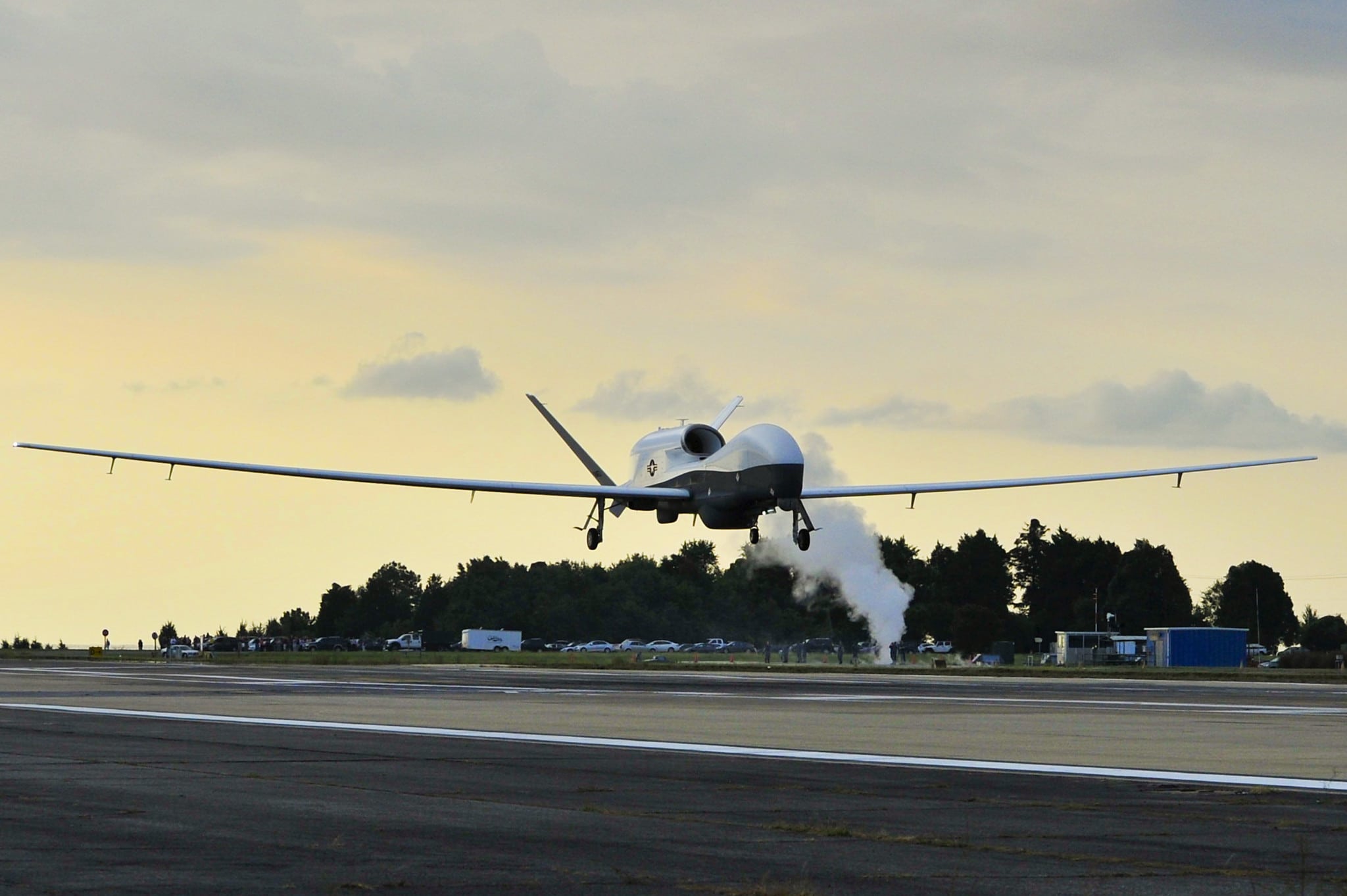
The headlines are bleeding money. $240 million of taxpayer gold has allegedly vanished into the depths of the Persian Gulf. The "defense analysts" are already on their predictable scripts, bemoaning the loss of a high-end asset and questioning the reliability of Northrop Grumman’s flagship MQ-4C Triton.
They are looking at the price tag. They should be looking at the data.
In the insular world of ISR (Intelligence, Surveillance, and Reconnaissance), a crash is often treated as a catastrophe. It isn't. If you aren't crashing occasionally, you aren't flying close enough to the sun to matter. The obsession with "zero-loss" architecture is exactly why Western procurement cycles take twenty years to deliver tech that is obsolete on arrival.
The loss of this Triton isn't a failure of American engineering. It’s a stress test of a doctrine that is finally moving away from the "precious gem" model of aviation.
The Myth of the Expensive Paperweight
The common consensus is that losing a $240 million drone is a strategic blow. This logic is grounded in 20th-century thinking where every airframe was a sacred relic.
Let's do the actual math. The MQ-4C Triton is designed to provide continuous maritime surveillance. It stays up for over 24 hours. It operates at altitudes above $50,000$ feet. To get the same level of persistence using manned P-8 Poseidons, you would need a fleet of aircraft, multiple crews, a massive logistical tail, and you would be risking human lives in a high-threat corridor.
When a Triton goes down, the "cost" is hardware. When a manned aircraft goes down, the cost is irreplaceable experience and a political firestorm that can end a presidency.
The $240 million price tag is a red herring. Much of that cost is amortized R&D, software development, and the sensor suites that—while expensive—are being refined with every hour of flight data streamed back to Whidbey Island or Jacksonville. The airframe is a shell. The value is the feed. If that drone collected six months of high-fidelity signals intelligence on Iranian radar signatures before it hit the water, it already paid for itself five times over.
Why We Should Want More Crashes
Risk aversion is a slow-acting poison in military technology. We have spent decades building "exquisite" systems—platforms so expensive and complex that commanders are terrified to use them in contested environments.
Imagine a scenario where the Navy becomes so protective of the Triton fleet that they only fly them in "safe" airspace. What is the point? A surveillance asset that only watches friends isn't an asset; it's a hobby.
The Persian Gulf is a electronic warfare jungle. It is a dense, noisy, hostile environment where GPS jamming and spoofing are the baseline, not the exception. If a Triton falls out of the sky, it provides a crucial data point: Where is the threshold of our autonomous stability?
We learn more from a drone that fails in a high-intensity zone than from a thousand drones that fly perfectly over the mid-Atlantic. The crash in the Gulf is a diagnostic report written in titanium and carbon fiber. It tells the engineers at Northrop exactly where the handoff between the flight control laws and the environmental sensors broke down.
The Stealth Cost of Perfectionism
The "People Also Ask" sections of the internet are currently flooded with questions like, "Why are drones so unreliable?" or "Is the Triton a failure?"
These questions are fundamentally flawed. They assume that reliability is the primary metric of success. It’s not. Persistence and expendability are the metrics that win modern wars.
The MQ-4C is essentially a modified Global Hawk. It was built to endure the brutal conditions of maritime environments—high humidity, salt spray, and extreme thermal cycling. By pushing these machines to the point of mechanical or software exhaustion, the Navy is discovering the actual edge of the envelope.
If we demand 100% reliability, the price of a single Triton will jump from $240 million to $500 million. We will spend a decade on "safety audits" while our adversaries iterate on cheap, fast, and "good enough" platforms.
The "lazy consensus" says we lost a quarter-billion dollars. The insider reality is that we just bought a $240 million lesson in how to survive the next conflict.
The Attrition Mindset Shift
We are entering the era of the "Attritable Fleet." This is a hard pill for Congress to swallow because they like to point at big, shiny things that stay shiny for thirty years.
But the nature of the Persian Gulf—and eventually the South China Sea—demands a mindset shift. We have to be okay with losing machines. We have to treat drones as high-end ammunition, not as miniature versions of the USS Gerald R. Ford.
The Triton’s ZPY-3 Multi-Function Active Sensor (MFAS) radar is perhaps the most capable maritime search tool ever built. It can sweep 2.7 million square miles in a single mission. The intelligence gathered by these sensors is digitized and distributed across the entire carrier strike group in real-time.
When the drone crashes, the intelligence doesn't un-exist. The data is already in the cloud. The "loss" is the physical bus, which can be replaced on an assembly line.
Stop Crying Over Hardware
I have seen programs canceled because a prototype crashed during a test flight. It is the height of bureaucratic cowardice.
The MQ-4C Triton is a beast of a machine. It is 130 feet of wing that allows the US Navy to see over the horizon without putting a single pilot in the crosshairs of a surface-to-air missile. If the cost of that visibility is the occasional loss of an airframe due to mechanical fatigue or an unforeseen atmospheric event, that is a bargain.
The real danger isn't the crash. The real danger is the subsequent "operational pause" that will inevitably be demanded by risk-averse politicians. Every day those drones are grounded for an investigation is a day we are blind in one of the most volatile regions on Earth.
The Brutal Truth of Modern ISR
The competitor's article focuses on the "loss." They want you to feel the sting of the taxpayer dollar. They want you to think the technology is buggy.
The truth is much colder. In a near-peer conflict, we will lose dozens of these a week. If we can't handle the loss of one during "peacetime" operations, we have already lost the next war.
We need to stop treating $240 million drones like they are museum pieces. They are tools. Tools break when you use them hard. And if you aren't using them hard in the Persian Gulf, you aren't using them at all.
The Navy shouldn't be apologizing for the crash. They should be ordering the next five off the line and pushing the remaining fleet even harder.
Buy the tech. Fly the tech. Break the tech. Repeat until the enemy is the only one left in the dark.
Stop looking at the wreckage and start looking at the telemetry. The mission didn't fail; the hardware reached its limit. Build a better limit.
Move on.