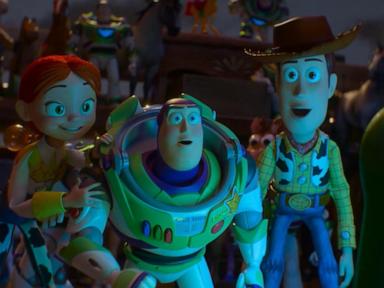
Hollywood loves a predictable moral panic. The latest distraction designed to trigger nostalgia-addled parents is the marketing rollout for Toy Story 5.
Commentators are swooning over the final trailer, applauding Pixar for tackling the "existential threat" of screen time. The lazy consensus among film critics is already locked in: Woody, Buzz, and Jessie going to war against Lilypad—the tablet voiced by Greta Lee—is a brave, timely critique of the "iPad kid" epidemic. Mainstream outlets are framing this as a tragic, poetic battle for the soul of childhood play.
They are completely misreading the room.
I have spent over a decade analyzing entertainment economics and studio IP strategies. This movie is not an artistic crusade against technology. It is a desperate corporate defense mechanism. Pixar isn't trying to save your children from touchscreens; they are trying to save their own aging toy-etic business model from irrelevance in an era where software scales faster than injection-molded plastic.
The narrative that tablets are an inherently "evil progress" that ruins imagination is a flawed premise designed to flatter adult audiences. The reality is far more uncomfortable for Disney.
The Hypocrisy of the Toy-Tech Binary
The core conflict of Andrew Stanton’s upcoming film posits that physical toys are noble, while electronic devices are soul-crushing monoliths. This is an incredible piece of cognitive dissonance coming from a studio built entirely on high-tech silicon graphics.
Let's dissect the flawed logic here.
- The Nostalgia Trap: Mainstream reviews argue that traditional toys foster genuine human connection while tablets isolate. This ignores the history of the toy industry. In 1995, parents were panicked that video games and television were destroying the minds of children who should have been playing outside. Now, those same 1990s relics—the original plastic Buzz Lightyear and Woody dolls—are treated as the gold standard of organic, wholesome play.
- The Commercial Reality: Every single Toy Story movie exists to drive retail sales. The original 1995 film literally rescued failing real-world brands like Slinky Dog and Mr. Potato Head from bankruptcy. By framing a smart tablet as the ultimate villain, Disney is attempting to manufacture a cultural backlash against the one object they cannot easily patent, manufacture, and sell in a Target aisle for a $25 markup.
Imagine a scenario where a child creates a complex, interactive digital world inside an iPad app, collaborating with friends across the globe. Is that less imaginative than staring at a static piece of plastic? Of course not. But Disney can’t put a barcode on a child’s open-ended digital imagination the same way they can sell a fleet of 50 "Multi-Buzz" action figures.
Dismantling the "IPad Kids Have No Attention Span" Premise
The loudest praise for the Toy Story 5 trailer centers on the idea that kids have lost the attention span for old-school toys. This is an unscientific oversimplification.
Children have not stopped playing; the medium of play has evolved. The modern child doesn't want to just hold a plastic cowboy and pretend he talks. They want interactive agency. They want to code in Roblox, build architectures in Minecraft, and manipulate digital physics.
[Traditional Play] -> Static, Parent-Imposed Narrative (e.g., Woody is a cowboy)
[Digital Play]     -> Dynamic, Child-Led Architecture (e.g., Open-world building)
By villainizing the Lilypad tablet, Pixar is trying to force a pre-digital framework onto a post-digital generation. It is the creative equivalent of an assembly-line factory worker yelling at an automation engineer.
The True Victim: Narrative Integrity
The most frustrating aspect of this fifth installment is how it completely undoes the emotional weight of its predecessors. Toy Story 3 was the perfect thematic conclusion to the franchise, dealing with the harsh reality of growing up and moving on. Toy Story 4 was an unnecessary, though visually stunning, epilogue that gave Woody closure with Bo Peep.
Now, Woody is pulled away from his new purpose just to fight an iPad. The introduction of cheap narrative tricks—like poking fun at Woody’s "middle age," his bald spot, and a beer gut—shows a franchise running on creative fumes. Instead of exploring deep, structural questions about legacy and existential utility, the film relies on slapstick gags and stunt casting.
Do we honestly believe that introducing Conan O'Brien as a potty-training toy named Smarty Pants or Bad Bunny as a "Pizza with Sunglasses" is a sign of a studio operating at the peak of its creative powers? It's not. It’s an intellectual property asset management strategy disguised as a cinematic event.
The Downside of the Contrarian Stance
To be fair, there is a risk to dismissing Pixar's approach entirely. Screens do present genuine behavioral challenges for early childhood development when unmonitored. Dopamine loops in modern apps are engineered to be addictive, and there is a legitimate conversation to be had about the loss of tactile, fine-motor play.
But a multi-billion-dollar entertainment conglomerate utilizing a legacy franchise to lecture parents about screen time while simultaneously selling millions of plastic tie-in toys is not the vehicle for that nuanced conversation. It is a marketing campaign wrapped in a guilt trip.
Stop asking whether Toy Story 5 will successfully warn us about the dangers of technology. Start asking why we keep buying tickets to corporate lectures disguised as our childhood memories.