Grease. Salt. The sharp, metallic tang of a freshly printed hundred-dollar bill.
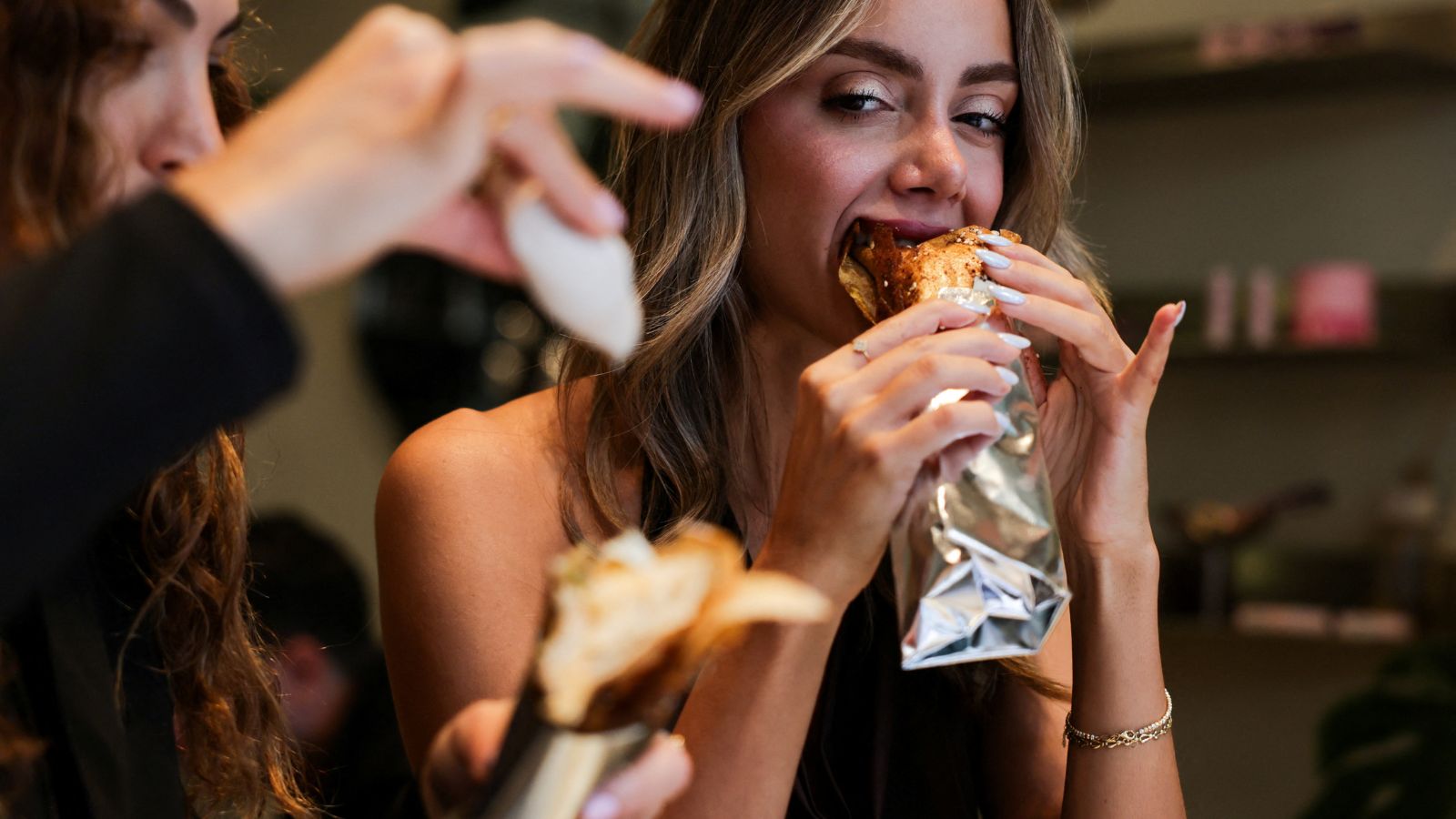
Stand on a humid evening along the sidewalks of Gemmayzeh or Mar Mikhael in Beirut, and you will smell garlic paste roasting over hot oil before you ever see the neon signs. A crowd spills onto the cracked asphalt. They are laughing, scrolling through glowing smartphones, waiting twenty minutes in the thick Mediterranean air for a brioche bun stuffed with buttermilk-fried chicken, coleslaw, and spicy mayo.
The price tag is thirteen dollars.
Pause on that number. Thirteen dollars. In Manhattan or London, it is an unremarkable Tuesday lunch, a forgettable line item on a debit card statement. In Lebanon—a country suffocating under one of the sharpest economic collapses in modern human history—thirteen dollars is a moral earthquake.
To understand why a piece of poultry between two slices of bread has ignited a bitter national argument, you have to feel the texture of the paper currency in a Beiruti’s pocket. Since late 2019, the Lebanese lira has lost more than ninety-eight percent of its value. Think about what that means in human terms, not on a central bank spreadsheet. Imagine waking up every morning to find that the life savings you spent forty years building can now barely buy a tank of gasoline or a week's worth of blood pressure medication. That is not a metaphor. That is the daily math of millions of households across the country.
When a restaurant in Beirut prices a single chicken sandwich at thirteen dollars—paid in crisp, physical U.S. currency—it is not merely selling dinner. It is drawing a razor-sharp boundary line right down the middle of the dinner table.
Two Cities Sharing One Sidewalk
Consider two hypothetical residents living less than three miles apart in the same city, breathing the same generator exhaust, dodging the same dark potholes at night.
First, meet Tariq. He is a forty-two-year-old high school physics teacher in a public school near Tariq el-Jdideh. His monthly salary, paid in Lebanese lira, fluctuates in real purchasing power depending on the hour, hovering somewhere around the equivalent of one hundred and eighty dollars. For Tariq, feeding a family of four requires military-grade logistics. Meat has vanished from his weekday grocery list, replaced by lentils, potatoes, and subsidized flatbread. When Tariq walks past a glowing burger joint on his way home, he does not see comfort food. He sees a mathematical impossibility. One sandwich equals nearly three days of his labor.
Now walk ten minutes north toward the coast and meet Nadia. She is twenty-six, a remote software designer working for a tech startup based in Dubai, paid directly into a fresh-dollar account. For Nadia, Beirut feels strangely affordable, almost discounted compared to European capitals. After enduring years of compounding trauma—the 2019 banking freeze that locked families out of their own accounts, the catastrophic 2020 port explosion that shattered windows and lives across half the capital, the endless blackouts where private diesel generators roar like wounded beasts outside every apartment block—Nadia wants to live. She wants the small, familiar joy of ordering a crispy chicken sandwich with friends on a Friday night without apologizing for surviving.
Both Tariq and Nadia are real archetypes of modern Lebanon. Neither of them caused the currency collapse. Neither of them looted the central bank or mismanaged the national grid. Yet when Nadia hands over thirteen dollars at the counter while Tariq counts crumpled bills for a bag of pitas two blocks away, the sandwich becomes a mirror. And nobody likes what they see reflected in the glass.
The Dollarization Trap
How did a nation that once prided itself on affordable street food—where a legendary shish taouk wrap cost the equivalent of two dollars and fed construction workers alongside university professors—end up here?
The answer lies in what economists call dollarization, though on the street it feels more like an amputation. As the local currency went into freefall, businesses could no longer price menus in lira without changing the numbers twice a day. Restaurants were importing cooking oil, packaging, spices, flour, and fuel for their generators in hard currency. Eventually, the Lebanese Ministry of Tourism allowed restaurants to price their menus directly in U.S. dollars.
On paper, it was a survival mechanism. Without dollar pricing, hospitality businesses would have shuttered overnight, throwing tens of thousands of waiters, dishwashers, and delivery drivers onto the street.
Look closer at the supply chain behind that thirteen-dollar sandwich, and the economics grow murky. A restaurateur in Beirut does not operate in a normal market. There is no reliable state electricity; a small kitchen can spend thousands of dollars every month just buying diesel to keep the fryers hot and the walk-in freezers cold. There are no functional bank loans. Everything is cash on delivery. When you bite into that brioche bun, you are tasting the hidden cost of a failed electrical grid, broken municipal water systems, and a private security apparatus filling the vacuum left by a hollowed-out state.
Even accounting for diesel and imported brioche flour, critics across Lebanese social media have cried foul. They point out that labor costs in Beirut remain a fraction of what they are in New York or Paris. A line cook earning three hundred dollars a month is frying a sandwich sold at Manhattan prices. To many observers, the thirteen-dollar price tag smells less like survival and more like opportunism—a sudden, unapologetic pivot toward an economy built exclusively for expatriates, tourists, NGO workers, and the thin slice of locals earning foreign salaries.
I admit, standing on those crowded Beirut streets, it is disorienting to hold both truths at once. You feel an immediate surge of anger when you calculate how many schoolteachers' lunches fit inside one gourmet fast-food order. Then you talk to a small business owner trying to pay staff enough to cover their own rent, watching their generator bills spike every summer, and the easy villain disappears. The system itself is rigged so that basic survival looks like greed.
The Architecture of a Divided Economy
Historians who study post-crisis societies recognize this pattern immediately. When a middle class is wiped out overnight, it does not vanish quietly. It fractures into two distinct economies occupying the exact same geographic space.
In one economy, life runs on the "fresh dollar"—cash bills brought into the country by the vast Lebanese diaspora, remittances sent home by sons and daughters working in the Gulf, Europe, and North America. According to World Bank estimates, remittances have accounted for over a third of Lebanon's gross domestic product in recent years, acting as a massive private life-support machine for a country whose public institutions have flatlined. Where those remittances flow, beach clubs stay packed in July, rooftop bars pour imported cocktails, and gourmet chicken joints open three new branches in a single summer.
In the other economy, there are no remittances. There is no uncle in Montreal or sister in Riyadh wiring three hundred dollars every month. In that Lebanon, public hospitals run out of basic anesthetics, school roofs leak through the winter rains, and families turn off their refrigerators for twelve hours a day to shave ten dollars off their neighborhood generator subscription.
The tragedy of the thirteen-dollar sandwich is not the chicken. It is the erasure of the shared space that street food used to guarantee.
For decades, food was Lebanon’s great equalizer. Across sectarian lines, across class divides, the corner bakery selling manakish—flatbread brushed with olive oil and thyme—belonged to everyone. A wealthy banker in a tailored suit stood shoulder-to-shoulder with a street sweeper at seven in the morning, both waiting for the same hot bread out of the stone oven, both paying pocket change. That mundane daily ritual stitched a fractured society together in ways politicians never could.
Today, that shared counter is gone. A manousheh that once cost pennies now stretches the budget of a public sector retiree, while high-end street food has migrated behind an invisible velvet rope made of crisp American bills.
What Happens When Hunger Meets Spectacle
Every night on TikTok and Instagram, food influencers film slow-motion close-ups of cheese pulls, smashed patties, and golden fried chicken tenders dripping with house sauce in Beirut. The comments sections under these videos have become battlegrounds.
"Where is the crisis everyone talks about?" asks one commenter from abroad, genuinely baffled by the packed tables and gleaming storefronts.
"Come visit the neighborhoods ten minutes away and see how people are actually eating," replies a local resident, exhausted by the split-screen reality of their own city.
This visual contradiction is dangerous. When outsiders see packed restaurants in central Beirut, international urgency fades. The narrative shifts from a nation trapped in systemic collapse to a resilient party town that somehow always lands on its feet. Meanwhile, inside the country, the psychological toll of watching luxury consumption flourish beside quiet desperation breeds a corrosive, silent resentment.
You can feel it in the traffic jams, where battered twenty-year-old sedans with cracked windshields sit bumper-to-bumper beside brand-new luxury SUVs bought in cash. You hear it in the hushed tone a mother uses at a pharmacy when she asks the pharmacist to sell her half a strip of antibiotics instead of the full box because she only has five dollars left until Friday.
Nobody wants to begrudge a young Beiruti a good meal after everything their generation has endured. Joy is not a crime in a traumatized city. Yet when basic dignity becomes a luxury good, every indulgence carries an unspoken weight.
A young man stands under the fluorescent glow of a Beirut takeaway window at midnight, unfolding a crisp twenty-dollar bill to pay for dinner while a frail elderly woman quietly gathers discarded cardboard boxes from the curb three feet behind him—both of them lit by the exact same neon sign.