The rain in London doesn't fall; it misbehaves. It drifts sideways under umbrellas, slicking the cobblestones outside Downing Street and blurring the red tail-lights of idling armored Audis. Inside one of those vehicles, a man sits with a briefing binder heavy enough to sprain a wrist. Keir Starmer knows about briefs. He spent a lifetime reading them as a prosecutor, looking for the single thread that makes a case unravel. But the theater of global politics doesn't care about the rules of evidence.
Every time a British leader crosses the Atlantic, they carry an invisible scale. On one side sits the "Special Relationship," that grand, slightly desperate phrase coined in the shadow of a global war. On the other side sits national self-respect. Striking the balance is hard enough when Washington is quiet. When the American landscape is dominated by a figure as loud, unpredictable, and fiercely demanding as Donald Trump, that scale doesn't just tip. It shatters.
The fallout from a high-stakes departure is rarely about the official communiqués. It is about the whispers left behind in the corridors. For Starmer, the exit from his latest international foray triggered an immediate, sharp chorus of disapproval. The critics were waiting in the tall grass. The core of their argument boiled down to a simple, devastating diagnosis: the Prime Minister had stumbled into a trap of his own making, leaving him with two distinct, agonizing problems that could define the early chapters of his premiership.
Consider what happens next when a leader tries to play both statesman and partisan.
The Friction of Two Masters
A Prime Minister answers to the voters who put them in office, people worried about damp housing, failing hospitals, and grocery bills that refuse to drop. But a Prime Minister also must live in the world as it exists, not as they wish it to be. When Donald Trump loomed large on the horizon, Starmer faced a choice that every modern British leader dreads. Do you stand on principle and risk freezing your nation out of the Oval Office, or do you extend a hand and risk alienating your own core supporters?
He chose the hand. The dinners were arranged, the polite words exchanged, and the diplomatic machinery hummed into gear. It was pragmatic. It was logical.
It was also explosive.
The first problem is domestic. For years, the political left in Britain viewed the populist wave across the Atlantic with a mixture of horror and disdain. To see their own champion—a man built on a reputation for sober legality and progressive values—sitting down to break bread with the avatar of American populism felt like a betrayal. The anger wasn't just loud; it was deep. It rippled through the backbenches of Westminster, a quiet murmur of discontent that threatened to turn into a roar.
Imagine a hypothetical backbench MP named Sarah. She won her seat by promising a return to clean, principled politics. Now, her inbox is a wall of fire from local party members asking why the leader of their movement is playing nice with a man who challenged the very foundations of American democracy. Sarah has to defend it, but her voice lacks conviction. The compromise leaves a bitter taste.
But the real problem lies elsewhere. The second problem is the nature of the man across the water.
The Trap of Unpredictable Alliances
Diplomacy with a traditional American president is like a game of chess played via mail. It is slow, predictable, and governed by thick manuals written by civil servants. Diplomacy with Trump is a live performance on a tightrope during a gale.
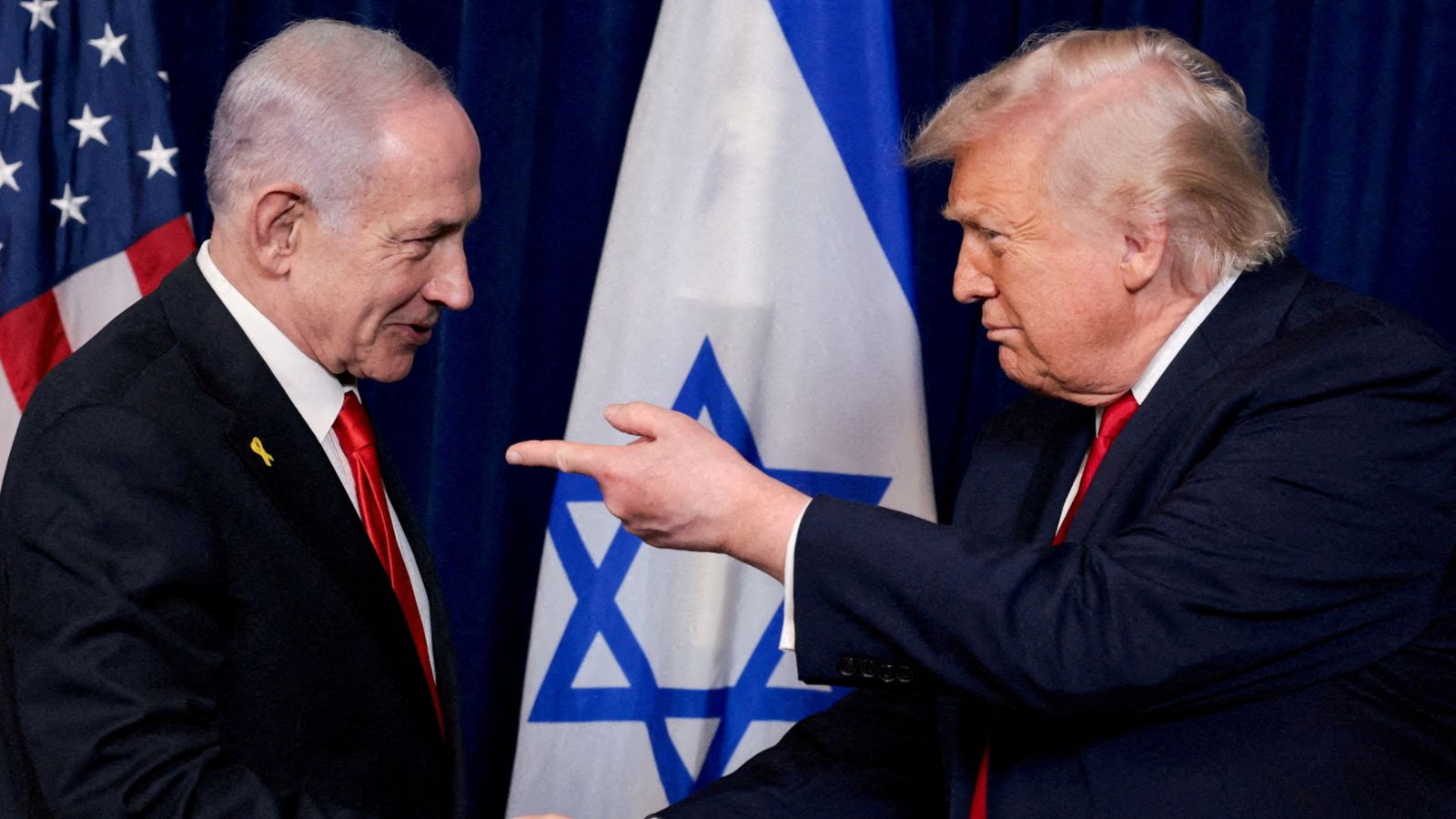
You cannot buy permanent loyalty in that arena; you can only rent it by the hour. Starmer’s attempts to build a working bridge were immediately scrutinized, not just for what was said, but for what was left unsaid. The moment the British delegation departed, the narrative shifted. The praise vanished, replaced by the sharp edges of criticism from Trump’s camp and his allies, who sensed weakness or calculations rather than genuine camaraderie.
It is a brutal lesson in modern power. You can bend over backward to accommodate a political force, burning your own domestic capital in the process, only to find that the moment your back is turned, the terms of the deal have changed. The criticism that followed Starmer’s exit wasn't just a minor press headache. It was an indication that the strategy of polite accommodation had yielded very little protection.
The British public watches this dance with a weary skepticism. They have seen it before. They saw Tony Blair walk into the fires of Iraq to maintain the bond with George W. Bush. They saw Theresa May hold Trump’s hand on the white colonnades of the White House, only to be publicly undermined days later. The collective memory of the nation is stained by the perception that the UK enters these relationships as the junior partner, begging for crumbs from the table of the empire.
The Loneliness of the Center Ground
To understand why this hurts Starmer so acutely, you have to understand the specific brand of politics he represents. He is a centrist by design, a man who believes that raw passion is a poor substitute for a well-drafted policy paper. He won power by promising to lower the political temperature, to turn off the constant reality-TV drama that had characterized British governance for a decade.
But the center ground is a lonely place when the world is polarizing.
When you stand in the middle, everyone has a clear shot at you. The right calls you weak for not fully embracing the new populist reality; the left calls you a sellout for compromising with it. By trying to navigate a middle path through the American political minefield, Starmer managed to validate the fears of both sides. He looked compromised to his friends and irrelevant to his detractors.
The silence from Downing Street in the aftermath of the criticism was telling. It wasn't the silence of indifference; it was the silence of a team realizing that the old rules of engagement no longer apply. You cannot brief your way out of a fundamental structural contradiction. You cannot file a legal motion against a hostile tweet or a scathing television commentary from an American media machine that thrives on conflict.
The Shadow Across the Atlantic
The true stakes are not about today's headlines or tomorrow's Prime Minister’s Questions. They are about the next five years.
Britain is an island nation trying to find its place in a world that is rapidly hardening into competing trade blocs and military rivalries. The economy is sluggish. The defense budget is stretched thin. The reliance on Washington for intelligence, nuclear deterrence, and trade is not a choice; it is a geographic and historical reality.
When a British leader is wounded by American political crossfire, the injury is felt in the boardrooms of the City of London and the defense planning rooms of Whitehall. If the Prime Minister is seen as someone who can be easily dismissed or publicly criticized by a potential or current US president without consequence, Britain's leverage on the world stage shrinks.
The Audis sit outside Downing Street, their engines purring quietly in the gray afternoon. The rain keeps falling, relentless and indifferent to the ambitions of the men inside. The binders are closed, but the two problems remain, written in invisible ink across every document the Prime Minister will sign this week. He must find a way to heal the rift within his own house while preparing for a relationship with an American superpower that grows more volatile by the day.
The scale remains unbalanced, and the wire is getting thinner.