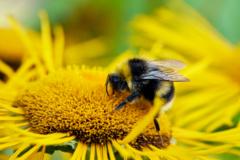
The collapse of temperate bumblebee (Bombus) populations across Western Europe is not a generic environmental crisis; it is an energetic throughput problem governed by fluid dynamics, physiological heat exchange limits, and strict thermal ceilings. Temperate bumblebees operate as thermal engines optimized for high-drag, low-temperature environments. When ambient temperatures cross specific operational thresholds, the thermodynamic cost of maintaining metabolic functions cascades into complete systemic collapse across individual, colony, and population vectors.
The Three Operational Thermal Ceilings
The physiological vulnerability of Bombus species is governed by three distinct thermal thresholds that dictate behavioral changes and biological failure rates.
- 28°C (The Operational Yield Threshold): At this ambient baseline, field foraging efficiency drops dramatically. The energy expenditure required to cool the flight motor (the thorax) begins to surpass the caloric intake from gathered nectar. Non-essential colony members, including males and cuckoos, halt external activity completely and seek refuge.
- 32°C to 36°C (The Colony Maintenance Ceiling): Outside foraging activity halts almost entirely. The primary allocation of labor pivots from resource acquisition to thermal management. Brood viability collapses when nest temperatures exceed 35°C for extended periods.
- 42°C to 45°C (The Physiological Critical Maximum): Flight becomes physically impossible without triggering immediate, lethal hyperthermia. Bees lose motor control, enter heat coma state between 50.7°C and 53.4°C, and experience permanent muscular or neurological impairment even if brief exposure is survived.
The Internal Heat Engine and Mechanical Failure
Bumblebees generate significant internal thermal energy during flight. The primary flight muscles located in the thorax must maintain an operating range between 30°C and 45°C to power mechanical movement. However, the physical traits that enable Bombus species to thrive in colder climates—dense hair insulation (pubescence), a high surface-area-to-volume ratio, and high thoracic mass—turn into mechanical vulnerabilities under heatwave conditions.
Equation-level thermodynamic heat models show that heat loss occurs primarily via two paths: convective cooling to the air and heat radiation transferred from the thorax to the head and abdomen. At ambient temperatures under 25°C, excess thoracic heat sheds passively into the surrounding environment. As ambient temperatures approach and exceed 35°C, the thermal gradient flattens. Convective cooling loses effectiveness.
To counter this, workers deploy emergency behavioural cooling mechanisms. They transfer fluid internally to the head or regurgitate a droplet of nectar onto their proboscis to cool their heads via evaporative dissipation—a process that drops head temperatures by approximately 2°C. This behavioral adaptation is a temporary bridge, not a sustainable system. It consumes energy and water reserves rapidly, creating a negative metabolic balance if prolonged.
                     [ High Ambient Air Temp (>32°C) ]
                                     │
                                     ▼
                      [ Convective Cooling Fails ]
                                     │
                                     ▼
                   [ Internal Thorax Heat Escalates ]
                                     │
            ┌────────────────────────┴────────────────────────┐
            ▼                                                 ▼
[ Emergency Evaporative Cooling ]            [ Shift to In-Nest Wing Fanning ]
 (Regurgitates nectar droplets)                (Foraging activity drops to ~0%)
            │                                                 │
            ▼                                                 ▼
[ Caloric & Fluid Depletion ]                  [ Colony Starvation & Heat Stagnation ]
The Colony-Level Energy Deficit
The true impact of elevated heat waves occurs at the colony scale. A bumblebee hive functions as a superorganism that requires homeostatic climate control. Optimal brood incubation demands temperatures maintained strictly between 28°C and 32°C.
When external ambient temperatures surge, the hive dynamics transition through a disastrous reallocation of resources:
- Labor Diverting: Foraging workers are recalled or redirected to in-nest thermoregulation. Instead of collecting pollen and nectar, up to 80% of active workers execute coordinated wing fanning to draw cooler air through the nest architecture.
- Resource Supply Shock: Concurrent drought conditions reduce floral nectar output and pollen availability. Plants under heat stress downregulate flower production and reduce fluid volume in remaining blossoms.
- Metabolic Squeeze: High ambient air increases worker basal metabolic rates, demanding higher caloric intake at the precise moment resource acquisition approaches zero.
This resource bottleneck generates severe structural impacts across generations. Larvae raised under heat stress experience elevated mortality rates, reduced final body size, and morphological deformities such as altered wing geometry. Drones exposed to 72-hour simulated heatwave conditions suffer a 50% drop in sperm viability, undermining the reproductive capacity of queens in subsequent seasonal cycles.
Structural Absence of Physiological Acclimation
A core vulnerability within the Bombus lineage is a total lack of physiological acclimation capacity to sudden thermal spikes. Experimental models assessing the upper critical thermal limits ($CT_{max}$) of key species like Bombus terrestris audax show that repeated exposure to heatwaves yields zero upward adjustment in heat tolerance limits. The critical threshold remains static between 48.9°C and 52.7°C, regardless of previous exposure history or acclimation attempts.
Because physiological adaptation cannot occur on operational ecological timescales, survival hinges strictly on microclimate access and spatial redistribution. Northern range expansions are limited by geographic barriers and floral availability, forcing populations into localized extinction events along their historical southern boundaries.
Strategic Interventions for Agricultural and Conservation Ecosystems
Mitigating pollinator system failure requires moving beyond simple nectar-plant installation toward microclimate thermal engineering.
Priority must be assigned to creating subterranean thermal sinks within agricultural corridors. Underground nesting habitats maintain ambient temperatures 5°C to 10°C below surface air, preserving brood viability during extreme heat waves. Landscape design must integrate multi-canopy vegetative structures that cast continuous ground shade, paired with accessible, shallow water sources lined with porous substrate to facilitate evaporative cooling without drowning risks. Agricultural systems relying on commercial Bombus pollination must mandate shaded hive structures and automated misting zones around field borders to prevent colony thermoregulatory failure.



:max_bytes(150000):strip_icc():focal(749x0:751x2)/Arnold-Schwarzenegger-Joseph-Baena-032926-a90f8d3315fc44a6aebc6d7bb44bda01.jpg)