The floor of the gymnasium was cold. It was late afternoon in Metro Atlanta, that peculiar hour when the light turns the color of weak tea and the promise of evening feels less like a comfort and more like an interrogation.
Ten backpacks sat in a neat, unassuming row against the cinderblock wall.
They were not remarkable backpacks. They were standard-issue canvas and nylon, the kind you buy in bulk with a discount coupon at the start of every school year. Inside them were things most people take for granted: small boxes of raisins, pouches of shelf-stable milk, single-serving mac and cheese cups, packets of instant oatmeal. Things that do not require refrigeration. Things that can be opened by a seven-year-old child who comes home to an empty kitchen and a mother working a second shift across town.
Ten backpacks. That was where it started.
If you had walked past them in 2017, you would have seen ordinary bags. You would not have seen the arithmetic of hunger. You would not have calculated that a child running on empty during the weekend cannot absorb the multiplication tables on Monday morning. You would not have understood that poverty in a booming southern metropolis is often invisible—hidden behind freshly painted suburban fences and the hum of air conditioning units whining against the humidity.
Hunger does not look like starvation in America. It looks like exhaustion. It looks like a child staring quietly at the chalkboard, waiting for the clock to strike noon because the school cafeteria is the only place where the world makes a reliable promise.
And then the weekend comes. The doors lock. The lights go out.
Consider what happens next.
For the adults who looked at those ten backpacks in 2017, the silence of the weekend was too loud to ignore. They were teachers, community organizers, neighbors who had stayed late enough to notice which kids lingered by the cafeteria doors on Friday afternoons. They did not draft a massive strategic plan. They did not commission a feasibility study. They bought groceries with their own money, filled ten cheap zippers, and placed them into the lockers of children whose names they whispered to protect their dignity.
Ten became twenty. Twenty became fifty.
By the time the momentum caught fire, the operation had outgrown the trunk of a sedan. It moved into church basements, then into donated warehouse corners where the smell of cardboard boxes mixed with the ambition of people who refused to accept that a thriving city could quietly let its children run out of food between Friday afternoon and Monday morning.
This is how movements actually begin. Not with a press release, but with an itch of conscience that refuses to be scratched away.
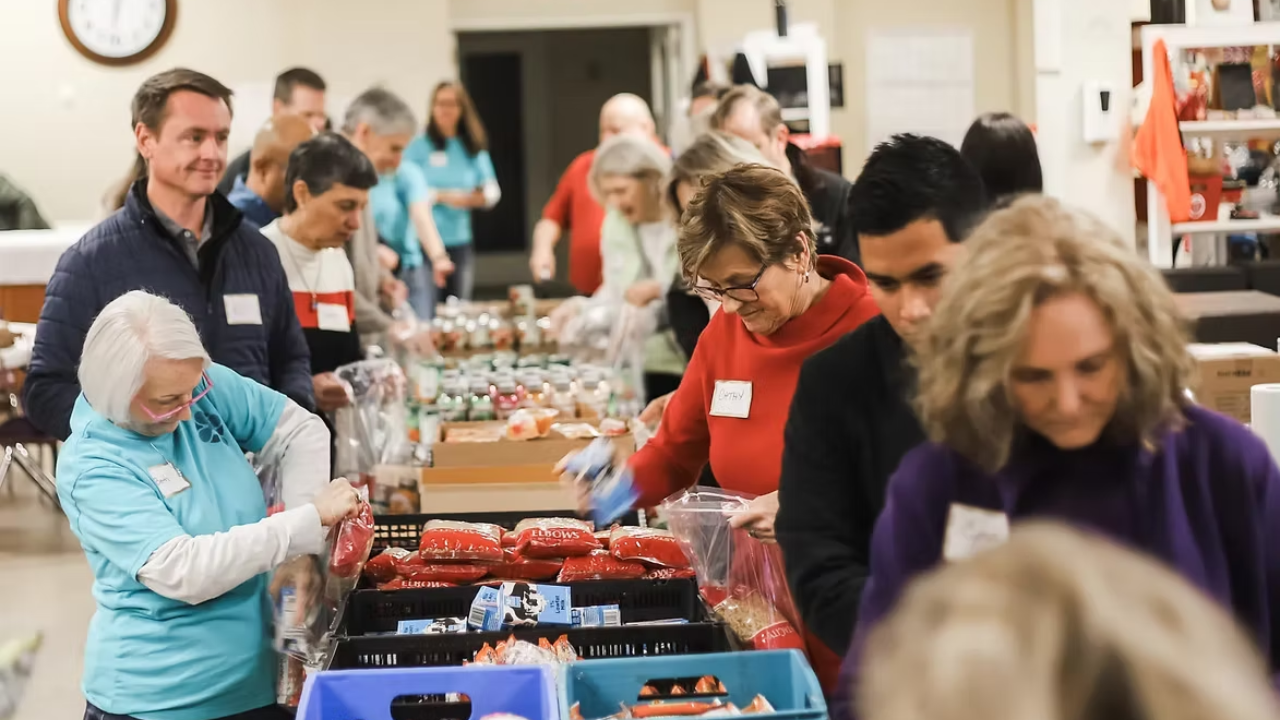
Let us be clear about the mechanics of the work. Feeding thousands of children across Metro Atlanta is not an exercise in romance. It is logistics. It is supply chains, volume discounts, pallet jacks, and volunteers arriving before sunrise to sort thousands of protein bars and fruit cups without crushing them.
Imagine standing in that warehouse on a Tuesday morning. The air smells of dust and plastic wrap. A retired postal worker is methodically counting juice boxes into crates, his movements practiced and rhythmic. Next to him, a college student is scanning expiration dates with the intensity of a surgeon. Nobody is speaking much. The work requires a strange, sacred quiet.
Every single box packed is a vote of confidence in a stranger's future.
As the program scaled, the geometry of need shifted. Metro Atlanta is a sprawling giant, a patchwork of glittering high-rises, sprawling subdivisions, and forgotten pockets where the economic tide somehow failed to rise. A backpack program that works in a tight-knit neighborhood behaves differently when stretched across multiple counties, navigating disparate school districts, differing bureaucratic hurdles, and thousands of distinct family stories.
To solve this, the organizers had to build a network. They partnered with local food banks, corporations looking for meaningful community outreach, and neighborhood associations that knew every alley and apartment complex. They learned how to buy in bulk. They learned which foods kids actually ate versus what adults hoped they would eat. (It turns out that instant oatmeal packets are universally beloved, while certain brands of healthy crackers are quietly abandoned at the bottom of lockers.)
The numbers grew because the trust grew.
Thousands of children now receive these weekend food packages across the metropolitan area. Thousands of families breathe a little easier on Friday nights. But the true metric of success is not found in the tonnage of food distributed or the square footage of the warehouse.
It is found in the attendance records. It is found in the teacher who notices that a particular student is finally able to finish a math test without putting their head down on the desk from sheer fatigue. It is found in the quiet preservation of childhood—allowing kids to worry about playground politics and spelling tests instead of where their next meal is coming from.
We live in an era obsessed with scale, with algorithms that optimize efficiency down to the microsecond. Yet the engine driving this entire transformation remains stubbornly human. It relies on the simple, radical act of noticing someone else's quiet struggle and deciding that it matters to you.
The ten backpacks from 2017 are long gone, worn out and discarded years ago.
Their descendants are everywhere now. Stacked neatly in crates, sliding across assembly lines, sliding into lockers, waiting for the bell to ring and the weekend to begin. They are silent monuments to what happens when ordinary people decide that hunger in their backyard is unacceptable, one canvas zipper at a time.