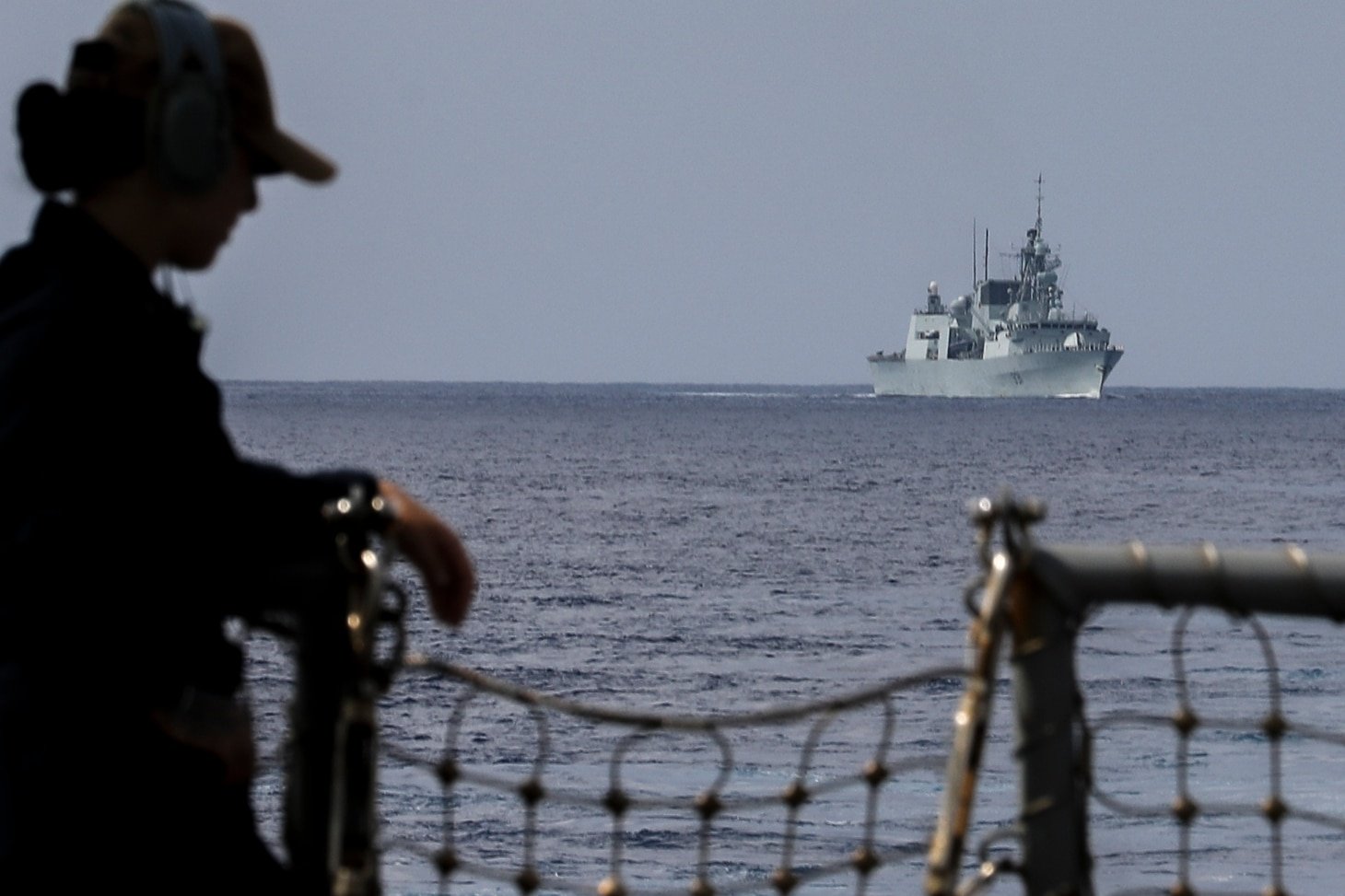
Japan just did something it hasn't done in decades. By sending the destroyer Sazanami through the Taiwan Strait, Tokyo didn't just sail a ship from point A to point B. It signaled a massive shift in its regional security posture. Beijing noticed. They didn't just notice; they "slammed" the move with the kind of rhetorical fire we usually see reserved for US freedom of navigation operations. This isn't just about water. It's about a "red line" that China claims is being crossed by a neighbor it already views with historical suspicion.
The timing is everything. You've got to look at the context of the last few months to understand why this specific transit caused such a localized earthquake in diplomacy. China has been increasing its own military presence around Japan’s southwestern islands. Now, Tokyo is pushing back. It's a high-stakes game of chicken in one of the most volatile waterways on the planet.
Why the Sazanami transit changed the game
For years, Japan played it safe. They avoided sending Maritime Self-Defense Force vessels through the Strait to avoid poking the dragon. That's over now. The Sazanami’s passage, accompanied by vessels from Australia and New Zealand, wasn't an accident. It was a coordinated message. Beijing views the Taiwan Strait as its internal waters, or at least a zone where it should have total control. International law says otherwise. Most of the world sees it as international waters where high-seas freedoms apply.
When Japan joins this club, it changes the math for China. It’s no longer just "the Americans" making a point. It’s a regional coalition. Lin Jian, the Chinese Foreign Ministry spokesperson, made it clear that China is "extremely vigilant about Japan’s political intentions." That’s code for: we think you’re helping the US contain us.
The red line that keeps moving
China’s "red line" regarding Taiwan is the most documented boundary in modern geopolitics. But what does it actually mean in 2026? To Beijing, the Taiwan Strait is a core interest. They argue that any military presence there by "external forces"—and they now include Japan in that category—is a violation of sovereignty.
You’ll hear officials in Beijing talk about the 1972 China-Japan Joint Communique. They claim Japan is breaking the spirit of that agreement. Japan’s perspective is simpler. They see China’s recent incursions into Japanese airspace as the real violation. Remember the Chinese Y-9 electronic warfare aircraft that entered Japanese airspace near the Danjo Islands recently? Tokyo does. They see the Sazanami transit as a "tit-for-tat" that’s long overdue.
Breaking down the military friction
It isn't just talk. The hardware involved matters.
- The Sazanami: A Takanami-class destroyer. It’s a serious piece of kit designed for anti-submarine warfare and surface strikes.
- The Liaoning: China’s aircraft carrier. It recently sailed between Taiwan and Japan’s Yonaguni Island.
- The Airspace: Frequent scrambles by Japanese F-15s against Chinese bombers.
The friction is constant. When Japan sails through the Strait, they’re telling Beijing that the "status quo" they keep talking about has already been broken by Chinese expansionism. It's a cycle of provocation and response that doesn't have an obvious off-ramp.
Japan is tired of being the quiet neighbor
If you've followed Japanese politics under the current administration, you know the "pacifist" label is getting thinner by the day. Tokyo is doubling its defense budget. They're buying Tomahawk missiles. They're turning islands like Ishigaki into fortresses.
The Sazanami transit is the latest piece of this puzzle. Japan realizes that if something happens in the Taiwan Strait, they're involved whether they like it or not. The northernmost part of Taiwan is barely 100 kilometers from Japanese territory. "A Taiwan contingency is a Japan contingency," the late Shinzo Abe famously said. Tokyo is finally acting like they believe it.
Beijing’s anger stems from the fact that they can no longer isolate Taiwan. If Japan, Australia, and New Zealand are all willing to sail through the Strait together, the "internal matter" argument starts to look very weak on the global stage. It’s about internationalizing a conflict that China wants to keep behind closed doors.
What this means for trade and stability
The Taiwan Strait is a highway for global trade. Huge amounts of the world’s container ships pass through here. If this area becomes a permanent military flashpoint, insurance rates for shipping go up. Supply chains for semiconductors get jittery.
China’s warnings aren't just about military pride. They’re a threat of escalation that could include economic coercion. We’ve seen it before with Lotte in South Korea or seafood bans against Japan. But Japan seems to have calculated that the risk of silence is now higher than the risk of a trade spat. Honestly, they might be right. If you let a neighbor redefine international boundaries without a peep, don't be surprised when they're standing in your front yard.
The US role in the background
Washington didn't lead this specific transit, but you can bet they were cheering from the sidelines. The US strategy is to build a "lattice" of alliances. Instead of a "hub and spoke" where everything goes through the US, they want Japan and Australia to work together directly.
This transit is the "lattice" in action. By coordinating with Canberra and Wellington, Tokyo showed that it can lead regional security initiatives. This is exactly what Beijing fears most: a united front of middle powers that don't need a direct order from the White House to stand up for "rules-based order."
Misconceptions about the transit
A lot of people think this is a prelude to war. It's probably the opposite. In the warped logic of deterrence, you have to show you're willing to fight to ensure you don't have to. Japan is showing teeth. It’s a signal that the "gray zone" tactics China uses—like constant coast guard patrols and airspace violations—will be met with mirror-image actions.
Moving forward in a tense region
Don't expect Beijing to quiet down. Expect more "drills" near Okinawa. Expect more heated press conferences. But also watch Japan’s next move. If they make these transits a regular occurrence, the "red line" becomes a blur.
The reality is that Japan has fundamentally changed its stance on regional security. You should pay attention to how other regional players, like the Philippines or Vietnam, react to this. If they follow Japan’s lead, the Taiwan Strait becomes a very crowded place for the People's Liberation Army Navy.
Keep an eye on the upcoming bilateral meetings between Tokyo and Beijing. If the tone remains this sharp, we’re looking at a multi-year deep freeze in relations. You don't "slam" a neighbor one day and go back to business as usual the next. Japan has picked a side. Now they have to live with the consequences of being a front-line state.
Watch the ship movements. Watch the defense white papers. The Sazanami wasn't just a ship; it was a policy shift in motion.