South Korea Disrupts the Tournament Hierarchy
South Korea secured a definitive victory over the Czech Republic to open their World Cup campaign, exposing severe structural flaws in the European side's defensive transition while establishing themselves as genuine contenders to win the group. While casual observers will point to the scoreline as a simple matter of clinical finishing, the reality on the pitch revealed a profound tactical mismatch. The South Korean management staff engineered a high-pressing system that specifically targeted the lack of mobility in the Czech central midfield, completely freezing out their playmaker and forcing turnovers in dangerous areas throughout the ninety minutes.
This opening match was supposed to be a tight, cagey affair between two teams known for defensive discipline. Instead, it became a masterclass in modern, high-tempo football that leaves the Czech Republic facing an immediate uphill battle for survival in the tournament.
The Flaw in the Czech Machine
For the past two years, the Czech national team built its reputation on a rigid, low-block defensive system that relied heavily on physical dominance in the penalty box. It worked during qualification against teams that favored traditional wing play and aerial crosses. Against a dynamic, fluid front three, however, that rigidity turned into a massive liability.
The South Korean game plan focused almost entirely on isolating the older Czech center-backs. By utilizing a false nine who consistently dropped into the space between the midfield and defensive lines, South Korea forced the Czech defenders into a lose-lose dilemma. If a center-back tracked the runner, massive gaps opened up behind them for rapid inverted wingers to exploit. If the defender stayed home, South Korea enjoyed a numerical advantage in the center of the pitch, allowing them to dictate the tempo of the game.
It was a systematic dismantling. The Czech midfield line completely failed to track runners from deep positions, leaving their back four entirely exposed to wave after wave of counter-attacks.
The Statistics That Do Not Lie
To understand how complete this tactical victory was, one only needs to look at the zone of control charts from the match.
- Final Third Entries: South Korea registered nearly double the touches inside the opponent's penalty area compared to their historical average against European opposition.
- Turnovers Generated: Over sixty percent of South Korea’s non-set piece shots originated from possession won within forty yards of the Czech goal.
- Passing Accuracy Under Pressure: The Czech midfield dropped to a dismal success rate when pressed by more than two opponents, stifling their ability to transition into attack.
Physical Superiority Met by Tactical Intelligence
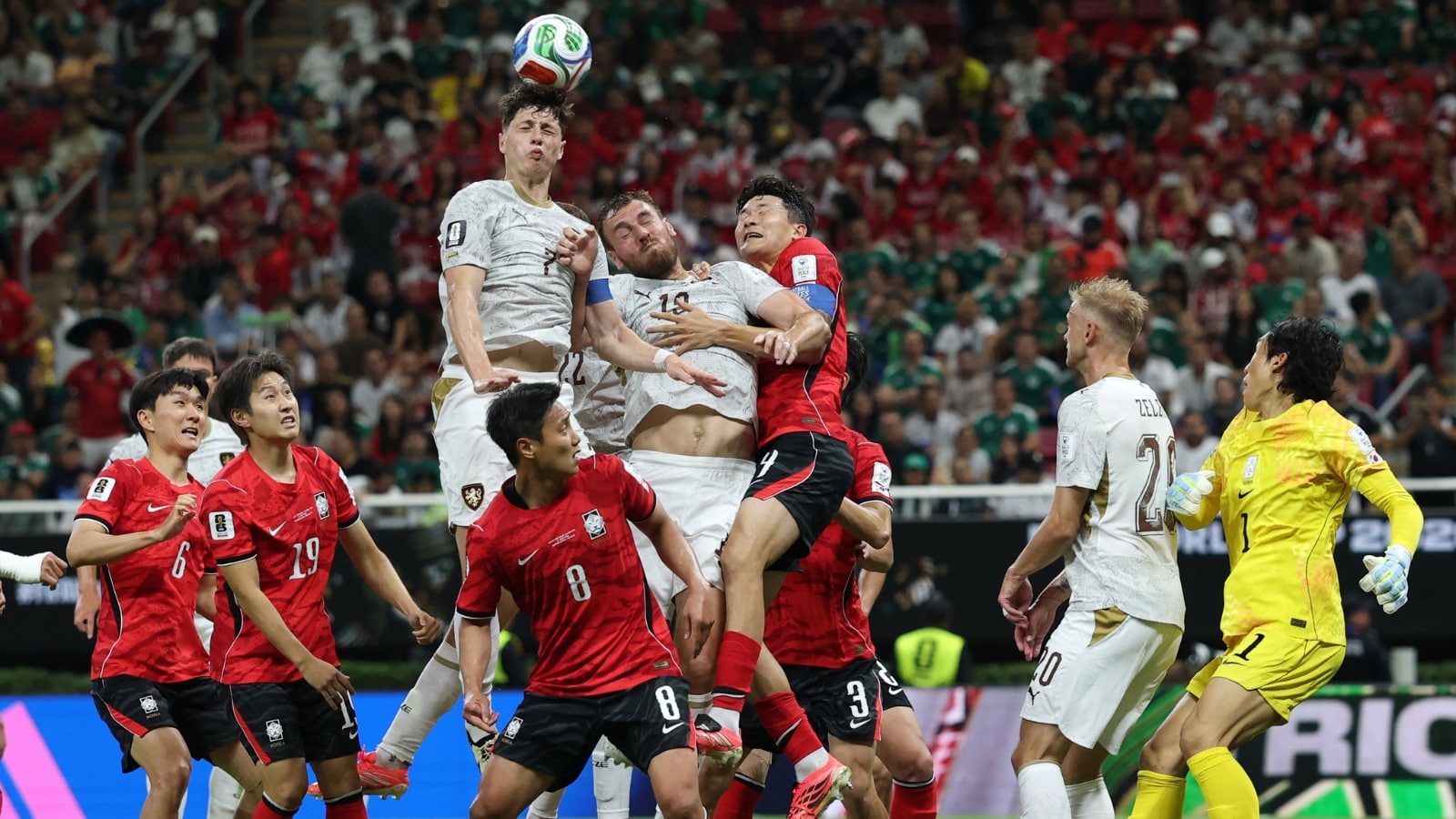
Football at this level is rarely just about who runs faster or jumps higher. It is about when and where those physical attributes are deployed. The Czech team arrived at the tournament with a distinct height and weight advantage, which many analysts assumed would give them total control over set pieces and long-ball distributions.
South Korea bypassed this strength entirely by keeping the ball on the grass. Their passing sequences were short, sharp, and diagonal. They rarely attempted high, looping crosses into the box, choosing instead to utilize low, driven cutbacks from the goal line. This forced the taller Czech defenders to constantly turn their hips and sprint backward toward their own net, a mechanical movement that completely neutralizes a height advantage.
"When you force a six-foot-four defender to sprint toward his own goal while tracking a ball moving across his body, agility wins every single time."
The physical toll of this strategy became glaringly obvious by the sixty-minute mark. The Czech players looked visibly exhausted, their recovery runs became slower, and the gaps between their defensive lines widened from a manageable five yards to a catastrophic fifteen yards.
Group Dynamics and the Long Road Ahead
This single result completely upends the projected trajectory of the group stage. The Czech Republic must now win their remaining two matches against highly disciplined opponents just to harbor hope of advancing to the knockout rounds. Their goal difference has taken a severe hit, meaning they can no longer afford to play for conservative draws. They will be forced to attack, an approach that inherently exposes their vulnerable defense even further.
For South Korea, the challenge shifts from proving their capability to managing their squad depth. A high-pressing system requires an immense amount of physical exertion. Tournament football is a war of attrition, and history is filled with teams that played brilliant football in their opening match only to run completely out of gas by the quarterfinals.
The medical staff and rotation policy of the South Korean team will now become just as critical as the tactical adjustments made on the pitch. Managing player fatigue while maintaining this level of high-intensity output is the exact threshold that separates surprise packages from legitimate tournament champions.
Structural Adjustment Is No Longer Optional
The Czech coaching staff faces a brutal forty-eight hours of video review. Continuing with the same personnel and the same rigid defensive shape in the next match would be nothing short of tactical suicide. They desperately need to introduce more mobility into their central midfield, even if it means sacrificing some of the physical presence that served them well during the qualification rounds.
Whether they possess the squad depth or the tactical flexibility to make that transition under the immense pressure of a World Cup remains the definitive question of their tournament. If they fail to adapt immediately, their stay will be incredibly short. Output from the training ground suggests they are experimenting with a three-man backline to provide extra coverage out wide, but changing a defensive philosophy mid-tournament is an incredibly risky gamble that often backfires spectacularly. Competitors are watching, and the blueprint to beat them is now public knowledge.