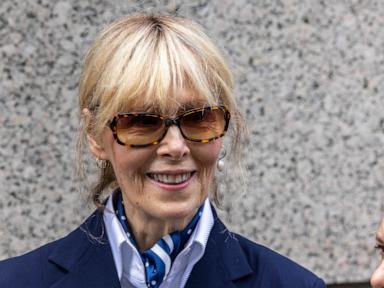
Donald Trump finally ran out of road on his first major civil judgment. The Supreme Court looked at his appeal regarding the $5 million E. Jean Carroll verdict and simply said no. They didn't offer a grand explanation. They didn't drop a massive, sweeping opinion on executive power. They just issued a brief order, noted no public dissents, and moved on. It means the 2023 jury decision stands. Trump has to pay.
This wasn't supposed to happen if you listened to his legal team over the last few years. They fought this battle across multiple fronts, arguing everything from unfair evidentiary rulings to absolute presidential immunity. Yet the nation's highest court, packed with three justices Trump himself appointed, decided this specific fight wasn't worth their time. It's a massive moment in a legal saga that has stretched over seven years. It shows that even a sitting president faces a hard ceiling when it comes to personal civil liability.
For E. Jean Carroll, the victory represents an ultimate validation. Her lawyer, Roberta Kaplan, stated bluntly that this ruling ends his quest to avoid accountability. Trump, expectedly, took to Truth Social to call it a fake case and expressed surprise that the court passed on it. But spin doesn't alter the legal reality. The $5 million judgment is locked in. Let's break down how we got here, why the defense collapsed, and what this actually means for the much larger $83.3 million judgment still hanging in the balance.
The Road to the Five Million Dollar Verdict
This entire battle started back in 2019. Carroll published an excerpt from her memoir, alleging that Trump assaulted her in a dressing room at the luxury department store Bergdorf Goodman during the mid-1990s. Trump didn't just deny it. He went on the offensive, claiming she wasn't his type and accusing her of inventing the story to drive book sales. That initial round of insults triggered her first defamation lawsuit.
Things changed drastically in 2022 when New York passed the Adult Survivors Act. That law created a temporary, one-year window for victims of sexual assault to file civil lawsuits, even if the statute of limitations had expired decades ago. Carroll didn't hesitate. She filed a second lawsuit, adding a claim for battery alongside a fresh claim for defamation based on statements Trump made after leaving office.
The case went to trial in Manhattan federal court in May 2023. Trump chose not to testify or even show up in the courtroom, a move that backfired spectacularly with the jury. Carroll gave detailed testimony about the encounter, describing how a friendly interaction quickly turned into a violent assault. Her legal team also brought in two other women, Jessica Leeds and Natasha Stoynoff, who testified about their own experiences with alleged prior misconduct by Trump. After a two-week trial, the anonymous jury found Trump liable for sexual abuse and defamation. They hit him with a $5 million bill.
Why Trump's Legal Strategy Failed at the Supreme Court
Trump's lawyers built their Supreme Court appeal on the idea that the trial court judge, Lewis Kaplan, botched the rules of evidence. They argued that letting those other two accusers testify was highly inflammatory and inherently unfair. They claimed it poisoned the well, making it impossible for Trump to get a fair shake from a New York jury.
The Supreme Court didn't buy it. Federal rules of evidence actually give trial judges a lot of leeway to admit testimony about prior alleged behavior in sexual misconduct cases. Carroll's legal team argued fiercely that Judge Kaplan followed standard legal procedures used across the country. By ignoring the appeal, the Supreme Court basically signaled that the trial court stayed within the lines of standard legal practice.
You also have to look at the timing. This specific verdict came down before Trump reclaimed the White House. While his team tried to frame the ongoing litigation as a distraction from his presidential duties, the Supreme Court clearly didn't see a compelling constitutional reason to intervene in a personal civil matter that had already been fully litigated and reviewed by a federal appeals court. The system worked exactly the way it's designed to work, much to Trump's annoyance.
The Eighty Three Million Dollar Problem Looming Next
If you think this is the end of the legal drama, you're missing the bigger picture. The $5 million verdict is pocket change compared to what's coming next. In January 2024, a completely separate jury looked at the original 2019 defamation claims—the ones stemming from Trump's initial response while he was sitting in the Oval Office. That jury hit him with a stunning $83.3 million judgment.
That massive number was meant to act as a deterrent. The jury wanted to punish Trump for using the bully pulpit of the presidency to trash a private citizen's reputation. Right now, that judgment is paused. A federal appeals court ruled in May 2026 that Trump doesn't have to pay out that $83.3 million until his appeals are completely exhausted, which means that case is also likely heading to the Supreme Court eventually.
Trump's defense team has a totally different card to play in that second case. They're relying heavily on the concept of absolute presidential immunity. They argue that because Trump made those statements while acting as president, he can't be sued for them. The Supreme Court already granted him broad immunity from criminal prosecution in 2024, so his team feels much better about their chances there. However, civil immunity for personal conduct is a much tougher sell, and this week's rejection shows the justices aren't eager to bail him out of personal legal jams.
The Counteroffensive and the Perjury Investigation
Trump isn't taking this sitting down. His administration has turned to a aggressive new tactic. In May 2026, Trump's Justice Department opened a criminal investigation into E. Jean Carroll. Reports indicate the probe is looking directly at whether Carroll committed perjury during her testimony in both civil trials.
This is a wild escalation. It marks the first time the federal government's criminal investigative powers have been deployed directly against a civil litigant who won a judgment against the president. Trump's allies call the civil cases a weaponized political witch hunt. Carroll's supporters see the new DOJ probe as pure retaliation, an abuse of power meant to intimidate a successful plaintiff.
This investigation creates a messy dual reality. On one hand, Carroll has an absolute, unappealable civil victory affirming that Trump assaulted and defamed her. On the other hand, she now faces federal prosecutors scrutinizing her past statements under oath. It ensures that even though the Supreme Court closed the door on the $5 million appeal, the broader conflict remains white-hot.
What Needs to Happen Next for Both Sides
The legal chess match enters a critical execution phase right now. Neither side can afford to sit back. The Supreme Court's refusal changes the leverage completely.
For Carroll's legal team, the priority shifts to collection. Trump has successfully dodged or delayed massive court judgments in the past, including a New York civil fraud penalty that was eventually thrown out on appeal. Carroll's team must move aggressively to secure the $5 million. They already secured a requirement forcing Trump to increase his appeal bond by millions to cover accruing interest while the appeals played out. Now, they need to convert that bond into cash.
For Trump's defense team, the focus turns entirely to the $83.3 million appeal. They need to fine-tune their presidential immunity arguments to avoid another outright rejection from the high court. They also have to manage the political fallout. Being a sitting president who is legally designated a sexual abuser by a finalized court order isn't a great look, even for a politician who has survived countless scandals.
The next few months will show if Carroll actually gets paid, or if the administration's new perjury probe manages to disrupt her historic legal victories. The high court washed its hands of the first act, but the final curtain is nowhere near falling.