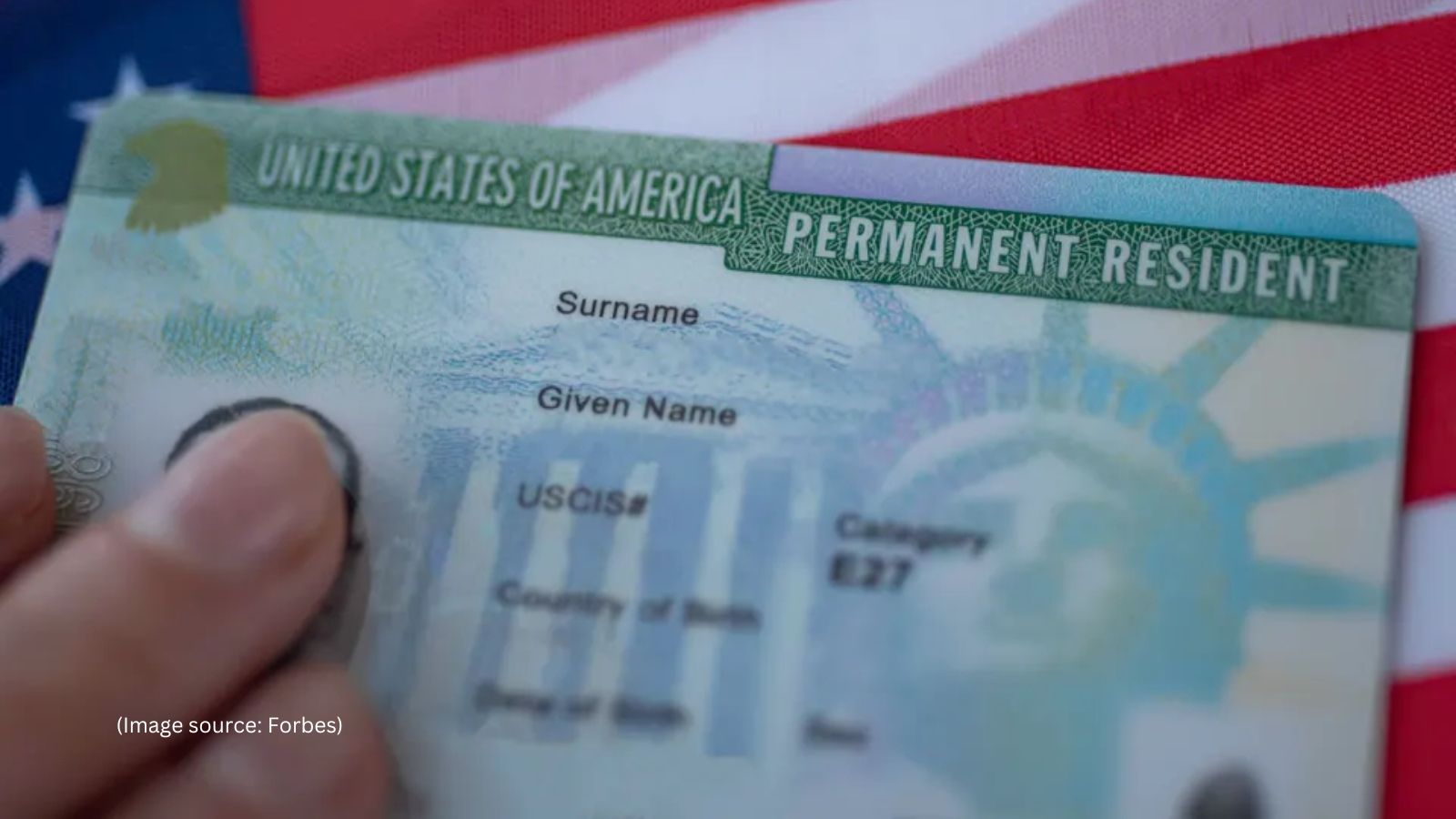
The media freakout over the Supreme Court’s tightening of deportation rules for green card holders is missing the entire point.
If you read the standard legal blogs or mainstream news updates, the narrative is painfully predictable: an aggressive, conservative court is stripped-down due process, creating a terrifying dragnet that will expel long-term legal residents for minor infractions. It is framed as a tragedy of judicial overreach.
That narrative is completely wrong. It is lazy consensus built on a fundamental misunderstanding of how administrative law interacts with real-world immigration incentives.
By streamlining the removal process for permanent residents who commit specific crimes, the Supreme Court didn't destroy the immigration system. It cleared out a massive legal loophole that was actively dragging down the economic and political standing of every single law-abiding immigrant in America.
The Myth of the Vulnerable Model Citizen
The core fallacy of the anti-deportation argument relies on a fictional archetype: the permanent resident who gets a single, minor infraction—say, turnstile jumping or a decades-old misdemeanor—and is instantly snatched from their family by immigration authorities.
Let's look at how the categorical approach actually works under the Immigration and Nationality Act (INA). To trigger deportation proceedings for criminal activity, a permanent resident must typically commit an "aggravated felony" or a "crime involving moral turpitude" (CIMT). These are not administrative oopsies. We are talking about theft, fraud over $10,000, violent assault, or drug trafficking.
For years, immigration defense attorneys leveraged a hyper-technical reading of state vs. federal statutes to get their clients off. If a state law defined "burglary" even slightly more broadly than the generic federal definition, the conviction suddenly didn't count for immigration purposes. A non-citizen could commit a serious break-in, plead guilty in state court, and completely evade immigration consequences because of a textual mismatch.
The Supreme Court didn't change the underlying crimes. It closed the semantic escape hatches.
The Hidden Cost of Legal Loopholes
When the legal system makes it functionally impossible to deport non-citizens who commit serious crimes, it creates a massive negative externality for the rest of the immigrant population. I have spent years working alongside corporate immigration structures and policy think tanks, and the dynamic is always the same: public trust is a finite resource.
When a small percentage of green card holders exploit statutory ambiguities to stay in the country after committing serious offenses, it erodes the political capital required to maintain high levels of legal immigration. It gives restrictionist politicians the exact ammunition they need to demand lower caps on H-1B visas, longer wait times for green cards, and harsher scrutiny during the naturalization process.
By forcing a cleaner, more predictable standard for criminal removal, the Court is separating the wheat from the chaff. It ensures that the millions of legal immigrants who arrive, work hard, and follow the law aren't painted with the same brush as those who treat the legal framework as a suggestion.
The Exploitation of Administrative Gridlock
Let’s talk about the administrative state. The Executive Office for Immigration Review (EOIR) is currently drowning in a backlog of over 3.5 million cases.
Every time a technicality allows a criminal alien to stretch out a deportation fight through years of appeals and motions to reopen, they are consuming precious judicial resources. Who pays the price for that gridlock?
- The tech worker waiting five years for an adjustment of status interview.
- The high-skilled engineer whose spouse is trapped in administrative processing.
- The international business trying to legally onboard top global talent.
The competitor articles lament the loss of "discretionary relief" or the narrowing of paths to cancel removal. They ignore the reality that a system that tries to give every single criminal offender a bespoke, ten-year legal odyssey will inevitably collapse under its own weight, punishing law-abiding applicants with infinite delays.
Dismantling the Premium Questions
The public is asking the wrong questions about this ruling because they’ve been fed a diet of alarmist headlines. Let's fix the premise of these concerns.
Does this mean a green card offers zero protection?
A green card offers massive protection. It gives you the right to live, work, and build a life in the United States permanently—provided you do not violate the social contract. A green card is not a shield against accountability. If a naturalized citizen can face prison time for fraud, a permanent resident should expect that serious criminal convictions carry immigration consequences. The protection is conditional on basic civic compliance.
Won't this tear families apart?
This is the emotional shield used to deflect from statutory realities. Yes, deportation separates families. But so does going to a state penitentiary for five years. The legal system routinely separates individuals from their families when they commit serious crimes against the community. Framing this exclusively as an immigration tragedy ignores the victims of the underlying offenses that triggered the deportation process in the first place.
The Strategic Playbook for Global Mobility
If you are an employer managing international talent, or an individual navigating the immigration system, stop reading the panic pieces. The operational reality has changed, and you need to adapt.
First, the era of the "safe plea" is over. Historically, criminal defense lawyers would advise non-citizen clients to plead guilty to a lesser state charge, assuming it wouldn't flag the Department of Homeland Security. With the Supreme Court standardizing the interpretation of these crimes, any intersection with the criminal justice system requires an immediate consultation with an immigration expert who understands federal immigration consequences, not just local criminal law.
Second, speed up naturalization. The absolute best way to insulate oneself from changes in deportation rules is to move from a green card to citizenship the exact moment eligibility opens. Too many permanent residents treat citizenship as an optional luxury. It is an insurance policy.
The Supreme Court didn't break the system. It restored an obvious principle: permanent residency in the United States is a privilege, not an unconditional right. Clean up your record, understand the rules, and stop defending the loopholes that threaten the entire legal immigration architecture.