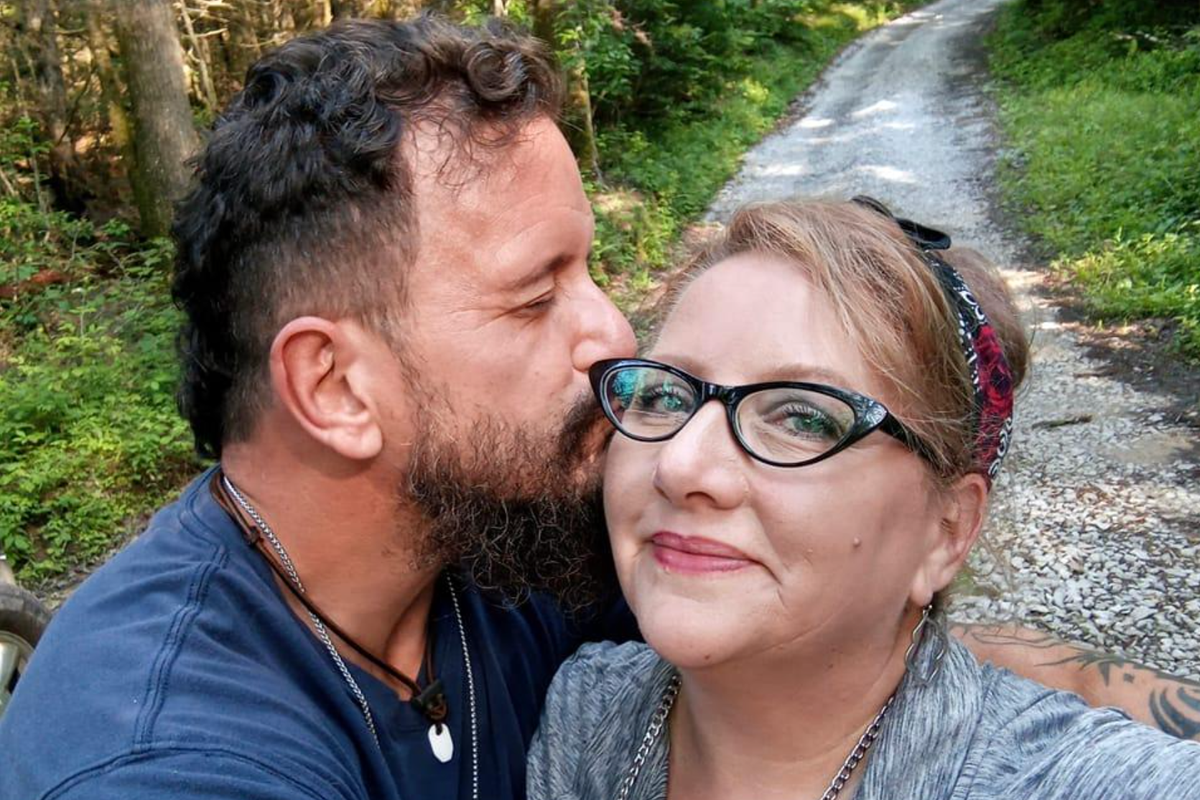
The odometer on a modern motorhome doesn’t just track miles. It counts heartbeats. It tallies the number of times you woke up to a sunrise over the Badlands or the smell of salt air in a hidden Oregon cove. For Adam and Michelle, that mechanical tally was supposed to be a testament to a life reclaimed from the gray, fluorescent hum of the nine-to-five. They weren't just travelers. They were storytellers, documenting a nomadic dream for a digital audience that watched from cubicles, living vicariously through every pixelated sunset.
Then the engine stopped.
The crime scene at the Kleber Wildlife Management Area in Kentucky didn't look like a set piece from a thriller. There was no screeching score, no dramatic lighting. Just a quiet, white RV parked against a backdrop of dense greenery, looking remarkably ordinary. Inside, however, the narrative had been violently rewritten. The couple, known for their vibrant "RV life" blog, were found dead from gunshot wounds.
Silence.
It is the one thing no travel vlogger ever records. They record the crunch of gravel, the sizzle of campfire bacon, and the wind whipping through the pines. But the silence of a campsite after the unthinkable happens is a weight that facts alone cannot carry.
The Illusion of the Open Road
We have been sold a specific brand of freedom. It looks like a Sprinter van parked on a cliffside. It feels like total autonomy. We call it "boondocking"—the act of camping on public lands without hookups, water, or electricity. It is the purest form of the lifestyle, a deliberate disconnection from the grid to reconnect with the self.
But disconnection has a shadow.
When you strip away the walls of a traditional home, you also strip away the layers of communal security we take for granted. There are no neighbors through a drywall partition. There are no streetlights. In the deep woods of Kentucky, the darkness isn't just an absence of light; it is a physical presence. For Adam and Michelle, that darkness became a trap.
Think about the vulnerability of a motorhome. It is a house made of fiberglass and aluminum, perched on four rubber tires. It offers the psychological comfort of a bedroom, but the structural integrity of a soda can. To an intruder, it is a locked box with a prize inside. To the occupants, it is a sanctuary that can be breached in seconds.
The Digital Breadcrumb Trail
There is a cruel irony in the way we share our lives today. To sustain a blog about "living free," you must constantly tether yourself to the world you claim to have left behind. You post your location. You tag your favorite hidden spots. You share your itinerary with thousands of strangers to "foster" a sense of community.
Consider the digital footprint of a nomad. Every "like" is a breadcrumb. Every "share" is a beacon.
While there is no evidence that Adam and Michelle were targeted specifically because of their online presence, the intersection of high-profile travel and isolated living creates a unique set of stakes. You are inviting the world into your living room, even when that living room is parked in a desolate clearing five miles from the nearest paved road. The very tools used to celebrate their freedom may have, in a broader sense, defined the parameters of their risk.
The Mechanics of a Mystery
The investigation moved with the slow, grinding precision of rural justice. Shell casings. Ballistics. The forensic mapping of a confined space. When a shooting occurs inside an RV, the physics are intimate. There is no room to run. No hallway to retreat down.
Investigators faced a void. There were no witnesses but the trees. In these sprawling wildlife management areas, the "neighbors" are often miles away, and the sound of a gunshot can easily be mistaken for a backfiring engine or a hunter in the distance.
The horror of this event lies in the subversion of the "safe space." We are wired to feel most secure when we are tucked into our beds, surrounded by our belongings. For the RV community, that bed moves, but the feeling of safety remains. That sense of security is a fragile thing. It shattered the moment the first round was fired.
A Community in Mourning and Fear
The "Van Life" community isn't just a collection of hashtags. It is a sprawling, loosely knit family of retirees, young adventurers, and digital nomads who meet at gas stations and exchange tips on solar panels and water filtration. When news of the murders broke, the shockwaves traveled through every caravan and campground in the country.
The questions started as whispers in forums and grew into a roar of anxiety.
Was it a random act of violence?
Was it a robbery gone wrong?
Are we being watched?
The truth is often more terrifying than a calculated plot: sometimes, the world is simply chaotic. We want there to be a reason. We want to find a lapse in judgment—a door left unlocked, a location shared too soon—because if there is a reason, we can avoid it. We can convince ourselves that it wouldn't happen to us.
But if it was truly random, then the road is no longer a path to freedom. It’s a gauntlet.
The Weight of the Invisible Stakes
We rarely talk about the psychological cost of the nomadic dream. We talk about the "holistic" benefits of nature and the "synergy" of work-life balance on the road. We don't talk about the hyper-vigilance.
Every snap of a twig outside the window at 3:00 AM becomes a potential threat. Every slow-moving truck that passes the campsite is scrutinized. For most, this is a low-level hum of background noise that eventually fades. But for those who have followed this story, that hum has become a deafening siren.
The stakes are not just about personal safety. They are about the viability of an ideal. If we cannot be safe in the wilderness, then the wilderness is no longer a refuge; it’s a theater of war.
The "invisible stakes" here are the loss of trust. Trust in the strangers we meet on the trail. Trust in the safety of our public lands. Trust in the idea that we can leave the "real world" behind without bringing its violence along for the ride.
The Final Frame
The blog remains. The photos of Adam and Michelle, smiling in front of sunsets, are still there, frozen in digital amber. They look happy. They look like they found exactly what they were looking for.
In one of their final posts, the light hits the side of the RV just right, turning the white metal into gold. It is a beautiful, curated moment. It represents the pinnacle of the life they chose—a life defined by movement, by the refusal to stay put, by the search for something more meaningful than a cubicle wall.
That image is what they wanted us to see.
The reality left behind in Kentucky is the image we can't look away from. It is the unfinished story. It is the reminder that no matter how far you drive, you can never truly outrun the human condition. The road doesn't end at the horizon. Sometimes, it ends in a quiet clearing, under the indifferent canopy of the Kentucky woods, where the only thing left to record is the wind.
The engine is off. The sun has gone down. And for two people who spent their lives looking for the perfect view, the screen has finally gone black.