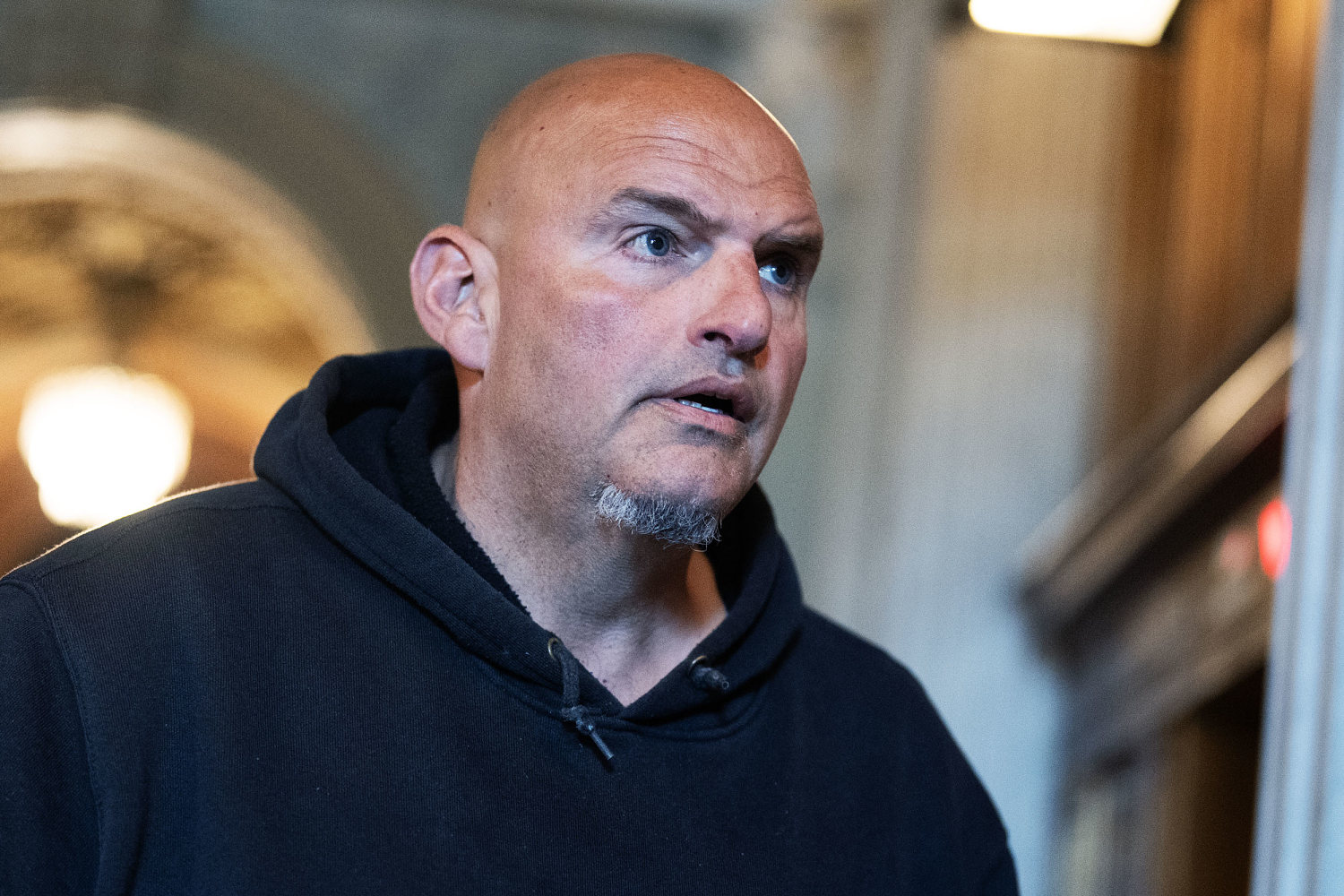
The hoodie is gone, replaced by a suit jacket that never quite looks settled on his six-foot-eight frame, but the posture remains entirely unchanged. John Fetterman sits in the glare of the Capitol lights, leaning forward with his elbows on the table, offering a look that says he would rather be literally anywhere else in the world. A microphone picks up the heavy cadence of his voice, shaped by stroke recovery and a stubborn refusal to smooth away his own rough edges.
Once again, he has to answer the question. It is a question born of a fractured political era where loyalty is measured in tribal blood oaths and any deviation from the orthodox church is treated as apostasy. Expanding on this idea, you can also read: Inside the Secretive DHS Voter Roll Sweep That Sparked a Whistleblower Revolt.
Are you going to cross the aisle? Are you joining them?
Fetterman shakes his head. He offers a dry, flat dismissal that leaves no room for breathless cable news speculation. He is not going to be a Republican. He is not running away from the party card in his wallet. But beneath that simple declaration lies a much stranger, much more uncomfortable truth for modern American politics: he refuses to fit neatly into the box that anyone has built for him. Observers at BBC News have shared their thoughts on this trend.
To understand why this matters, you have to look past the talking points and step into the humid, post-industrial grit of western Pennsylvania towns where the factories rusted out decades ago and the people stopped believing in politicians long before it became fashionable.
Imagine standing on a street corner in Braddock during a winter dusk. The air tastes of sulfur and old coal smoke, even though the mills have quieted down. The houses are leaning, tired, wearing their decades like bruised armor. Down here, nobody gives a single damn about Senate procedure, procedural filibusters, or the delicate etiquette of committee rooms. They care about whether their kids have shoes that don't leak and whether the local hospital is going to keep its emergency room open.
When Fetterman was mayor of that borough, he didn't govern from an ivory tower. He tattooed the dates of every murder that happened on his streets onto his arm. He lived the failure of the system up close, breathing the same air as men who watched their livelihoods vanish when the steel went overseas. That kind of background leaves a mark. It burns away the patience for academic debates that have nothing to do with rent.
So when he goes to Washington and starts voting against the grain of his party’s progressive wing—when he questions immigration policy, when he breaks ranks on energy production, when he stands shoulder-to-shoulder with Israel with an unyielding stubbornness that alienates the Twitter left—people panic. They look at him as a defecting soldier. They look for the betrayal.
They are missing the plot entirely.
Fetterman isn't shifting right. He is simply anchored to a different gravity.
Modern political polarization operates like a giant centrifuge. It spins faster and faster, hurling politicians outward toward the ideological extremes until they lose all contact with reality. If you move toward the center on even a single issue, the machine registers you as a traitor. It demands total conformity. It demands that you hate the people the party tells you to hate, and that you praise the policies the party tells you to praise, without hesitation, without a second thought.
John Fetterman looks at that machine and spits.
It is a posture that infuriates the architects of party discipline. During his recovery from the severe stroke that threatened to derail his career just as it was hitting the national stage, he had to relearn how to process language. He had to sit in quiet rooms and fight his own brain to form sentences. That kind of vulnerability changes a man. When you come back from the edge of losing everything, the petty tantrums of congressional cloakrooms lose their terror.
He doesn't care about the club rules because he never really wanted to be a card-carrying member of the club in the first place. He wanted to be a senator from Pennsylvania. There is a vast, continental divide between those two ambitions.
Consider what happens when a politician stops worrying about their next primary opponent. The entire ecosystem of modern campaigning is built on fear—fear of a primary challenge from the left, fear of a primary challenge from the right, fear of the donor class pulling their checks. That fear turns politicians into cowards who speak in focus-tested riddles.
Fetterman speaks like a guy talking across a diner booth over lukewarm coffee.
When asked about his refusal to switch parties, his answer is remarkably pedestrian because it is rooted in basic identity rather than high-flown strategy. He is a Democrat because, in his view, the Democratic Party is the only political vehicle that historically cared about whether working people had a fighting chance. But that doesn't mean he signed away his right to look at a bad idea and call it stupid.
This is the great fracture in our current political landscape. We have mistaken dissent for treason. We have engineered a culture where nuance is treated as a mortal sin. If you agree with your party ninety percent of the time but dare to disagree on the other ten percent, you are hunted down as an enemy within the gates.
Fetterman’s refusal to play that game is precisely why he drives both sides crazy. The right wants him to be a prodigal son who finally saw the light and crossed over to save them. The left wants him to fall in line, shut his mouth, and vote the party line without asking questions.
He refuses both roles.
He goes to the floor in his gym shorts and a hoodie. He calls out members of his own party when he thinks their priorities are out of touch with ordinary people. Then he turns around and votes for critical labor investments and social safety nets that make conservative ideologues froth at the mouth. It is erratic only if you view politics through the lens of a football game where you must root for laundry instead of outcomes.
There is a profound lesson in this stubborn independence, though it is one that Washington will likely reject.
The American electorate is exhausted. They are tired of watching politicians act like high school debaters scoring points while the bridges crumble and the grocery bills climb. They are tired of the performative outrage, the choreographed walkouts, the social media posturing designed to raise small-dollar donations from terrified retirees in suburban cul-de-sacs.
When a politician steps out of the matrix—even imperfectly, even clumsily—it draws a crowd because it looks like a human being.
Fetterman is not a political philosopher. He is not crafting a grand new ideology to save the republic. He is a guy from the Rust Belt who survived a physical catastrophe, walked into the most exclusive club in the world, and decided he was going to say whatever the hell he wanted to say.
The reporters keep asking him if he’s going to cross the aisle. They ask because they don't know how to categorize someone who doesn't march in lockstep. They want a neat label. They want a narrative arc that ends with a dramatic floor speech and a party switch.
They are looking at a man who is far too stubborn to give them the script they want. He is staying right where he is—awkward, loud, irritating to his allies, infuriating to his enemies, and anchored to a reality that Washington spends most of its time trying very hard to forget.
The cameras click. The microphones record every heavy, deliberate syllable. And somewhere out there in the quiet towns where the mills used to roar, someone watches the screen, nods once, and pours another cup of coffee.