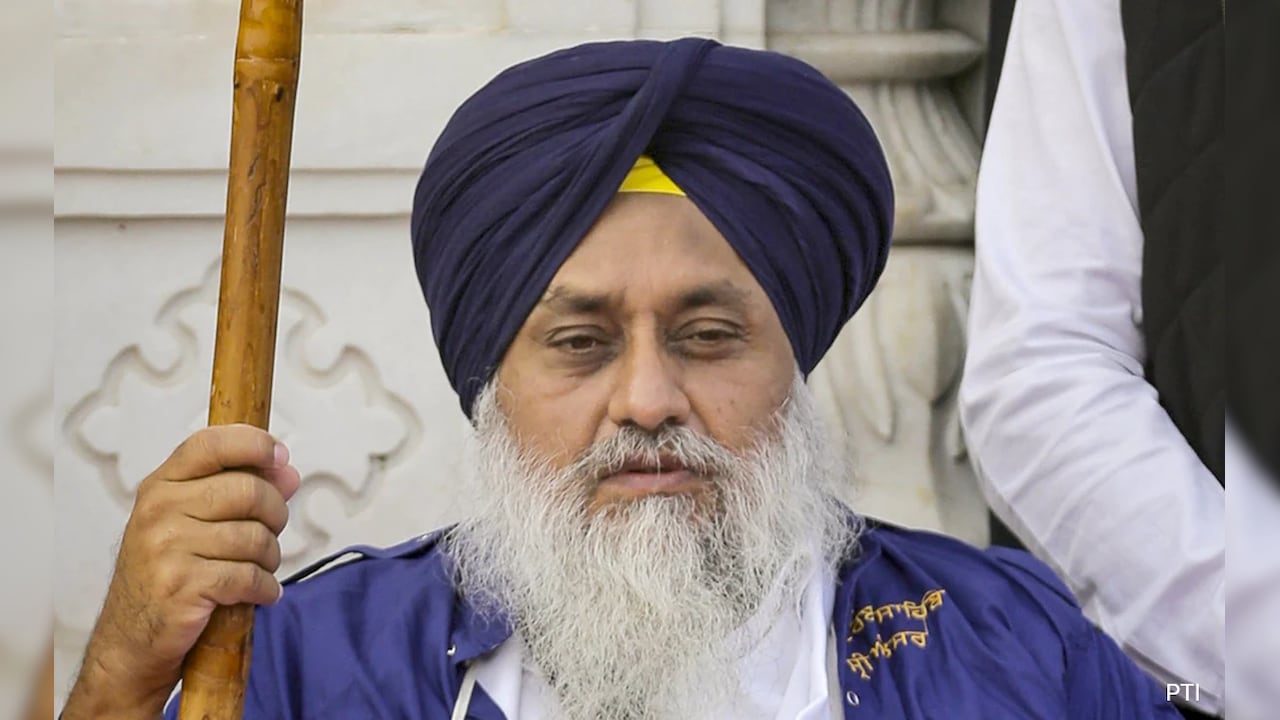
Political security architecture operates under a persistent illusion of absolute containment. When a public figure carrying high-tier protective detail is assaulted within a controlled religious precinct, the failure is rarely isolated to operational reaction time. Instead, it exposes deep structural flaws in how protection protocols interface with public-facing environments. The recent assault on Shiromani Akali Dal president Sukhbir Singh Badal at a gurdwara in Nanded, Maharashtra, alongside a prior assassination attempt at the Golden Temple in Amritsar, provides a stark clinical dataset on the systemic fragilities defining contemporary VIP protection in sacred spaces.
The Protocol Paradox of Sacred Precincts
High-tier security arrangements, such as the Z-plus framework assigned to prominent political figures, are engineered to mitigate quantified threat matrices involving transit routes, designated public appearances, and static addresses. However, these systems encounter a severe performance ceiling when deployed inside religious institutions.
The core operational friction points break down into three distinct variables:
- Access Symmetry: Religious sanctuaries are structurally designed to prioritize egalitarian entry, requiring security details to permit close physical proximity between the protectee and unknown individuals.
- Asset Integration: The presence of internal volunteers, or sewadars, who reside or work within these complexes for extended durations creates an insider threat vector that standard external threat intelligence struggles to map.
- Weaponization of Tradition: Sites of worship often involve traditional elements, such as ceremonial daggers or kirpans, which neutralize standard weapon-screening expectations through cultural exemption protocols.
When Jaspal Singh, an individual embedded as a volunteer within the Nanded gurdwara for two years, launched an assault using a traditional blade, he bypassed conventional perimeter defenses by leveraging time-acquired spatial legitimacy. This demonstrates that insider proximity reduces the reaction window of personal security officers to near-zero margins, regardless of the numerical strength of the escort detail.
Historical Residues and Contemporary Friction
The political longevity of dynastic leadership in regions marked by historical trauma carries an inherent risk premium. The governance tenure of the Shiromani Akali Dal between 2007 and 2017 generated institutional grievances and socio-political friction that continue to reverberate through splintered ideological factions.
The cost function of past political decisions manifests decades later as acute personal vulnerability. While formal investigations by state law enforcement and anti-terrorism squads attempt to isolate immediate catalysts—ranging from localized grievances regarding public policy to broader ideological opposition—the structural reality remains unchanged. Leaders operating against a backdrop of historical accountability are subjected to continuous threat multiplication. The convergence of historical policy backlash and open-door public architecture creates an elevated risk profile that standard protective details are fundamentally ill-equipped to neutralize permanently.
Systemic Failure Points in Executive Protection
Analyzing the sequence of physical breaches involving the same political figure reveals systemic vulnerabilities that extend beyond localized human error.
The first failure mode involves the mitigation lag of protective details. In environments dense with civilian movement, security personnel function reactively. Even when an operative physically intervenes—as seen when security staff intercepted attackers in both the Amritsar and Nanded incidents—the intervention occurs post-initiation of the attack vector. Protection protocols that rely on physical shielding after a strike has commenced expose the asset to variable degrees of physical harm.
The second failure mode is intelligence blind spots regarding long-dwell insiders. Standard vetting protocols evaluate immediate entourage members and external threat registries. They systematically fail to audit long-term institutional participants, such as precinct volunteers or resident workers, who maintain neutral operational cover over extended timelines. An individual embedded for years inside a religious complex occupies a blind spot in executive protection telemetry.
Strategic Realignment of VVIP Security Frameworks
To mitigate the recurring risks associated with public religious outreach, security architecture must undergo a fundamental operational shift. Protecting high-profile assets in open environments requires moving away from static numerical force deployment toward dynamic spatial control.
Security planners must enforce strict perimeter separation during movement phases within open-access complexes, decoupling the necessity of religious participation from unstructured public mingling. Intelligence collection units must integrate continuous behavioral audits of long-dwell institutional personnel within high-risk protectee itineraries. Until executive protection models resolve the friction between open sacred access and closed security containment, high-risk political figures will remain structurally exposed to proximate threats.
Sukhbir Badal Attacked With Kirpan At Nanded Gurdwara, Attacker Detained, CBI Probe
This visual report from the search results outlines the immediate aftermath and official response following the security breach at the Nanded gurdwara.
http://googleusercontent.com/youtube_content/1