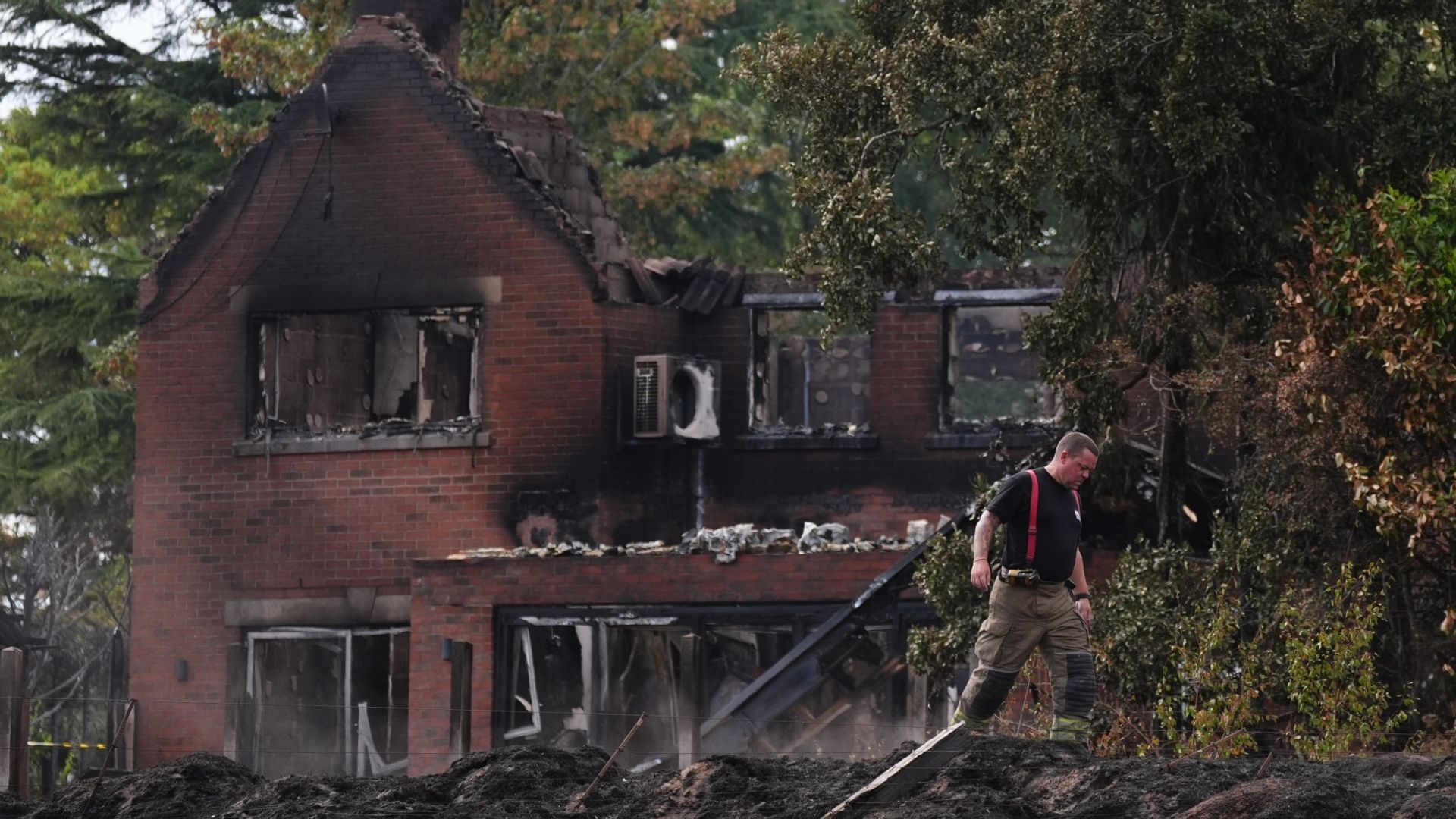
When nineteen residential structures are reduced to ash by two independent ignition events, public discourse predictably defaults to moralizing warnings about vigilance and cautionary reminders regarding household safety. This surface-level analysis fails to interrogate the underlying systemic mechanisms that transform minor thermal anomalies into catastrophic structural failures. Understanding residential loss requires shifting away from superficial incident reporting and toward a rigorous examination of ignition physics, material science thresholds, building envelope integrity, and municipal response latencies.
Residential destruction of this scale is rarely the result of a single catastrophic error. Instead, it represents the intersection of deterministic failure points within the built environment. To decode why accidental fires result in disproportionate asset loss, one must analyze the architecture of risk through three distinct vectors: the ignition efficiency of domestic environments, the velocity of fire propagation through modern construction materials, and the structural collapse timeline under thermal stress.
The Mechanics of Accidental Ignition
An accidental fire begins with an energy transfer event that exceeds the activation energy of surrounding combustible materials. In domestic settings, these events typically manifest through electrical faults, unattended thermal appliances, or localized friction. However, the probability of an ignition source converting into an active fire is dictated by fuel load density and environmental oxygen availability rather than the initial spark alone.
Modern residential interiors contain significantly higher concentrations of synthetic polymers and engineered wood products compared to structures built mid-century. Polyurethane foam found in upholstered furniture, composite cabinetry bonded with urea-formaldehyde resins, and synthetic textiles exhibit lower flash points and significantly higher heat release rates than natural wood, cotton, and wool. When an accidental spark occurs in a room saturated with high-calorific synthetic materials, the time-to-flashover window contracts sharply.
Flashover marks the critical transition phase where radiant heat feedback ignites all exposed combustible surfaces simultaneously within a compartment. In older homes, this transition often took upwards of fifteen to twenty minutes, allowing occupants ample time for manual intervention or evacuation. In contemporary spaces utilizing lightweight engineered materials, flashover can occur in less than four minutes. This compression of the timeline explains why seemingly minor accidental ignitions rapidly outpace domestic suppression capabilities, converting localized mishaps into total structural write-offs.
Fire Propagation Vectors and Building Envelope Failures
Once a fire breaches the initial compartment, its propagation path is governed by the structural design of the building envelope. Modern residential construction frequently prioritizes cost efficiency and open-plan spatial layouts over compartmentalization. While open floor plans maximize usable square footage and aesthetic fluidity, they eliminate the vertical and horizontal fire barriers that historically contained blazes to a single room.
Lightweight wood trusses and engineered I-joists are standard in contemporary residential framing. While these materials offer high strength-to-weight ratios and structural versatility, they possess minimal thermal mass. Solid dimensional lumber retains structural integrity longer under thermal assault because the outer layers must char entirely before internal load-bearing capacity degrades. Conversely, engineered wooden I-joists feature thin OSB webs and narrow flanges that lose structural rigidity within minutes of direct flame exposure.
This structural vulnerability leads to premature floor and roof collapse, trapping unburned fuel or altering airflow dynamics within the structure. When structural elements fail prematurely, they often create new ventilation pathways, introducing fresh oxygen to oxygen-starved fire plumes. This phenomenon, known as ventilation-induced flashover or backdraft potential, accelerates the consumption of the remaining nineteen structures if spatial density permits radiant heat transfer between adjacent properties.
Spatial density remains a critical exogenous variable in multi-home destruction events. Modern suburban lot sizes have decreased to maximize land utilization, resulting in property setbacks of ten feet or less between independent structures. When an unmitigated residential fire achieves fully developed status, the radiant heat flux emitted through windows and exterior walls can exceed the ignition threshold of neighboring vinyl siding or unshielded framing. Vinyl siding softens at relatively low temperatures, melting and exposing secondary structural layers to direct flame impingement. Consequently, the fire transitions from an isolated domestic incident to a localized conflagration through thermal radiation alone, rendering interior suppression systems in adjacent buildings irrelevant if exterior protection is absent.
The Suppression Latency Deficit
Mitigating residential fire loss relies on a closed-loop system comprising early detection, automated suppression or alarm transmission, and professional intervention. A failure at any node in this loop guarantees exponential growth in damage magnitude.
Standard smoke detectors rely on ionization or photoelectric sensing mechanisms to identify combustion particles. While effective for smoldering or flaming fires, domestic smoke alarms function as warning devices rather than mitigation tools. They alert occupants to evacuate, but they do not arrest fire growth. Residential fire sprinkler mandates remain controversial due to installation costs and regulatory friction, meaning the vast majority of single-family homes rely entirely on municipal emergency services for active suppression.
Professional intervention is bounded by total response latency, which is the sum of discovery time, dispatch delay, turnout time, and travel time. Because modern homes reach flashover in minutes, any friction within this latency chain results in fire departments arriving during the decay phase of the first structure or during the peak growth phase of secondary ignition targets.
Fire department resource allocation is optimized for probabilistic risk, but unexpected high-intensity simultaneous events strain tactical capabilities. When two structures ignite concurrently within proximity, water supply limitations, hose-lay logistics, and personnel deployment ratios force incident commanders to triage suppression efforts. In municipal sectors with municipal water grids featuring lower static pressures or wider hydrant spacing, establishing an adequate fire flow rate becomes a severe bottleneck. If water delivery capacity falls below the heat release rate of the burning structures, offensive interior attack is abandoned in favor of defensive exterior master streams, ensuring total structural loss of the primary targets and increasing exposure risks for adjacent properties.
Systemic Interventions for Risk Reduction
Mitigating the recurrence of multi-home destruction events requires abandoning reliance on individual behavioral compliance alone. Campaigns urging caution with space heaters, cooking equipment, or electrical cords address symptoms rather than structural vulnerabilities. A resilient housing stock must be engineered to withstand human error through fail-safe design principles.
Retrofitting existing housing stock and updating building codes to mandate non-combustible exterior assemblies can drastically reduce inter-property fire spread. Replacing vinyl siding with fiber cement or masonry veneers increases the critical radiant heat flux required for secondary ignition by a factor of three. Similarly, mandating thermal barriers in attic spaces and enforcing stricter compartmentation rules in new residential builds disrupts the primary propagation vectors exploited by modern synthetic fuel loads.
On the detection and suppression front, residential fire sprinkler mandates must be evaluated not as luxury amenities, but as essential baseline infrastructure. Automatic suppression systems arrest fire growth at the incipient stage, keeping heat release rates below the threshold required for structural collapse or exterior envelope breach. By neutralizing the fire before flashover occurs, these systems decouple structural survival from municipal response latency, protecting both occupants and neighboring assets from cascading failure.
Future municipal planning must also re-examine urban and suburban density guidelines in relation to thermal radiation modeling. Enforcing minimum spatial setbacks based on exterior wall fire-resistance ratings prevents high-density residential developments from functioning as continuous fuel networks.
Prioritize the integration of interconnected, smart-grid smoke and heat sensors that automatically shut down domestic HVAC systems upon detection of combustion products. HVAC blowers act as mechanical oxygen pumps, accelerating fire spread throughout a structure by forcing air into compromised compartments. Automating the isolation of the building envelope during an ignition event removes a primary driver of internal fire velocity.
Allocate municipal capital expenditure toward upgrading water grid infrastructure in high-density suburban sectors to guarantee minimum fire flow requirements, ensuring that suppression units never face water starvation during simultaneous multi-structure incidents.