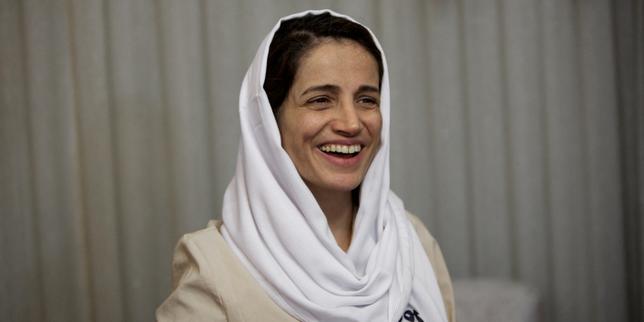
The temporary release of Nasrin Sotoudeh from Qarchak prison functions not as a triumph of judicial leniency, but as a calibrated valve adjustment within the Iranian state’s broader mechanism of social control. When the Islamic Republic grants "temporary leave" or "bail" to high-profile political dissidents, it is executing a dual-track strategy: mitigating international diplomatic pressure while maintaining an invisible tether that ensures the subject remains neutralized. Sotoudeh’s case—defined by a 38-year sentence and 148 lashes—provides the data points necessary to map the lifecycle of state-managed dissent.
The Architecture of Judicial Pressure
The Iranian penal system operates on a principle of "Strategic Ambiguity." By sentencing activists to terms that far exceed a human lifespan or the practical limits of physical endurance, the judiciary establishes a surplus of punitive capital. This surplus allows the state to "trade" years of a sentence for temporary compliance or specific geopolitical concessions without ever depleting its legal leverage.
The judicial framework used against Sotoudeh rests on three distinct pillars:
- Legal Over-Saturation: Charging a single individual with multiple, overlapping national security offenses (e.g., "insulting the Supreme Leader," "propaganda against the state," and "appearing without a hijab"). This ensures that even if one charge is vacated or appealed, the others provide a permanent basis for re-detention.
- Health-Based Leveraging: The state frequently ignores the deteriorating health of prisoners until the risk of a "custodial death"—which could trigger mass civil unrest—outweighs the benefit of continued incarceration. Sotoudeh’s heart condition and the hunger strikes she undertook were the primary variables in the state's recent risk-reward calculation.
- Financial Extraction (Bail as Bondage): The bail amounts required for political prisoners in Iran are often set at levels that necessitate the collateralization of family homes or business assets. This turns the prisoner’s social and familial network into an informal extension of the prison's monitoring system. If the prisoner resumes activism, the state can exert immediate economic violence on their entire support structure.
The Physical and Psychological Cost Function
The use of corporal punishment—specifically the 148 lashes mandated in Sotoudeh's sentencing—serves a function beyond mere pain. In the logic of the Iranian penal code, based on a specific interpretation of Sharia law, physical punishment is intended to degrade the "revolutionary's body." It is a performative act of state dominance designed to signal the physical vulnerability of the individual compared to the permanence of the system.
When a prisoner is released under these conditions, the psychological overhead is significant. The "Temporary Leave" status is a perpetual state of legal limbo. Unlike a pardon, temporary release can be revoked within minutes. This creates a state of hyper-vigilance that is often more effective at silencing dissent than actual imprisonment. The subject is forced to self-censor to avoid returning to the conditions of Qarchak or Evin, effectively turning the outside world into a broader, more comfortable cell.
The Geopolitical Arbitrage of Human Rights
The timing of Sotoudeh’s release rarely correlates with domestic legal milestones. Instead, these events typically align with fluctuations in the "Diplomatic Exchange Rate." The Iranian Ministry of Foreign Affairs uses the status of Sakharov Prize winners and Nobel laureates as currency in negotiations with the European Union and the United Nations.
The "Sotoudeh Variable" in Iranian diplomacy:
- Sanction Mitigation: Releasing high-profile prisoners often precedes "Human Rights Dialogue" sessions with EU representatives, intended to soften the stance on economic sanctions.
- The "Good Faith" Facade: By releasing a prisoner temporarily, the state can claim adherence to humanitarian standards in international forums like the UN General Assembly, despite the underlying sentence remaining active.
- Internal Distraction: Domestic economic crises or instances of state-led violence (such as the crackdown on the "Woman, Life, Freedom" movement) create a need for "positive" news cycles to dilute international condemnation.
The second limitation of this system is its reliance on the prisoner’s willingness to stay silent. In Sotoudeh’s case, the strategy often fails because her professional identity as a human rights lawyer is inseparable from her public defiance. This forces the state into a cycle of "catch and release," where the periods of freedom are increasingly shortened as the state’s tolerance for public dissent narrows.
The Logistic Reality of Qarchak and Evin
The transfer of prisoners between Evin (the traditional site for political detainees) and Qarchak (a prison known for inhumane conditions and overcrowding) is a calculated move in the "Punishment Escalation Matrix." Qarchak, a former industrial slaughterhouse, lacks the basic infrastructure for long-term human habitation, particularly regarding water quality and medical facilities.
Transferring a lawyer of Sotoudeh’s stature to Qarchak is a deliberate attempt to break the "Elite Dissident" status. It exposes the individual to a broader population of violent offenders and removes the relative protections afforded by the international spotlight focused on Evin. This logistical shift indicates that the judiciary has moved from a "Containment" strategy to an "Attrition" strategy.
The bottleneck in the Iranian state's strategy is the transparency provided by digital networks. Even from within Qarchak, information regarding Sotoudeh’s health and the conditions of her detention leaked to the international community. This transparency increases the "reputational cost" of her detention, forcing the state to utilize the bail mechanism earlier than they might have preferred under a closed-information model.
Mapping the Strategic Recommendation for International Actors
For NGOs and diplomatic bodies, the focus must shift from celebrating "releases" to demanding the "abolition of sentences." A temporary release is a tactical retreat by the state, not a change in policy.
The strategic play for international pressure involves:
- Eliminating the "Temporary Release" Metric: International monitoring bodies should cease categorizing bail or medical leave as "progress." The only metric that indicates a shift in state behavior is the full judicial exoneration and the restoration of the right to practice law.
- Targeting the Bail Mechanism: Sanctions or diplomatic pressure should be specifically directed at the assets of the "Bonyads" (charitable foundations) and judicial figures who profit from the seizure of bail collateral. If the economic cost of holding a prisoner exceeds the ransom value of the bail, the state’s incentive structure changes.
- Universalizing the Legal Defense: The state relies on isolating political prisoners from their professional guilds. Strengthening the direct links between international bar associations and Iranian lawyers provides a layer of "professional immunity" that makes the state more hesitant to apply the most extreme forms of corporal punishment.
The Iranian state will continue to use Nasrin Sotoudeh as a barometer for international pressure. As long as the underlying legal framework of the Islamic Republic permits the criminalization of legal advocacy, these releases will remain cyclical. The objective of the state is not to end the conflict with the dissident, but to manage it at a sustainable cost. The only way to break this cycle is to increase the cost of "Strategic Ambiguity" until the judicial system finds the maintenance of these sentences to be a net liability to its own survival.