Trade policy operates through complex transmission channels that rarely distribute costs and benefits uniformly across economic sectors. When import tariffs alter the cost function of domestic manufacturing, the immediate policy objective is capital protection and domestic output stimulation. However, microeconomic adjustments within individual firms frequently produce second-order effects on employment, input sourcing, and operational margins. Deconstructing the friction between macroeconomic protectionism and regional labor outcomes requires analyzing how trade barriers interact with globalized supply chains, factor substitution elasticities, and regional industry concentration.
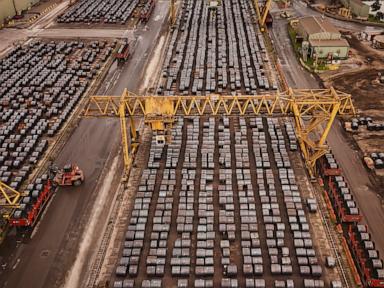
Tariffs function as an artificial tax on foreign-produced goods, designed to raise the relative price of imports and shift consumer and industrial demand toward domestic alternatives. This mechanism assumes a closed or semi-closed loop where domestic producers can readily scale production to absorb displaced market share. Modern manufacturing, however, relies on intricate, cross-border value chains where intermediate goods cross multiple national boundaries before final assembly. When a tariff is levied on a critical input—such as specialty steel, aluminum, or electronic components—the cost function of downstream domestic manufacturers shifts upward.
Consider the operational reality of a mid-sized industrial fabrication plant. The enterprise faces a fixed capital structure and long-term supply contracts. When import levies increase the acquisition cost of raw materials, the firm’s marginal cost of production rises. Management generally evaluates three distinct strategic levers to preserve operating margins: absorbing the cost increase through reduced net income, passing the burden downstream to consumers via higher prices, or altering the production function through factor substitution.
In competitive markets, the capacity to pass price increases downstream is constrained by demand elasticity. If international competitors or domestic alternatives unaffected by the specific input cost structure keep prices stable, a domestic manufacturer loses market share. To protect profitability, firms often accelerate capital expenditure on automation to reduce labor overhead, or they relocate assembly operations to jurisdictions where input costs and regulatory burdens are lower. Consequently, protectionist policies intended to secure domestic jobs can inadvertently trigger structural labor dislocation by accelerating capital-labor substitution and eroding export competitiveness.
The geographic concentration of manufacturing creates acute regional vulnerabilities when trade policies alter input-output dynamics. Industrial towns and factory-centric districts often depend on a single primary employer or a tightly integrated cluster of suppliers. When macroeconomic shocks impact the operational viability of these anchor firms, the local labor market experiences asymmetric distress. Displaced factory workers face high frictional unemployment costs because their specialized skill sets—often tailored to specific legacy production processes—exhibit low immediate transferability to expanding sectors of the economy, such as technology services or specialized healthcare.
Retaliatory trade measures compound these structural pressures. When trading partners implement counter-tariffs on domestic agricultural and manufactured exports, export-dependent industries experience demand contraction. A manufacturing firm that splits its revenue between domestic sales and international exports now faces margin compression on both fronts: higher costs for imported inputs at home and restricted access to foreign markets abroad. Management response under this dual constraint typically involves freezing hiring, reducing shifts, or executing workforce reductions.
Evaluating the political ramifications of these economic friction points requires moving beyond aggregate employment figures to examine distributional impacts. While protectionist measures may yield concentrated benefits for specific capital owners and workers in heavily shielded sectors, the diffusion of costs across downstream consumers and export-exposed workers generates deep political friction. Midterm electoral shifts in industrial districts often reflect this localized cost-benefit asymmetry. Voters evaluate economic policy not through national GDP metrics, but through personal income security and regional economic vitality.
Long-term labor market resilience in trade-exposed sectors depends on factor mobility and skills upgrading rather than static border protections. As global supply chains continue to evolve in response to geopolitical and economic friction, manufacturing competitiveness requires flexibility in sourcing, high productivity growth, and continuous workforce adaptation.
To stabilize operational output and protect employment levels amidst trade volatility, industrial enterprises must prioritize supply chain diversification and modular production engineering. Policymakers and industry leaders should focus capital allocation on regional workforce retraining programs that target high-demand technical competencies, thereby reducing the structural friction of labor market transitions when trade dynamics shift.