Wartime macroeconomic expansion exhibits a fundamental illusion. When a state redirects industrial capacity toward ordnance, payrolls for defense contractors surge, and unemployment plummets to historic lows, standard indicators flash growth. Gross domestic product ticks upward. Real wages nominally rise. Yet, this expansion operates on a balance sheet decoupled from market discipline. A state funding its fiscal deficit through liquid reserves, forced domestic borrowing, and redirected banking capital is not generating sustainable wealth; it is consuming its own capitalization.
Deconstructing the trajectory of a state-mobilized war economy requires stripping away nominal output metrics to evaluate structural erosion. The core dynamic is not an immediate fiscal cliff, but a slow-motion crowding out of private capital, severe demographic contraction, and structural misallocation. When capital expenditures target non-productive military assets rather than infrastructure, technology, or private enterprise, the long-term cost function compounds silently until productivity collapses.
The Fiscal Architecture of State Mobilization
To understand how a resource-rich autocracy maintains prolonged military expenditures, one must examine the mechanics of its domestic funding mechanisms. Unlike Western economies that issue debt into deep, liquid international capital markets, a sanctioned state relies on an enclosed financial loop.
First, the primary deficit is absorbed by domestic financial institutions, predominantly state-owned banks. These banks are structurally compelled to purchase sovereign bonds using liquidity provided by the central bank. This mechanism bypasses external borrowing constraints but immediately creates internal inflation pressures and crowds out commercial credit. Private enterprises find themselves unable to compete for capital against state-backed defense orders offering guaranteed, high-margin payouts.
Second, liquid international reserves held outside the traditional sanctions perimeter act as a finite shock absorber. As these liquid buffers deplete, the state must pivot toward aggressive taxation, extraction of quasi-rents from commodity exporters, and the drawdown of sovereign wealth funds. Each successive layer of extraction increases the friction coefficient on the non-military commercial sector.
Third, fiscal policy adopts a wartime multiplier that operates in reverse. Traditional fiscal stimulus generates productive assets—roads, power grids, software—that yield future economic returns. Defense spending consumes its output instantly. A shell fired or a tank destroyed represents a complete subtraction of value with zero subsequent economic velocity. The nominal income earned by the worker manufacturing that shell circulates through the domestic economy, chasing a shrinking pool of consumer goods, which institutionalizes structural inflation.
The Labor Supply Constraint and Productivity Collapse
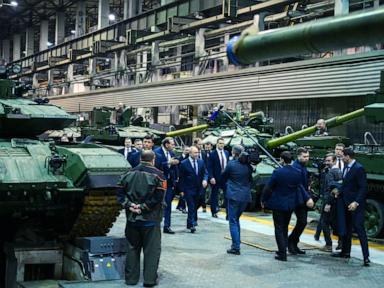
The most severe bottleneck facing a wartime economy is not capital, but human units of production. Mobilization creates a dual labor crisis: millions of prime-age workers are pulled into active military service or high-turnover defense manufacturing, draining talent from the commercial sectors.
This demographic drain accelerates an already severe structural decline driven by long-term population aging and low fertility rates. To compensate for the labor shortage, nominal wages in non-military sectors must spike to attract remaining workers, leading to wage-price spirals that outpace productivity gains. When wages rise because of scarcity rather than efficiency improvements, unit labor costs surge.
Compounding this is the technology and capital goods deficit. Modern industrial output requires sophisticated machine tools, precision electronics, and specialized maintenance components. When sanctions restrict direct access to advanced jurisdictions, domestic industries are forced into inefficient substitution models. Reverse engineering or procuring lower-grade alternatives from secondary markets increases production costs while lowering output quality. The economy trades long-term technological convergence for short-term operational continuity.
The Dynamics of Sectoral Bifurcation
A mobilized economy does not contract uniformly; it bifurcates into a heavily subsidized military-industrial core and a starving civilian periphery.
The defense sector operates under a command-administrative price structure. Inputs are prioritized, logistics are heavily state-directed, and profit margins are guaranteed by fiscal fiat. This draws the most capable engineering talent, the most reliable logistics networks, and the most abundant raw materials away from commercial enterprises that rely on efficiency, cost control, and consumer demand.
Meanwhile, the civilian sector bears the brunt of macroeconomic adjustments. Consumer-facing businesses face rising borrowing costs as interest rates are hiked to combat inflation. They deal with supply chain friction, currency volatility, and an eroding consumer base whose purchasing power is steadily eroded by hidden inflation and redirected tax burdens. Over time, the atrophy of the civilian economy destroys the tax base required to sustain the state in the post-conflict phase. Innovation stalls, fixed capital depreciates without replacement, and economic complexity regresses.
The Long-Term Erosion Function
The cumulative impact of extended wartime mobilization is best modeled as a depreciation curve of national economic potential. The transition from a market-adjacent economy to a command-administrative structure inflicts damage that persists long after active hostilities cease.
- Capital Stock Atrophy: Civilian infrastructure, commercial real estate, and non-military manufacturing capacity are starved of reinvestment. Maintenance schedules are deferred, and technological upgrades are abandoned.
- Institutional Degeneration: Resource allocation shifts permanently from market signals to bureaucratic fiat. When economic survival depends on state procurement favor rather than consumer satisfaction, entrepreneurial capability degrades.
- Balance Sheet Exhaustion: The depletion of liquid sovereign buffers forces the state into structural austerity or high inflation regimes once the wartime stimulus abruptly terminates.
The terminal state of this trajectory is not a sudden, dramatic collapse, but a protracted stagnation. A nation that mortgages its future capital and demographic surplus for short-term military output locks itself into a lower developmental plateau, trading geopolitical ambitions for permanent economic fragility.