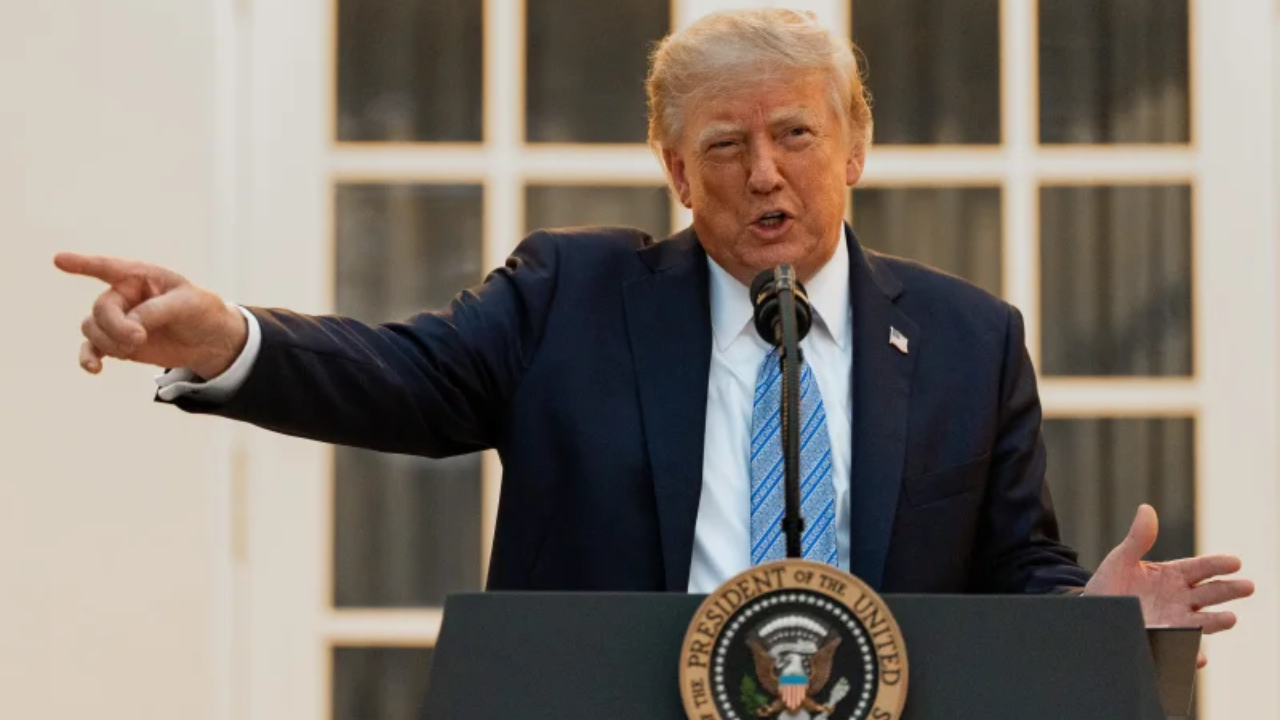
Executive access within the apparatus of state power is frequently misinterpreted as an uncodified constitutional entitlement. In practice, press credentials for the White House briefing room function as a managed resource, an administrative instrument allocated or withheld by the incumbent administration to shape narrative velocity. When political authorities revoke press passes or restrict physical entry for specific broadcast organizations, the underlying dynamic is not merely a dispute over professional etiquette. It represents a systemic test of institutional endurance, forcing a re-evaluation of how legacy media networks generate authority, distribute information, and sustain their economic models in the absence of direct proximity to power.
The Asymmetry of Executive Power and Media Dependence
For decades, the dominant economic and editorial model of Washington-based journalism relied heavily on access. Proximity to the seat of government offered a low-cost mechanism for news production. Official statements, background briefings, and physical presence inside the press briefing room provided a steady stream of authoritative raw material. Outlets traded a degree of critical distance for the operational efficiency of direct reporting channels.
This dependency creates a structural vulnerability. When an administration chooses to weaponize access, the cost function shifts abruptly. The traditional model assumes a baseline reciprocity: the state requires public channels to project its messaging, while the press requires institutional channels to verify and broadcast events. However, when an administration determines that the political utility of conflict outweighs the utility of accommodation, this reciprocity collapses.
The removal of physical access forces a sudden structural break. Outlets accustomed to treating executive announcements as primary inputs must re-engineer their intelligence-gathering apparatus. Instead of functioning as passive recipients of state-sanctioned narratives, excluded organizations face two operational paths. They can either capitulate to administrative demands to restore access, trading editorial independence for proximity, or they can absorb the friction of exclusion and build alternative sourcing networks. Choosing the latter transforms the media outlet from an internal participant in the institutional ecosystem into an external adversarial force.
The Operational Pivot from Proximity to Friction
Operating outside the physical confines of the executive briefing room introduces quantifiable friction into the news production cycle. Without direct line-of-sight to press secretaries and unscripted verbal exchanges, broadcast networks experience a delay in primary reaction time. Official transcripts and pool reports arrive filtered through institutional buffers controlled entirely by the administration.
To counteract this operational deficit, network organizations must deploy alternative intelligence vectors. This requires investment in decentralized reporting units, enhanced reliance on statutory transparency mechanisms like Freedom of Information Act requests, and deeper cultivation of mid-level bureaucratic sources who retain operational expertise independent of political appointees.
The mechanics of this shift alter the nature of the broadcast product. Stories derived from secondary or investigative sources carry higher initial verification costs but lower narrative capture risk. When a news organization is physically barred from state spaces, its reporting is stripped of the visual compliance implicit in broadcasting from official podiums. This visual separation alters audience perception. The absence of the White House backdrop signals to the consumer that the reporting is untethered from executive approval, which paradoxically enhances credibility among segments of the audience skeptical of state authority.
Economic Hedging and Audience Retention Under Exclusion
Institutional survival under political hostility depends entirely on the stability of the organization's economic model. Legacy broadcast networks operate within dual-revenue structures combining carriage fees and advertising sales. Both revenue streams are sensitive to brand positioning and audience alignment.
An executive ban triggers a public relations shockwave. For publicly traded media companies, institutional conflict with the state can be weaponized by political actors to encourage subscriber boycotts or advertiser flight. Conversely, the same conflict can galvanize core demographic segments, turning institutional martyrdom into a brand differentiator.
Organizations facing exclusion must calculate whether the cost of lost access is offset by the value of increased brand loyalty from audiences that prioritize adversarial reporting over access-driven compliance. If the target demographic values institutional independence, the exclusion functions as an effective market positioning tool. It signals ideological contrast, hardening viewer retention against competing networks that maintain compliant access.
The financial calculus requires shifting capital away from maintenance of physical infrastructure in Washington toward investigative resources elsewhere. The reduction in overhead associated with maintaining large physical presences in restrictive environments can be reallocated to regional bureaus, legal defenses, and specialized reporting verticals that do not depend on executive goodwill.
Strategic Playbook for Long-Term Institutional Survival
Navigating prolonged exclusion from seats of political power requires a codified operational framework designed to withstand sustained pressure from executive authorities.
First, news organizations must institutionalize narrative diversification. Relying on a single political beat for primary daily output creates systemic vulnerability. Spreading reporting capacity across judicial, legislative, local, and international domains ensures that the denial of access to one specific node of power does not cripple the entire editorial schedule.
Second, legal and structural defenses must be integrated into the core strategy of the organization. When access is revoked arbitrarily, the response cannot be purely rhetorical. Utilizing administrative law, challenging viewpoint-based discrimination in the judicial system, and forming coalitions among competing media outlets to resist credential restrictions establish a baseline defense of the fourth estate as a collective entity rather than a collection of isolated competitors.
Third, editorial governance must enforce strict firewalls between business operations and newsrooms during periods of political retaliation. Administrative pressure often manifests through backchannel corporate communications aimed at placating political figures to protect unrelated commercial interests. Insulating editorial judgment from corporate exposure is the single most critical determinant of whether an organization maintains its operational integrity under duress.
The resilience of an independent press in an era of executive hostility is measured by its capacity to decouple its institutional authority from state-granted privileges. When access is treated as a conditional favor rather than a permanent right, the only viable long-term strategy is to build a self-sustaining reporting architecture that renders state-administered permission irrelevant to the dissemination of truth.