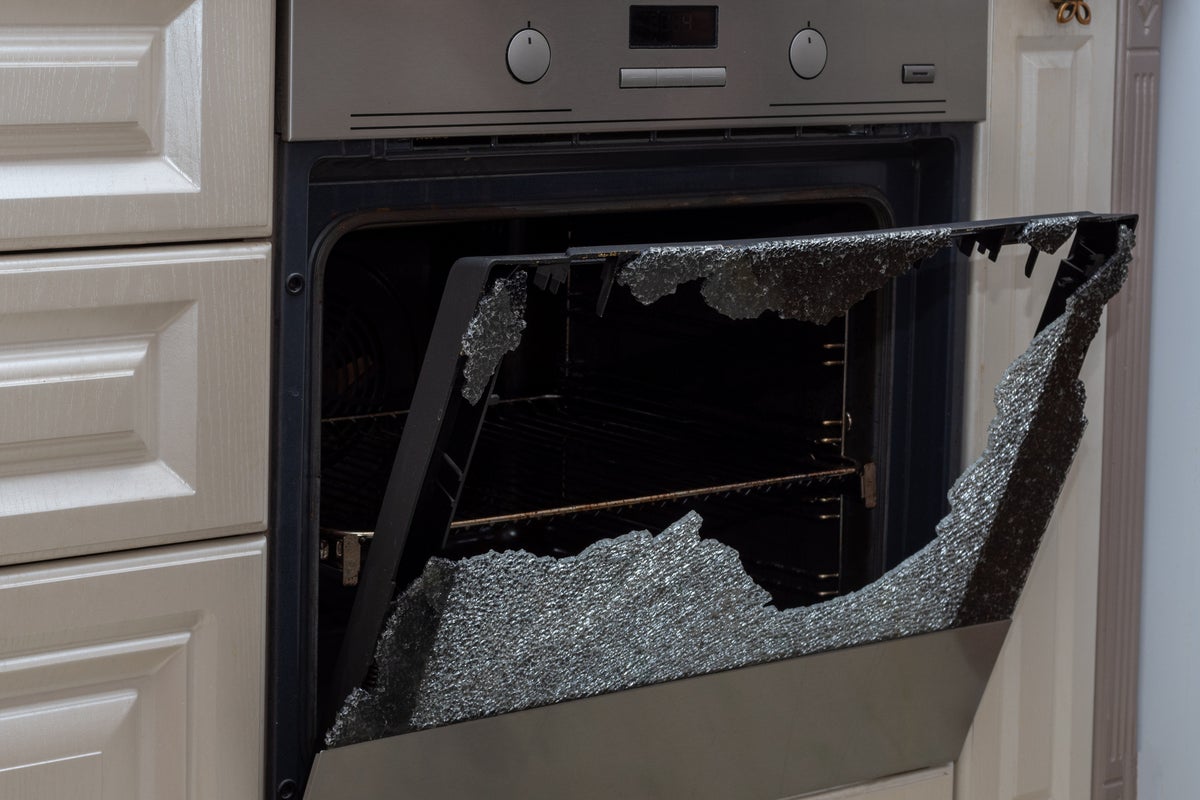
The sudden, high-energy failure of tempered glass oven doors is not an unpredictable anomaly, but the logical consequence of accumulated mechanical stress and material properties. Data compiled by federal safety regulators via SaferProducts.gov documents 386 distinct glass-shattering incidents across major appliance brands between January 2025 and March 2026. These failures resulted in over 40 reported injuries.
To evaluate the operational risk of these appliances, it is necessary to move past the sensationalized language of consumer complaints and analyze the exact material science governing tempered glass, the systemic nature of manufacturing and field stress, and the corporate risk-management strategies deployed by major appliance manufacturers.
The Stress-Equilibrium Framework of Tempered Glass
Understanding why an oven door shatters requires analyzing the structural physics of thermally tempered glass. Unlike standard annealed glass, which breaks into sharp, jagged shards under low impact, tempered glass is engineered to fail into thousands of small, relatively obtuse fragments. This is achieved through a controlled thermal manufacturing process that creates a highly unstable but structurally beneficial state of internal stress equilibrium.
During fabrication, the glass sheet is heated to approximately 620°C and then rapidly cooled by high-pressure air blasts. This process creates a distinct structural zoning effect:
- The Outer Surface Layers: The exterior surfaces cool and solidify rapidly, contracting ahead of the interior mass. This creates a permanent state of high compressive stress on the outside of the glass.
- The Core Layer: The interior core cools more slowly. As it cools and contracts later, it pulls against the already-solidified outer layers, creating a permanent state of high tensile stress in the center.
For the glass panel to remain structurally sound, the surface compression must perfectly balance the internal tension. The glass achieves its high impact resistance because any external force must first overcome the deep surface compressive layer before it can introduce tensile stress to the surface.
The inherent vulnerability of this system lies in the core tensile zone. If a microscopic defect, scratch, or inclusion penetrates past the outer compressive layer and reaches the internal tension zone, the stress equilibrium instantly collapses. The stored energy within the tensile core releases catastrophically, propagating fractures throughout the entire volume of the glass at speeds exceeding 1,500 meters per second. This rapid energy release produces the loud acoustic report—often described by consumers as an explosion—and expels fragments outward.
The Temporal Delay: Why Cold Glass Fails Spontaneously
A significant point of confusion in consumer safety reports is the temporal detachment between appliance operation and structural failure. In a high percentage of documented cases, the oven was completely turned off, cold to the touch, or had not been operated for several days prior to the collapse. This phenomenon is explained by two distinct mechanisms: stable micro-crack propagation and nickel sulfide inclusion expansion.
Mechanical Fatigue and Micro-Crack Propagation
Oven doors are subjected to ongoing mechanical impacts during daily operation. Slamming the door, striking the inner glass panel with heavy cookware, or using abrasive chemical cleaners creates microscopic abrasions on the surface. While these micro-cracks may initially reside entirely within the outer compressive zone, they act as severe stress concentrators.
Subsequent thermal cycles—the expansion during heating and contraction during cooling—introduce localized cyclic fatigue. The micro-crack creeps deeper into the glass over time, millimeter by millimeter. If the crack depth crosses the threshold dividing the compressive layer from the inner tensile zone while the oven is idle, spontaneous structural failure occurs without any immediate external trigger.
The Nickel Sulfide (NiS) Inclusion Mechanism
A secondary, purely material-driven cause of delayed failure is the presence of microscopic nickel sulfide contaminants within the glass matrix during raw material processing. During the initial high-temperature phase of tempering, NiS particles transition into a compact, high-temperature crystalline alpha-phase. When the glass is rapidly cooled, these particles become trapped in this high-temperature state, unable to transition back to their low-temperature beta-phase.
Over months or years at ambient room temperatures, the trapped NiS particles naturally revert to their stable beta-phase. This phase transformation involves a volumetric expansion of approximately 2% to 4%. If an inclusion is located within the high-tension core of the glass panel, its expansion generates extreme localized tensile stress, eventually exceeding the material's structural limits and initiating a sudden failure from the inside out.
Brand Distribution and Manufacturing Exposure
The distribution of safety complaints across the industry reveals that glass-shattering incidents are systemic across the modern appliance manufacturing ecosystem, though reporting density varies considerably by brand.
Of the 386 incidents analyzed in the 15-month federal regulatory window, the distribution among the five most frequently cited manufacturers is highly asymmetric:
| Manufacturer | Documented Incidents (15-Month Window) |
|---|---|
| Frigidaire | 263 |
| GE Appliances | 63 |
| Whirlpool | 35 |
| LG Electronics | 15 |
| Samsung | 10 |
This data distribution must be interpreted with caution. A higher volume of complaints does not automatically correlate to an inferior manufacturing process or a lower-grade glass specification. Market penetration, total unit volume in active operation, and the average lifespan of the installed consumer base heavily influence raw incident counts.
However, the overwhelming concentration of reports associated with a single manufacturer indicates a potential variance in physical design choices. These choices include the thickness of the glass panels used, the structural rigidity of the surrounding steel door frame—which can transfer torsional stress directly to the glass when twisted—or the specific quality control metrics enforced during the third-party glass tempering process.
Corporate Liability and Risk Management Frameworks
The variance in corporate responses to these 386 incidents highlights two fundamentally different risk-management strategies utilized by major appliance manufacturers.
The Compliance Defense Strategy
The dominant response strategy from four of the top five cited manufacturers relies on baseline regulatory compliance. Their corporate positions emphasize that their appliances meet all current third-party safety certifications, such as those established by Underwriters Laboratories (UL) or the American National Standards Institute (ANSI).
From a strict liability perspective, this stance establishes that the products are not defectively designed under existing legal definitions. Because tempered glass is engineered to shatter into small fragments precisely to minimize deep lacerations, the manufacturers view the failure mode itself as the safety feature working as intended, rather than a system failure. Consequently, these companies treat out-of-warranty glass failures as standard consumer maintenance expenses, refusing to provide universal component remediation.
The Warranty Agnostic Mitigation Strategy
Samsung has adopted an alternative risk strategy by offering free-of-charge range oven repairs, covering both parts and labor, regardless of the appliance's warranty status.
This model shifts the financial burden of component failure from the consumer to the manufacturer's balance sheet. While this increases short-term operational expenses, it serves as a calculated brand-equity protection strategy. By eliminating the economic friction of repair for affected users, the company mitigates the long-term risk of class-action litigation and reduces the likelihood of punitive regulatory interventions by the Consumer Product Safety Commission (CPSC).
Structural Risk Mitigation Protocol
Because tempered glass lacks a visible yield point or gradual degradation phase prior to failure, standard visual inspection has severe limitations. Instead, maintaining structural integrity depends on reducing external stress inputs and managing physical operational variables.
- Eliminate Point-Load Impacts: Avoid striking the inner glass boundary with high-density materials like cast iron cookware, ceramic baking stones, or stainless steel trays. Point-load impacts introduce deep, concentrated stress profiles that can bypass surface compression.
- Abolish Abrasive Maintenance: Never use steel wool, wire brushes, or highly abrasive scouring powders on the glass surface. These tools cut micro-grooves into the surface layer, reducing the total compressive force required to initiate a failure cycle. Use soft polymers and chemical solvents optimized for carbon dissolution instead.
- Audit Mechanical Fasteners: Periodically check the structural integrity of the door hinges and handle assemblies. Loose fasteners or misaligned hinges cause uneven weight distribution and introduce torsional warping across the glass panel when opened or closed, adding structural stress to the material.
- Document and Report Structural Anomalies: At the first appearance of a visible chip, deep scratch, or edge fracture, consider the glass panel fundamentally compromised. Discontinue use of the thermal cycles immediately, log photographic evidence, and submit a formal report to SaferProducts.gov to ensure the data is captured in federal safety oversight metrics before executing a total panel replacement.