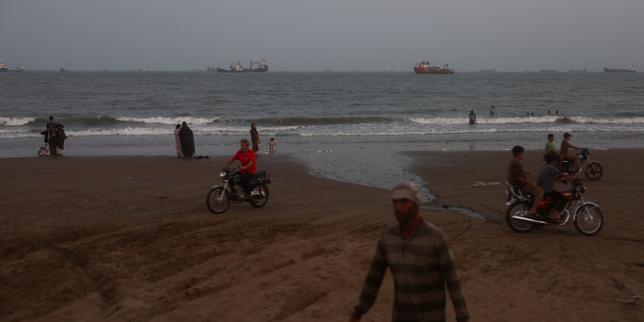
Geographic concentration creates asymmetric leverage. When twenty percent of the global liquid natural gas supply and millions of barrels of crude oil are funneled through a passage merely thirty-nine kilometers wide at its narrowest point, the physical constraints of the earth dictate macroeconomic vulnerability. Observers examining the protracted maritime conflict in the Persian Gulf frequently misdiagnose the situation as a temporary disruption of transit routes. Instead, the operational reality reflects a permanent structural shift where asymmetric military capabilities convert geographic bottlenecks into sovereign extortion tools. Understanding this dynamic requires analyzing the underlying cost functions, the failure modes of traditional naval protection, and the strategic pivot toward geographic bypassing.
The mechanics of state-level maritime coercion do not require symmetrical naval parity. Traditional military doctrine measures sea control through capital ship tonnage, carrier strike groups, and blue-water dominance. However, modern anti-access and area-denial strategies invert this economic equation. By deploying distributed networks of low-cost loitering munitions, shore-based anti-ship cruise missiles, and indiscriminate naval minefields, a regional actor can raise the maritime risk premium to prohibitive levels.
Insurance underwriters respond to structural uncertainty by instantly adjusting Hull War Risk premiums. When commercial transit faces a non-zero probability of kinetic interception, the cost of capital and insurance per voyage spikes exponentially. Insurance spikes render standard commercial shipping margins untenable long before a physical blockade achieves total closure. The aggressor incurs minimal marginal costs to maintain this state of perpetual hazard, while target nations and shipping conglomerates absorb compounding economic penalties. This asymmetry forms the core of the new operational normal: a low-cost denial mechanism that paralyzes high-value global commerce without requiring fleet engagements.
Strategic optimization by Gulf hydrocarbon producers has historically relied on the line-of-least-resistance principle, routing maximum volume through the immediate basin. The operational shockwaves of the current crisis expose the structural liabilities of this over-concentration. When transit is conditioned on compliance with unilateral navigational protocols and fee extraction demands imposed by a belligerent state, energy exporters face a stark strategic trilemma: accept regulatory subordination, absorb prolonged export halts, or accelerate capital expenditure on alternative overland corridors.
The economic cost function of relying exclusively on maritime chokepoints involves three compounding variables:
- Direct physical vulnerability to kinetic interdiction and asymmetric harassment.
- Regulatory capture, where non-state or hostile actors impose unauthorized transit tolls and route mandates.
- Macroeconomic exposure to sudden freight rate and insurance volatility that transmits immediately downstream to global industrial centers.
Mitigating these variables demands a transition from defensive naval escort models to structural geographic decoupling. Defending every merchant vessel inside a confined basin against swarm tactics and underwater mines consumes disproportionate naval resources while offering diminishing security returns. Sustainable adaptation requires shifting focus from protecting the passage to rendering the passage strategically optional.
The physical architecture of regional energy transit is undergoing a forced migration toward bypass infrastructure. Existing pipeline assets, such as Saudi Arabia's East-West crude oil pipeline terminating at Yanbu on the Red Sea and the Abu Dhabi Crude Oil Pipeline terminating at Fujairah outside the basin, instantly transition from secondary operational redundancies to primary existential lifelines. Expanding the capacity of these terrestrial vectors diminishes the coercive leverage derived from maritime blockades. If an adversary cannot trap hydrocarbons inside production fields due to high-capacity overland and outer-basin export terminals, the political utility of bottleneck control collapses.
Liquefied natural gas presents a distinct engineering hurdle due to the absence of equivalent large-scale overland cryogenic pipeline networks connecting Gulf fields directly to open ocean terminals outside the basin. Consequently, the natural gas sector remains acutely exposed to maritime gatekeeping. Addressing this vulnerability requires accelerating modular liquefaction expansion on outer-coast nodes and forging bilateral intelligence-sharing frameworks that integrate private maritime registries with regional defense networks.
The macroeconomic fallout extends far beyond immediate petroleum pricing. Industrial supply chains dependent on uninterrupted petrochemical inputs face margin compression and inventory depletion when transit throughput drops. Central banks must factor chronic maritime friction into inflation models, treating chokepoint volatility not as an exogenous supply shock, but as a persistent structural tax on global trade.
Future capital allocation by sovereign wealth funds and energy conglomerates will prioritize redundancy over raw extraction efficiency. The era of treating maritime chokepoints as neutral global commons has ended. Stakeholders must price the permanent cost of contested geography into every layer of asset valuation, supply chain design, and geopolitical risk assessment. Redirect capital expenditure toward outer-basin pipeline loops and dedicated overland corridors before market pricing forces reactive, high-cost structural adjustments.