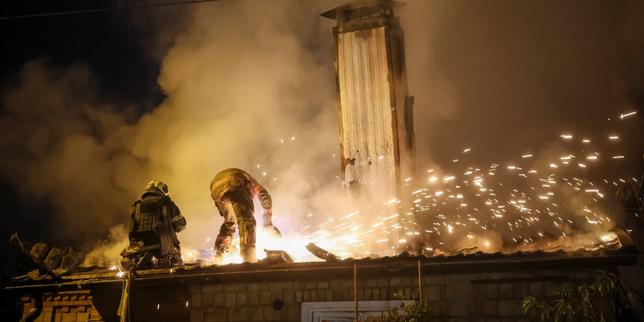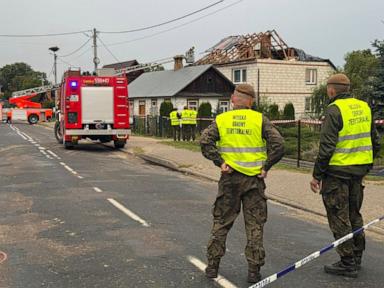
Geopolitical stability on the eastern flank of the European Union is currently conditioned not by the explicit mechanics of total conventional war, but by the calculated calibration of sub-threshold friction. The borderlands between Poland and its eastern neighbors function as a laboratory for modern gray-zone conflict, where the primary objective is the systemic degradation of social cohesion, logistical throughput, and institutional trust without crossing the threshold that triggers collective defense clauses. Analyzing this theater requires abandoning traditional models of territorial invasion and replacing them with an economic and informational cost-function framework.
The Tripartite Vector Matrix of Sub-Threshold Operations
State-sponsored disruption below the level of armed conflict relies on three distinct operational vectors operating simultaneously. Each vector targets a different vulnerability within the administrative and psychological architecture of a frontline state.
The first vector is logistical subversion. Critical transport corridors, particularly the rail and highway arteries feeding material assistance into Ukraine, represent high-leverage chokepoints. Operations targeting these corridors do not seek immediate systemic collapse; rather, they aim to introduce perpetual friction, insurance rate spikes, and localized delays that compound across time. The recruitment of localized proxy networks to execute low-signature sabotage minimizes attribution risk while maximizing downstream economic anxiety.
The second vector is manufactured migratory pressure. By exploiting administrative and humanitarian norms at sovereign borders, state actors can force target nations into a permanent defensive posture. This creates a resource allocation dilemma. Capital, surveillance infrastructure, and personnel diverted to border fortification are necessarily drawn away from broader economic productivity and internal security operations.
The third vector is cognitive destabilization. The information ecosystem surrounding frontline regions is weaponized to amplify pre-existing societal fractures. By orchestrating incidents that generate localized panic—such as airspace violations, unexplained infrastructural failures, or staged provocations—adversaries test the reaction velocity and communication integrity of the host government.
The Economic Cost Function of Border Resilience
To understand why hybrid tactics persist, one must evaluate the asymmetry of the cost function. For the aggressor, the capital expenditure required to mount persistent, low-level provocations is fractional. These operations leverage existing intelligence assets, criminal proxies, and disposable capabilities.
Conversely, the defensive cost function borne by the frontline state is radically asymmetric. To achieve near-zero vulnerability against stochastic sabotage and airspace incursions, the defender must scale expenditures exponentially:
- Capital Investment: Upgrading border surveillance networks, acoustic sensors, radar coverage, and physical barriers requires massive public outlays.
- Human Capital Drain: Continuous mobilization of territorial defense units and intelligence apparatuses introduces burnout and administrative strain.
- Collateral Economic Friction: Heightened security protocols inevitably slow down commercial transit, increasing the cost of goods and diminishing regional trade velocity.
This asymmetry forms the core utility of gray-zone operations. Even when an operation fails tactically—such as a disrupted sabotage attempt or a intercepted courier—the strategic objective of forcing the defender to remain in a high-cost, high-alert state is successfully achieved.
Information Warfare and the Amplification of Social Friction
Physical security disruptions are structurally coupled with informational payloads. A kinetic event at a border crossing or a logistical node is designed primarily as a content generator for the digital infosphere.
When freight infrastructure is targeted or airspace is violated, the immediate tactical damage is often secondary to the secondary and tertiary narrative effects. Adversarial information operations immediately inject polarizing narratives into the domestic political discourse, seeking to pit local populations against national authorities, or to stoke friction between the host population and refugee communities. The mechanism relies on exploiting existing cultural anxieties, transforming isolated security incidents into proof of institutional incompetence.
The objective is the erosion of epistemic trust. When citizens can no longer reliably distinguish between systemic state failure and targeted psychological operations, the state's capacity to mobilize public will during a crisis diminishes.
Institutional Adaptation and Strategic Counter-Measurement
Countering continuous sub-threshold pressure requires a structural shift from reactive policing to preemptive institutional resilience. Frontline security architectures must integrate civil defense, intelligence sharing, and critical infrastructure hardening into a unified operational doctrine.
Intelligence agencies must pivot toward preemptive network dismantling, targeting the financial and communication rails used to recruit local proxies before operational phases initiate. Simultaneously, critical supply chains require physical redundancy and decentralized dispatch mechanisms to ensure that localized sabotage cannot bottleneck macro-level logistics.
Societal resilience is equally quantifiable. Transparent, rapid-cadence public communication by state authorities neutralizes the velocity of hostile narrative injection. When the state establishes an authoritative baseline of facts before alternative narratives can scale, the return on investment for adversarial information operations collapses.
Strategic Outlook
The frontier between stability and conflict in eastern Europe will remain characterized by persistent, low-amplitude friction rather than sudden escalatory leaps. As long as asymmetric gray-zone tactics yield strategic intelligence and psychological leverage at minimal cost to the actor, these methods will remain the primary instrument of regional coercion. Long-term security is therefore a function of institutional endurance, systemic redundancy, and the systematic reduction of structural vulnerabilities before they can be exploited.