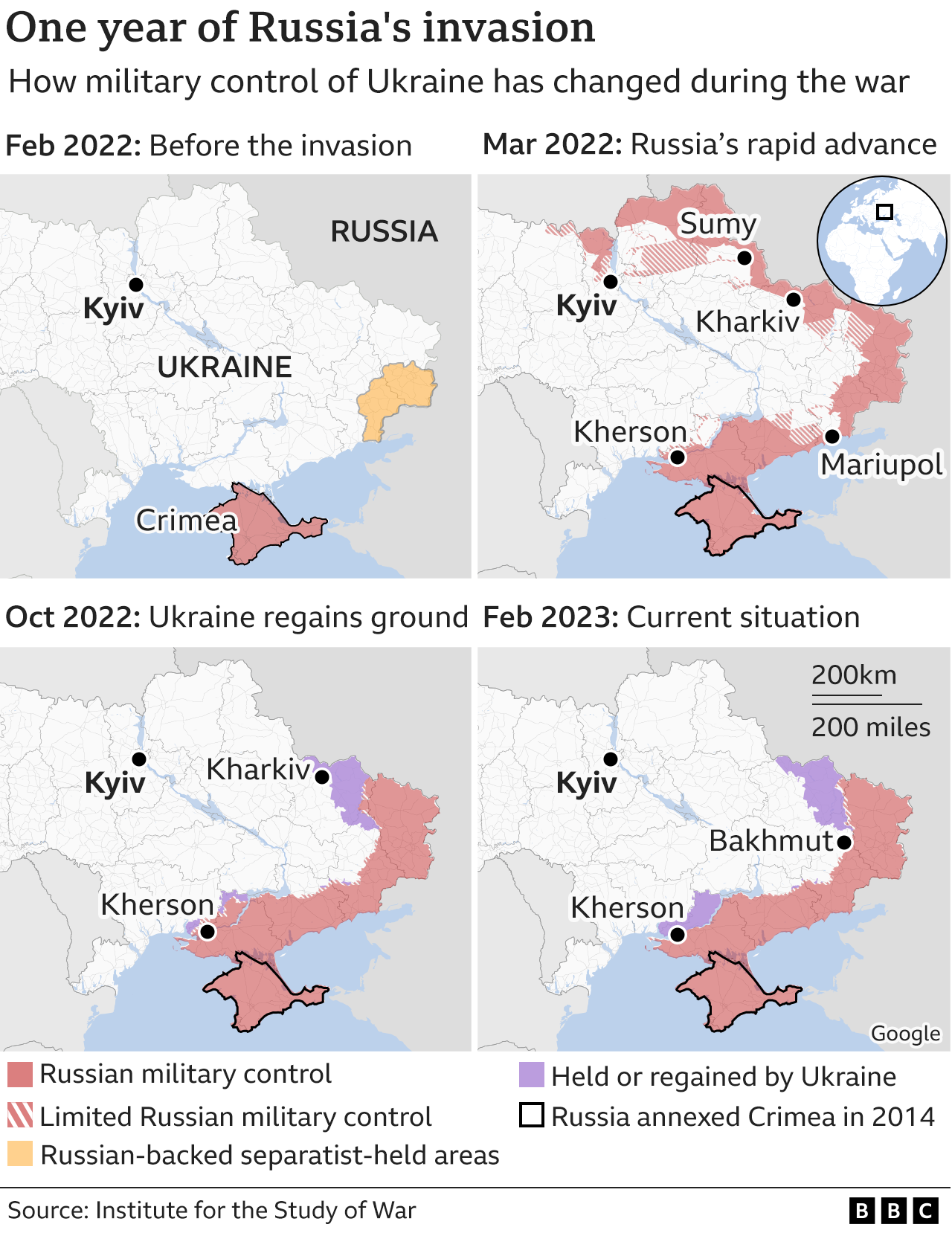
The probability of a global kinetic conflict involving nuclear assets is not a binary switch but a variable function of strategic signaling, domestic stability, and the erosion of conventional deterrence. While sensationalist media interprets rhetoric as an immediate precursor to "apocalypse," a structural analysis reveals that nuclear threats often serve as a tool of risk management rather than a declaration of intent. The current friction between the Russian Federation and Western alliances operates within a framework of managed escalation where both parties attempt to redefine the "red lines" of the other without triggering a total systemic collapse.
The Logic of Nuclear Signaling as a Defensive Utility
Nuclear rhetoric serves a specific functional purpose in asymmetrical warfare. When a state perceives its conventional military capabilities are being offset by external support—such as Western munitions and intelligence provided to Ukraine—it pivots to its primary strategic advantage: its nuclear triad. This is the Rationality of Irrationality model, where a state signals a willingness to engage in mutually assured destruction to force a more powerful or better-funded adversary to self-censor.
The current Russian doctrine relies on the concept of "Escalate to De-escalate." In this framework, the use of a tactical nuclear weapon is theorized not as the start of World War III, but as a "stop-loss" mechanism designed to shock the opponent into a ceasefire. The failure of this logic lies in the Escalation Ladder, a 44-step hierarchy popularized by Herman Kahn.
A conflict moves from "Sub-Crisis Maneuvering" to "Central War" through a series of distinct thresholds:
- The Threshold of Violence: Moving from economic and cyber warfare to direct kinetic strikes.
- The Threshold of Scope: Expanding the geography of the war beyond the immediate contested borders.
- The Nuclear Threshold: The transition from high-yield conventional explosives to low-yield tactical nuclear devices.
The current geopolitical environment is stuck in a loop between the threshold of scope and the nuclear threshold. Every time a new weapon system is introduced—such as long-range missiles or F-16s—the Russian state apparatus must increase the volume of its nuclear signaling to maintain the illusion of an immovable red line.
The Mechanics of Tactical vs Strategic Deployment
To understand the validity of a "nuclear threat," one must differentiate between the two primary classifications of nuclear hardware. Vague reporting often conflates these, leading to an inaccurate assessment of risk.
- Tactical Nuclear Weapons (TNWs): These are low-yield devices (typically $1$ to $50$ kilotons) intended for use on a battlefield to destroy specific military formations or hardened facilities. Their use does not automatically trigger a global exchange, but it shatters the 80-year "nuclear taboo," making further escalation statistically more likely.
- Strategic Nuclear Weapons: These are the "city-killers" (yields often exceeding $500$ kilotons) delivered via Intercontinental Ballistic Missiles (ICBMs). These are the instruments of the "apocalypse" mentioned in tabloid headlines.
The current threat profile focuses almost exclusively on TNWs. However, the deployment of a TNW carries a massive Strategic Cost Function. The state that uses it faces immediate total economic isolation, the likely entry of conventional NATO forces into the theater, and the loss of its remaining "neutral" partners like China or India, who view nuclear stability as a prerequisite for global trade.
The Deterrence Decay Formula
Deterrence is not a static state; it decays over time if threats are not perceived as credible. This is known as Deterrence Erosion. When a "red line" is crossed without a corresponding kinetic response, the adversary’s confidence increases, leading to more aggressive maneuvers.
The formula for effective deterrence can be simplified as:
$$D = C \times P$$
Where $D$ is Deterrence, $C$ is Capability (the hardware), and $P$ is Probability (the perceived will to use it).
Russia possesses the $C$, but the global community is increasingly discounting $P$. This creates a dangerous paradox: to restore deterrence ($D$), the threatening party may feel compelled to execute a small-scale "demonstration" (such as an atmospheric test or a strike on an uninhabited area) to prove that $P$ is not zero. This is the point where accidental World War III becomes a statistical reality.
Logistics of the "Invevitable" Conflict
The assertion that a third world war is "inevitable" ignores the logistical bottlenecks of modern total war. Unlike 1914 or 1939, modern economies are deeply integrated through complex semiconductor, energy, and pharmaceutical supply chains. A total war between Russia and the West would not just be a military failure; it would be an immediate "dark age" event for the domestic populations of the combatants.
Specific bottlenecks preventing a rapid slide into total war include:
- Precision Munition Depletion: Both Russia and NATO are currently facing "burn rates" of artillery and missiles that exceed their industrial replacement capacity.
- Cyber-Kinetic Interdependence: A full-scale strike would likely begin in the digital domain, disabling power grids and satellite communications (GPS/GLONASS). This creates "fog of war" conditions that make coordinated military campaigns nearly impossible to sustain.
- Domestic Resilience: High-intensity conflict requires total mobilization. In modernized, aging societies, the political cost of mass conscription is often high enough to act as a tether on the executive branch’s ability to escalate.
The Role of Proxy Attrition
The conflict is currently managed through Proxy Attrition, where the primary actors (the US/NATO and Russia) fight through a secondary medium (Ukraine) to avoid direct contact. The danger of "inevitability" arises when the proxy is no longer sufficient to contain the energy of the conflict.
If the Ukrainian front collapses, Russia faces a direct border with NATO, removing the "buffer" that allows for managed escalation. If Russia faces a total conventional defeat, the regime faces an existential crisis. In both scenarios, the Security Dilemma—where one state's attempt to increase its security is seen as a direct threat to another's—reaches a terminal point.
Strategic Identification of the Brink
We can measure the proximity to a nuclear event by monitoring specific operational indicators rather than political speeches:
- Movement of the 12th Main Directorate: This is the Russian MoD branch responsible for nuclear storage. Until warheads are moved from central storage to deployment sites, the threat remains psychological.
- Strategic Submarine Sorties: A sudden increase in "boomers" (SSBNs) leaving port signals a move to a high-readiness posture.
- Communication Silencing: The termination of the "deconfliction hotlines" between Washington and Moscow is the single most reliable predictor of an imminent strike.
Calculated Forecast: The High-Friction Plateau
The most likely trajectory is not an immediate nuclear apocalypse, but a prolonged High-Friction Plateau. This is a state of permanent "near-war" where rhetoric remains at a fever pitch, cyber-attacks are constant, and localized kinetic exchanges occur, yet the final nuclear threshold remains uncrossed due to the lack of a "First Strike" advantage.
In a world of redundant detection systems and second-strike capabilities, there is no mathematical path to "winning" a nuclear exchange. The Russian state is aware that a "nuclear apocalypse" results in the total erasure of the Russian state, a result that contradicts the very nationalist survivalism driving their current policy.
The strategic play for Western observers and policymakers is to maintain Proportionality of Response. Every Russian escalation in rhetoric must be met with a calculated, non-nuclear increase in conventional pressure that maintains the cost of further escalation without backed-the-adversary into a "nothing to lose" corner. The goal is to maximize the Duration of the Conflict until the internal economic and political costs for the aggressor exceed the perceived benefits of the territorial gain. This is a game of industrial and psychological endurance, not a quick march to Armageddon.