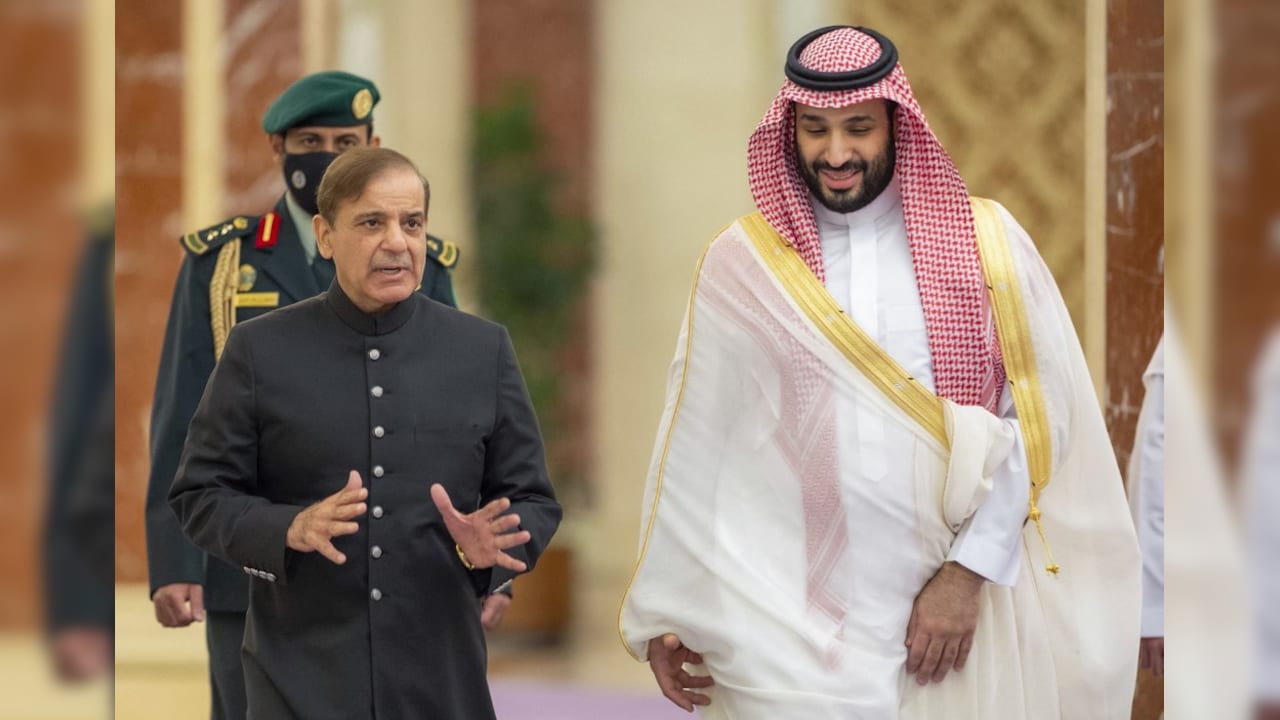
Statecraft in West Asia operates on hard transactional ledgers rather than sentimental declarations of Islamic solidarity. When Riyadh and Islamabad formalize security arrangements—most visibly reinforced through expanded bilateral frameworks and multilateral architectures like the Mecca Joint Defence Agreement—external analysts frequently misinterpret these instruments as unconditional military guarantees. To measure the genuine ceiling of Saudi Arabia's commitment to Pakistan, one must deconstruct the underlying economic exposure, regional risk asymmetry, and institutional constraints governing both states.
The Three Pillars of Bilateral Interdependence
The durability of the relationship rests on three distinct vectors, each carrying specific operational parameters and hard limits.
- Macroeconomic Stabilization Support: Saudi Arabia functions as an external balance-of-payments buffer for Pakistan. Through central bank deposits, deferred oil payment facilities, and emergency liquidity injections, Riyadh prevents systemic default in Islamabad. This financial lifeline is bounded by the fiscal health of the Kingdom and the strict conditionalities imposed by international financial institutions overseeing Pakistan's debt restructuring.
- Human Capital and Remittance Flows: Approximately 2.5 to 3 million Pakistani expatriates reside within the Kingdom, generating billions of dollars in annual inward remittances. This workforce spans construction, engineering, medical sectors, and domestic services. While vital for sustaining domestic consumption in Pakistan, this labor pipeline subjects Islamabad's economic stability to regulatory shifts in Saudi domestic employment quotas and Saudization policies.
- Defense Industrial and Personnel Cooperation: Pakistan provides military training, technical advisory roles, and localized defense equipment production to Saudi forces. In return, Islamabad secures a reliable partner for defense manufacturing joint ventures, specifically targeting unmanned systems, electronic warfare applications, and ammunition supply chains.
The Cost Function of Regional Intervention
Formal defense pacts that declare an attack on one state to be an attack on all conceal profound operational ambiguities. The historical precedent demonstrates that proximity does not equate to automatic belligerency.
When the Saudi-led military campaign in Yemen escalated, Pakistan's parliament formally voted to maintain neutrality, prioritizing domestic counter-terrorism burdens over foreign expeditionary commitments. This institutional friction highlights a permanent structural divergence in threat perceptions. Pakistan’s primary security matrix remains anchored to South Asia—specifically land borders and deterrence postures vis-à-vis India. Conversely, Saudi Arabia's strategic anxieties center on Gulf maritime security, energy infrastructure integrity, and the containment of asymmetric threats emanating from regional rivals.
An armed conflict involving Pakistan in South Asia triggers severe diplomatic calculus for Riyadh. Saudi Arabia maintains vital economic, technological, and energy-supply architectures with New Delhi. Financial exposure to Indian markets and labor exchanges prevents Riyadh from executing a zero-sum alignment that completely alienates India. Consequently, the upper bound of Saudi intervention in a direct India-Pakistan crisis restricts itself to diplomatic mediation, intelligence sharing, and logistical or financial cushioning, short of direct kinetic engagement or nuclear guarantees.
Institutionalizing Strategic Autonomy
The evolution of trilateral security signaling involving Turkey, Saudi Arabia, and Pakistan reflects an adaptation to a multipolar international order where traditional Western security guarantees are perceived as increasingly volatile. Each actor enters this arrangement to maximize individual leverage:
- Riyadh seeks to convert financial dominance into durable regional security architecture while insulating its ambitious economic diversification programs under Vision 2030 from regional kinetic shocks.
- Islamabad aims to diversify its strategic partnerships, widening its diplomatic horizon beyond traditional reliance on Western capitals and Beijing.
- Ankara leverages its defense-industrial output to project sustained influence across West Asia and South Asia.
Despite these convergent ambitions, the structural mechanics of decision-making remain decentralized. Operational deployment requires unanimous alignment of national interests, which breaks down the moment a crisis crosses domestic sovereignty thresholds.
Strategic Trajectory
The utility of the Saudi-Pakistani alignment lies in its deterrence signaling rather than its war-fighting automation. Riyadh is willing to go as far as financial bailouts, diplomatic umbrella support, and defense-industrial integration can carry them without fracturing their broader economic diversification imperatives. Policy planners must evaluate the partnership through its economic mechanics and institutional friction points, discarding the rhetorical veneer of unconditioned military automaticity.