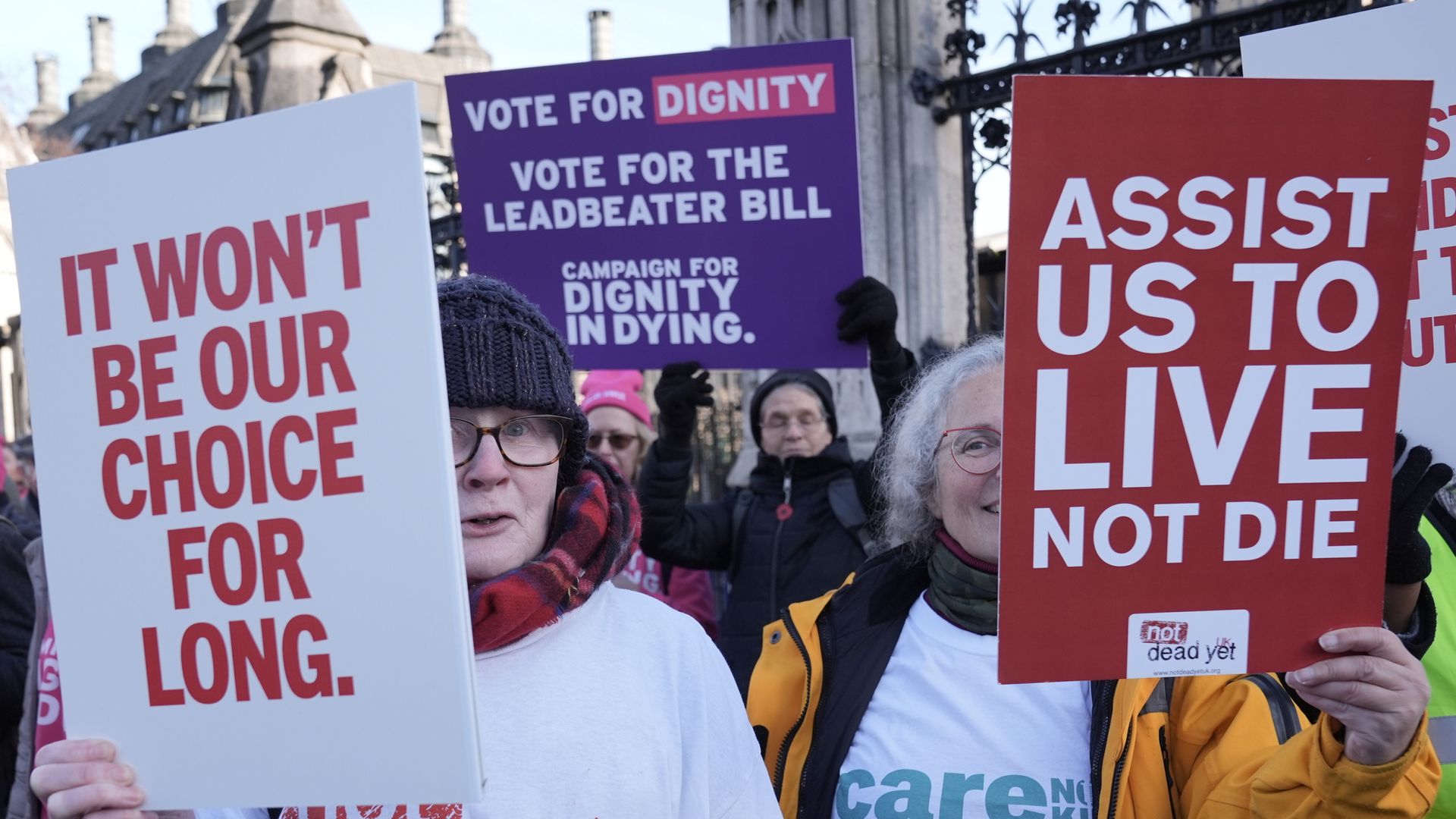
The failure of assisted dying legislation is rarely a failure of public sentiment; it is a failure of legislative architecture and risk-mitigation modeling. In jurisdictions where these bills collapse, the defeat typically stems from an inability to reconcile two competing mathematical imperatives: the maximization of individual autonomy and the absolute minimization of "wrongful death" errors. To advance such a bill from a failed motion to a functional statute, proponents must move beyond moral arguments and solve for the specific technical bottlenecks that trigger legislative vetoes.
The Triad of Legislative Friction
Any bill seeking to legalize assisted dying must pass through a gauntlet of three distinct pressure points. When a bill fails, it has almost always been strangled by one of these specific variables:
- The Definition of Terminality: The core eligibility bottleneck. If the definition is too broad (e.g., "unbearable suffering"), it loses the support of moderate blocks who fear "mission creep." If it is too narrow (e.g., "death within six months"), it excludes the very demographics whose suffering is most prolonged, such as those with neurodegenerative conditions.
- The Judicial vs. Medical Oversight Balance: Legislators often deadlock on who should hold the final "kill switch." Medical-led models prioritize clinical assessment but face pushback from doctors who refuse to act as adjudicators. Judicial-led models offer higher perceived rigor but introduce bureaucratic latency that can outrun the patient’s remaining lifespan.
- The Safeguard Feedback Loop: This is the mechanical process of ensuring no coercion exists. The failure point here is usually the "subjectivity gap"—the difficulty of proving a negative (the absence of pressure from heirs or healthcare providers) to a standard of absolute legal certainty.
Assessing the Failure of the Current Motion
The recent legislative collapse can be mapped directly to a loss of confidence in the Coercion Detection Protocol. Opponents did not necessarily win on the morality of the act; they won on the "Implementation Risk" profile.
Legislative bodies function as risk-aversion machines. When a bill’s language allows for high variance in interpretation—specifically regarding what constitutes "mental capacity" at the point of request versus the point of administration—the risk of a catastrophic error (a wrongful death) is weighted more heavily than the benefit of the policy. The failure to provide a high-resolution, data-backed method for assessing late-stage capacity created an information vacuum that skeptics filled with "Slippery Slope" hypotheticals.
The Mechanism for Legal Resuscitation
For a failed bill to return to the floor and succeed, the strategy must pivot from advocacy to technical optimization. This requires a three-phase re-engineering of the legislative proposal.
Phase I: Quantitative Eligibility Hardening
The next iteration must replace qualitative descriptors with a Clinical Eligibility Matrix. Rather than relying on a single doctor's prognosis, the bill should require a "consensus model" involving:
- An independent medical review board.
- A fixed diagnostic window that is verifiable through objective pathology.
- A tiered eligibility system that starts with terminal oncology and only expands to other conditions after a mandatory five-year data review period.
This "phased rollout" strategy mimics the regulatory path of high-risk pharmaceuticals. It reduces the immediate political cost by narrowing the scope of initial impact while establishing the infrastructure for future expansion.
Phase II: Decoupling Administration from Adjudication
A significant cause of legislative friction is the "Conscientious Objector" bottleneck. By forcing the existing healthcare system to absorb assisted dying as a standard service, bills trigger resistance from medical unions and religious-affiliated hospital groups.
The structural solution is the creation of a Dedicated Statutory Authority. This body would exist outside the standard National Health Service or private insurance networks. By centralizing the expertise and the legal liability within a specialized agency, the bill removes the burden from general practitioners and creates a "clean" data set for oversight. This also solves the "Judicial Latency" problem by providing specialized judges or magistrates dedicated solely to these applications.
Phase III: The Verification Log
To neutralize the argument of "hidden coercion," the new bill must integrate a Multi-Point Consent Log. This is not a single form, but a longitudinal record of intent.
- T-Minus 90 Days: Initial declaration of intent.
- T-Minus 30 Days: Independent psychiatric evaluation focusing on external pressures.
- T-Minus 48 Hours: Final confirmation of capacity.
This creates a "paper trail of autonomy" that is difficult to challenge in a court of law. It shifts the burden of proof from the state (to prove there is no coercion) to the process itself (which documents the active desire for the procedure over a sustained period).
The Economic and Capacity Variables
The discussion often ignores the "Bed-Blocker" perception—a cynical but potent political variable. In healthcare systems facing severe capacity constraints, assisted dying is sometimes viewed through a dark lens of "cost-saving." Proponents fail when they ignore this; they succeed when they insulate the bill from fiscal influence.
The bill must include a "Fiscal Firewall" clause, explicitly stating that the funding for assisted dying programs cannot be linked to palliative care budgets. This prevents the zero-sum game argument where opponents claim that legalizing assisted dying will lead to the defunding of end-of-life care. In fact, for a bill to pass, it often requires a "sidecar" piece of legislation that increases funding for palliative care, thereby proving that the state is not choosing the "cheaper" option.
The International Comparison Gap
Opposition often cites the "Canada Model" (MAiD) as a cautionary tale of rapid expansion. This creates a "Data Contamination" effect where the failures of one jurisdiction's loosely written law are used to veto another's tightly written one.
To bypass this, the strategy must involve a Comparative Policy Audit. The new bill should be explicitly drafted to counter the specific "vulnerabilities" identified in the Canadian or Dutch systems. For example, by explicitly prohibiting assisted dying for mental health as a primary condition, the bill can distance itself from the most controversial international precedents, making it "safe" for moderate legislators to support.
Structural Resistance in the House
The secondary failure point is the committee stage. Even if a bill passes a second reading, it is often gutted during the line-by-line scrutiny of the committee. The resistance here is usually technical:
- Liability Protections: Ensuring that doctors participating in the process are immune from both criminal prosecution and civil litigation, provided the protocol was followed.
- The "Last Act" Requirement: The debate over whether the patient must physically administer the lethal dose themselves (Self-Administration) or if a clinician can do it (Euthanasia).
Data from Oregon and Washington suggests that a "Self-Administration" model has a much higher rate of legislative success because it places the final physical act of agency solely on the patient, which serves as the ultimate safeguard against third-party error. Moving the bill toward a "prescriptive-only" model—where the doctor provides the means but does not perform the act—is a high-probability path to passing the House.
The Strategic Path Forward
The path to law is not through another emotional debate. It is through the meticulous de-risking of the policy. The next move for proponents is the formation of a Shadow Drafting Committee comprised not of activists, but of insurance actuaries, palliative care specialists, and constitutional lawyers.
Their goal must be to produce a "High-Resolution Statute" that addresses the "Implementation Risk" head-on. This means defining "Capacity" with the same rigor used in high-stakes financial contracts and establishing an oversight body with the transparency of an aviation safety board.
Once the "Safeguard Feedback Loop" is mathematically sound and the "Fiscal Firewall" is in place, the legislative resistance loses its technical footing. The bill then ceases to be a radical social change and becomes a regulated medical evolution. The focus must shift from the "Right to Die" to the "System of Dying." Success lies in the boring, granular details of administrative law, not the soaring rhetoric of the public square.
To win, the next bill must be so technically robust that its rejection would appear irrational from a risk-management perspective. Proponents must stop trying to win the heart and start trying to satisfy the audit. This is the only mechanism that survives the committee stage and reaches royal assent.