Capital allocation failure in federal disaster recovery is rarely a problem of total dollar volume; it is a problem of institutional throughput, oversight friction, and execution capacity. When $1.9 billion in federal disaster recovery appropriations yields less than a third in actual expenditures nearly a decade after a major catastrophe, the failure mechanism is structural rather than budgetary.
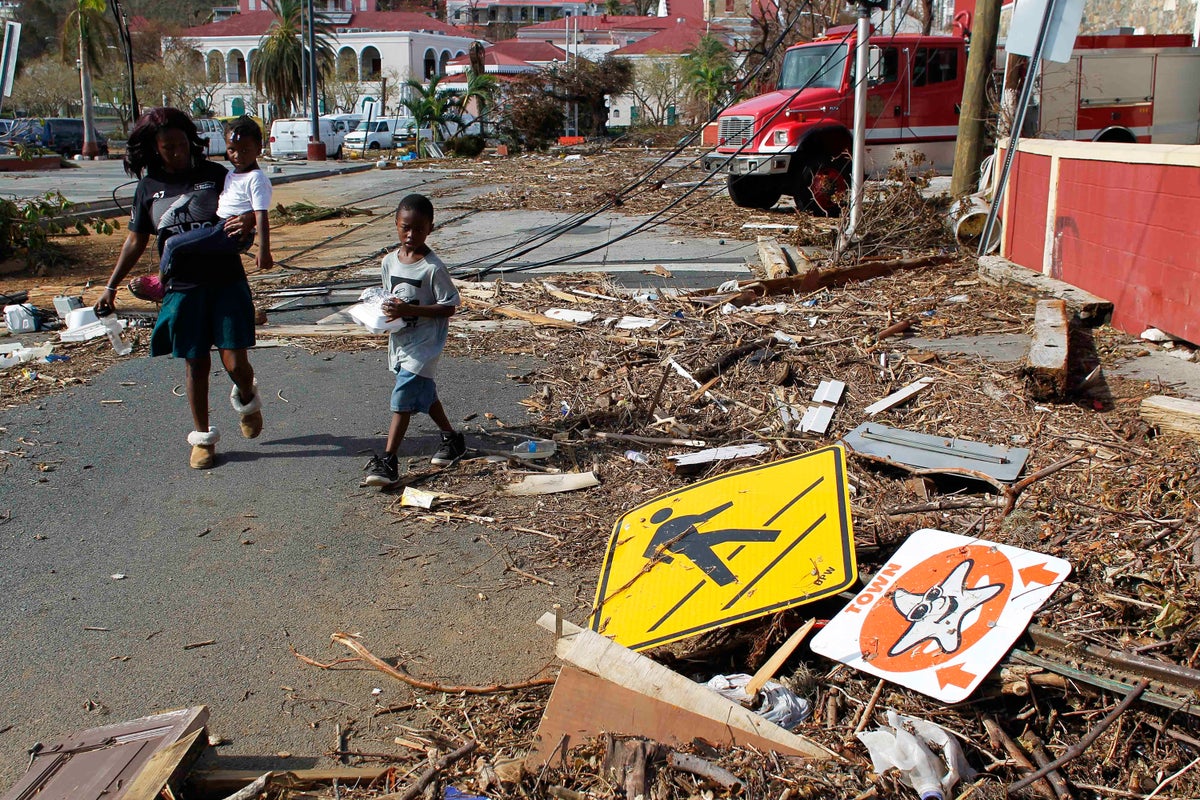
The U.S. Department of Housing and Urban Development (HUD) suspended federal funding transactions involving the Virgin Islands Housing Finance Authority (VIHFA) following an investigation revealing systemic capital stagnation, administrative burn rates, and financial mismanagement. The central dynamic is stark: despite an allocation of $1.9 billion intended for post-Hurricane Irma and Maria infrastructure and housing restoration, approximately $1.3 billion remains unspent and effectively locked out of public distribution.
Understanding this capital bottleneck requires deconstructing the operational path of Community Development Block Grant Disaster Recovery (CDBG-DR) funds, the structural incentives of local implementation agencies, and the systemic failure points that convert federal grant commitments into idle accounts.
The Three Structural Failure Points of Post-Disaster Capital Flow
Federal recovery frameworks rely on a two-tier capital deployment model. Congress appropriates capital to federal agencies (such as HUD or FEMA), which then obligate these funds to territorial or state entities acting as pass-through managers. The execution then depends entirely on the receiving entity's procurement, engineering, and oversight systems. In the case of the Virgin Islands' disaster recovery capital, this execution pipeline collapsed across three primary vectors.
1. Project Execution Collapse and Velocity Asymmetry
The fundamental metric of capital deployment efficacy is the execution rate relative to time and administrative expenditure. Operational records demonstrate a extreme disparity between administrative consumption and output delivery.
- Capital Deployment vs. Project Output: Out of 95 planned single-family rental rehabilitation projects, only two were completed. Out of 329 planned single- and multi-family housing projects, zero were completed.
- Energy Infrastructure Stagnation: As of mid-2026, the local housing authority had deployed approximately 2% of allocated grid recovery funding.
- Administrative Burn Disparity: While physical infrastructure projects sat at near-zero execution, the administrative entity consumed over 50% of the grant funds designated specifically for administrative overhead.
This dynamic creates an overhead-to-output asymmetry. When an agency consumes overhead capital without advancing physical infrastructure, the marginal cost per completed project scales exponentially, eroding the real purchasing power of the total grant before physical work even begins.
2. Double-Dipping and Financial Control Failures
When internal accounting systems lack real-time reconciliation across federal funding streams, agency operations degenerate into duplicative requests and fraudulent reporting. HUD’s forensic audits uncovered that the territory’s housing authority sought $6.2 million in disaster relief for expenditures already compensated by the Federal Emergency Management Agency (FEMA).
This reflects a breakdown in basic ledger synchronization. When multi-agency funding sources (HUD CDBG-DR, FEMA Public Assistance) overlap in scope, local agencies operating without strict programmatic firewalls risk committing cross-grant accounting errors or outright double-billing. The result is immediate federal administrative intervention, which freezes the total capital pipeline to audit historic ledger entries.
3. Procurement Decay and Fraud Risk
The procurement cycle in disaster zones suffers from severe agency-cost problems. When federal funds flow into localized high-demand, low-supply vendor environments, the risk of procurement distortion rises sharply.
The conviction of the authority's former chief operating officer on federal fraud and money-laundering charges illustrates this dynamic. The inflation of a basic material supply contract—scaling a $3 million lumber purchase to $4.5 million to yield a $107,000 illicit payment—did not simply siphon money out of the program; it resulted in total asset decay. The procurement material was left exposed to environmental degradation, rendering the asset entirely useless. Procurement failure in capital deployment is rarely just a monetary loss; it is a timeline collapse where physical inputs rot before reaching construction phases.
Quantifying the Cost of Capital Stagnation
Money delayed in disaster recovery is money depreciated. The $1.3 billion capital lock cannot be viewed as a static pool of purchasing power sitting safely in an escrow account. Between the initial post-storm allocations in 2017–2018 and the present date, three distinct economic forces actively diminish the real value of these disaster grants.
Real Value Delivered = Total Allocation - (Inflationary Decay + Admin Overhead Burn + Material Waste)
Inflationary Cost Escalation
Building material, supply chain logistics, and labor costs in island territories experience compounding inflation rates far exceeding mainland benchmarks due to maritime freight dependencies. A dollar allocated for concrete or structural steel in 2018 buys a fraction of that physical volume today. By allowing $1.3 billion to sit unspent for years, the territorial housing authority effectively experienced a massive erosion in real purchasing power without ever laying a foundation.
Opportunistic Overhead Siphoning
When primary capital deployment halts, the administrative apparatus does not pause its payroll or operational overhead. The longer a grant cycle stretches without reaching construction milestones, the higher the proportion of total capital consumed by salaries, legal fees, consultancy retainers, and office leases. Capital meant for hard assets transitions into fixed operating costs for an idle bureau.
Federal Clawback and Opportunity Risk
Federal disaster recovery programs operate on strict statutory spend-by deadlines. When local agencies miss compliance metrics, federal oversight bodies impose administrative freezes or initiate statutory clawbacks. The immediate consequence of a HUD suspension is not just the termination of current corrupt practices; it is the complete operational lockup of legitimate sub-contractors, municipal projects, and home repairs dependent on that pipeline.
Operational Architecture: Federal Capital vs. Local Execution
To understand why this systemic breakdown occurred, consider the operational structural differences between federal disaster allocation and local execution capacity.
| Operational Dimension | Federal Allocation Stage (HUD/FEMA) | Local Execution Stage (VIHFA) |
|---|---|---|
| Primary Metric | Congressional Appropriation & Obligation Volume | Project Completion & Outlay Velocity |
| Control Mechanism | Statutory Compliance & Audit Thresholds | Procurement & Vendor Management |
| Incentive Structure | Capital Deployment & Political Accountability | Overhead Maintenance & Local Contracting |
| Primary Vulnerability | Delayed Oversight & Slow Fraud Detection | Administrative Stagnation & Procurement Fraud |
| Failure Mode | Blanket Interdiction (Grant Suspension) | Asset Rot & Zero Output Delivery |
The systemic mismatch is clear. Federal authorities measure success by the billions obligated, whereas local communities experience recovery only through physical projects delivered. When local execution capacity fails, the federal system's only recourse is blanket interdiction—cutting off the flow of funds entirely. This protects taxpayer dollars from further fraud, but it locks the local populace into a perpetual state of unrecovered disaster damage.
Direct Action Playbook for Post-Interdiction Recovery
Restoring a frozen disaster capital pipeline requires moving beyond basic anti-corruption rhetoric. When a federal agency halts a territory's housing authority funding, unfreezing that capital requires a complete restructuring of the administrative architecture.
Implement Third-Party Fiduciary Oversight
The local housing authority must strip its internal procurement unit of direct disbursement power. A independent financial manager must be integrated into the payment workflow, requiring dual-key authorization for any transaction exceeding basic micro-purchase thresholds. All cross-agency claims between FEMA and HUD allocations must be routed through automated clearinghouses that block duplicate invoice submissions.
Unbundle Large Procurement Contracts
Instead of issuing broad, multi-million-dollar umbrella procurement awards—which invite local kickbacks and create single-point operational failures—the recovery authority must break housing projects into smaller, fixed-price modular contracts. Sub-contractors should be paid strictly on verified milestone completions rather than upfront material procurement advances, eliminating the risk of paid-for materials rotting in storage.
Shift Focus to Direct In-Kind Material Delivery
To combat localized price inflation and procurement manipulation, the managing authority should transition from cash-grant reimbursements to centralized, pre-audited federal material supply chains. Direct delivery of standardized housing components circumvents local procurement bottlenecks and restricts opportunities for inflated invoicing.
Establish Transparent Outlay Dashboards
Administrative cost consumption must be algorithmically tied to physical project progression. A public-facing ledger tracking spending alongside real-time engineering milestones ensures that administrative burn cannot exceed physical completion percentages without triggering immediate automated audits.
Rebuilding hurricane-damaged infrastructure requires operational competence, procurement integrity, and relentless capital tracking. Until receiving jurisdictions align their internal administrative capacities with the scale of federal capital inflows, billions in recovery aid will continue to sit idle in accounts while the physical assets they were meant to replace remain broken.