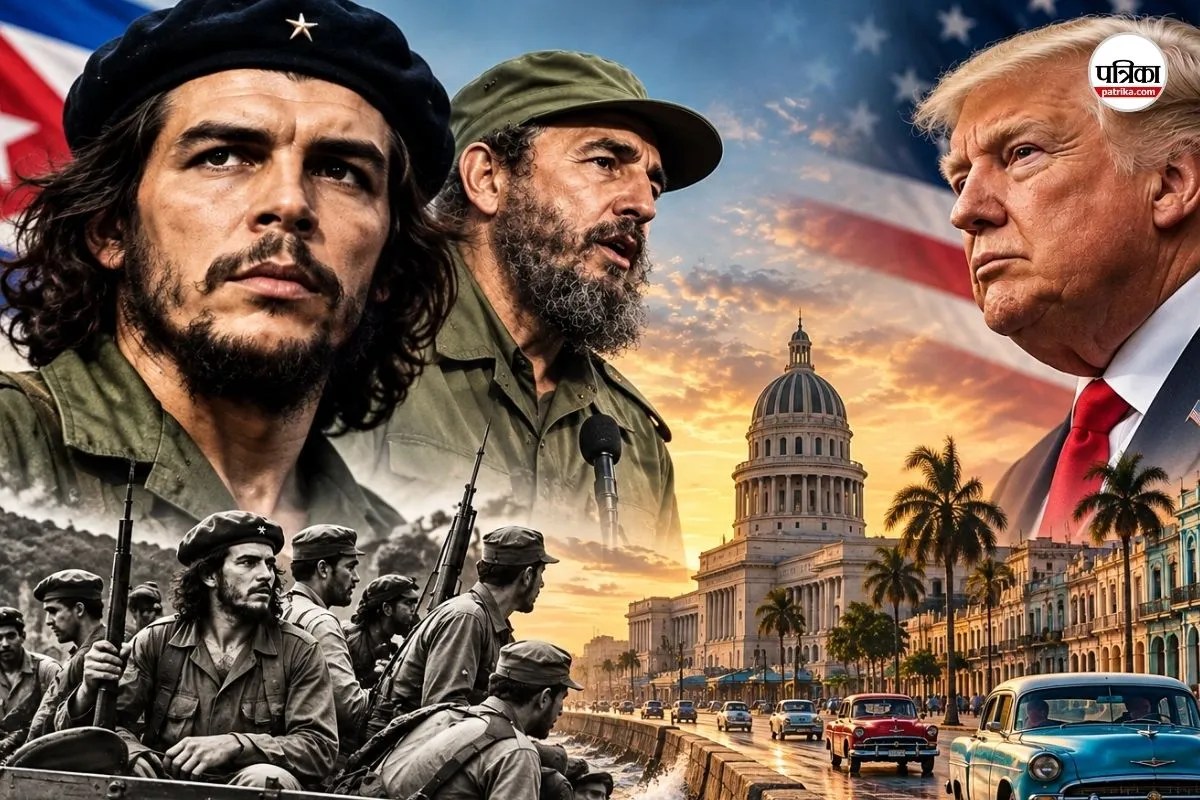
The persistent friction between Washington and Havana is rarely evaluated through structural economics; instead, it is typically reduced to ideological posturing. To understand why modern executive pressure from the United States exerts such asymmetric force on Cuba, one must deconstruct the island's macroeconomic architecture, its dependency vectors, and the failure modes of its state-controlled model. The mechanics of this pressure do not rely on military engagement, but on the systematic constriction of energy inputs, financial clearing mechanisms, and external subsidies.
The Tripartite Dependency Model
The historical resilience of the Cuban state rested on its ability to substitute one external patron for another. Following the collapse of the Soviet Union, which triggered the contraction known as the Special Period, the island diversified its survival strategy across three distinct vectors:
- Subsidized Hydrocarbon Imports: Energy security functioned as the primary variable of macroeconomic stability. When the Venezuelan alliance under Hugo Chávez supplied preferential-rate crude oil, it insulated Havana from global spot-market pricing.
- Remittance Inflows: Foreign exchange generated by the diaspora in Florida provided the liquidity required to import staple foodstuffs and intermediate goods, functioning as an unofficial private-sector cushion against state-sector stagnation.
- State-Managed Tourism and Export Monopolies: Capital accumulation remained concentrated within tourism infrastructure and medical internationalism, generating hard currency to service external obligations.
When external variables compress these three vectors simultaneously—such as the tightening of oil supply chains, restrictions on remittance channels, and the post-pandemic collapse in tourism yields—the state's fiscal deficit widens beyond the capacity of internal production to compensate.
The Cost Function of Economic Isolation
The U.S. embargo and secondary sanctions operate as friction costs embedded into every commercial transaction originating in or destined for Cuba. Traditional economic analysis often mistakes the embargo for a simple trade prohibition, whereas its operational reality is financial extraterritoriality.
Institutions engaging in trade with Havana face the opportunity cost of losing access to the U.S. financial clearing system. Consequently, international shipping firms, insurers, and commercial banks apply a risk premium to any transaction involving the island. This mechanism creates a persistent bottleneck:
$$\text{Transaction Cost} = \text{Base Price} + \text{Logistical Friction} + \text{Sanctions Risk Premium}$$
Because the Cuban economy imports roughly 70 to 80 percent of its food and nearly all of its primary energy, this compounded cost function manifests as chronic domestic scarcity, inflationary pressures in informal markets, and capital flight.
Structural Reforms and the Dualized Economy
Faced with declining state capacity, the domestic economic model has undergone a forced transition. The expansion of private micro, small, and medium-sized enterprises, alongside the legalization of non-state retail trade, points toward a structural shift reminiscent of state-directed capitalist models observed elsewhere. However, this internal reform creates a dualized economy characterized by severe divergence:
- The Dynamic Private Sector: Fueled by hard-currency remittances and foreign supply chains, private actors capture urban consumer trade and services.
- The Shrinking Public Sector: State employees, reliant on fixed local-currency salaries, experience severe purchasing power erosion as inflation outpaces nominal wage adjustments.
This divergence degrades the traditional social contract of the revolution. As the state loses its ability to distribute basic entitlements through the ration book (libreta), the political legitimacy of the administrative apparatus is directly challenged by everyday socioeconomic exhaustion.
Strategic Assessment and Forward Projections
The pressure exerted by the second Trump administration—characterized by tightened financial restrictions, enforcement of energy tariffs on third-party suppliers, and the designation of state entities—accelerates these internal contradictions. Havana's historical playbook of waiting out hostile administrations encounters diminishing returns when internal capital reserves are depleted and demographic emigration reaches historic highs.
The trajectory of the island depends on the elasticity of its emerging private sector versus the rigidity of its political controls. If the state attempts to re-absorb private capital accumulation to preserve ideological purity, economic contraction will deepen. Conversely, an uncontrolled transition toward managed state capitalism risks dissolving the ideological foundation of the regime from within. The strategic outcome will be determined not by rhetorical confrontation, but by which system runs out of liquidity first.