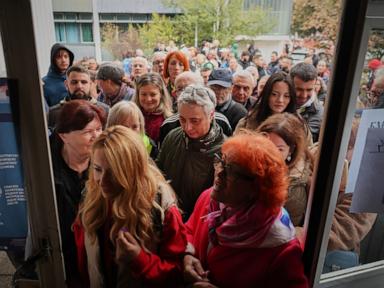
Western journalists love a clean story. They see tens of thousands of Serbian students marching through Belgrade, blocking intersections, and chanting against corruption, and they immediately dust off the playbook from the year 2000. They see the ghosts of Otpor!—the student movement that helped topple Slobodan Milosevic—and assume history is repeating itself.
They are wrong. Completely, dangerously wrong. Meanwhile, you can read other events here: The Heavy Iron Gates of Paris and What Happens When Teenagers Refuse to Open Them.
Mainstream coverage frames Serbian parliamentary elections alongside student demonstrations as a binary battle between a cornered populist strongman and a rising democratic tide. That narrative sells clicks in Brussels and Washington, yet it fundamentally misunderstands how modern competitive authoritarianism works. Aleksandar Vucic is not a brittle autocrat trembling behind palace walls while the youth storm the gates. He is a political technician who has spent over a decade turning street protests and snap elections into the very oxygen his regime breathes.
If you want to understand what is actually happening in Serbia, stop watching the crowd sizes in Belgrade and start looking at the structural mechanics of the Serbian Progressive Party (SNS). To explore the bigger picture, check out the detailed report by NPR.
The Fallacy of the "Cornered Strongman"
When a parliamentary election happens against a backdrop of massive student unrest, the lazy consensus argues that the ruling party is on the defensive. In reality, snap elections in Serbia are almost always called by Vucic himself—often years ahead of schedule—precisely when street pressure threatens to coalesce into something organized.
I have watched political analysts, international election observers, and Western diplomats fall for this exact feint across the Balkans for fifteen years. They treat an election announcement as a concession to the streets. It is not a concession. It is a pressure-release valve.
Think about the logistics of a snap campaign in a media environment where the ruling coalition controls nearly every national television frequency and tabloid front page. Calling an election forces the opposition and student organizers out of the streets—where they hold the moral high ground and visual momentum—and drags them into an institutional arena where the rules are rigged from the jump.
Suddenly, energy that was focused on a single, unifying grievance (like government accountability or infrastructure failures) fractures into squabbles over coalition lists, threshold percentages, and ideological purity. Vucic does not fear the ballot box; he uses it to reset the clock on public anger.
Competitive Authoritarianism Is Not a Dictatorship
To understand why the "Milosevic 2.0" comparison fails, we need to define our terms with surgical precision. Political scientists Steven Levitsky and Lucan Way coined the term competitive authoritarianism to describe regimes where formal democratic institutions exist and are widely viewed as the primary means of gaining power, yet incumbents abuse state resources so severely that the playing field is overwhelmingly tilted.
Slobodan Milosevic ruled through overt, clunky coercion, international isolation, and catastrophic wars. When the economy collapsed and the security apparatus fractured in October 2000, the regime imploded overnight.
Vucic operates on an entirely different operating system.
- Co-optation over crude repression: Aside from sporadic police clashes during peak flashpoints, the Serbian state largely avoids creating martyrs. Why beat students on live television when you can simply outwait them, smear their leaders in state-aligned tabloids, and wait for exam season or summer break to thin the crowds?
- The patronage machine: The SNS is not an ideological movement; it is the largest employment agency in Southeast Europe. With roughly 700,000 members in a country of fewer than seven million people, state jobs, public tenders, and local permits are tied directly to party loyalty.
- Geopolitical triangulation: Unlike Milosevic, Vucic maintains functional, transactional relationships with Washington, Brussels, Moscow, and Beijing simultaneously. European leaders care about lithium mining deals, regional stability in Kosovo, and migrant transit routes far more than they care about press freedom in Novi Sad.
When foreign reporters treat Serbian elections as a referendum on Vucic’s popularity, they miss the point. Elections in Serbia are not beauty contests. They are audits of a patronage network.
What Everyone Gets Wrong About the Student Protests
Are the students brave? Yes. Are their grievances legitimate? Undeniably. Years of institutional decay, opaque infrastructure contracts with foreign conglomerates, and suffocating media control have hollowed out public trust.
Yet passion is not a strategy, and moral clarity does not translate into parliamentary seats.
Imagine a scenario where 100,000 students occupy every major square in Belgrade for three straight months, maintaining total discipline and zero violence. Even in that best-case scenario, who governs the morning after?
The fatal flaw of modern leaderless—or aggressively horizontal—protest movements is their allergic reaction to party politics. Influenced by distrust of all politicians, student groups frequently distance themselves from opposition parties to keep their movement "pure." They ban party flags at rallies. They refuse to endorse electoral slates.
Vucic loves this. Every time protesters chant that "all politicians are the same," they do the ruling party's dirty work for free. Authoritarian incumbents do not need voters to love them; they only need voters to believe that no viable alternative exists. By divorcing street energy from institutional politics, protesters guarantee that their momentum hits a brick wall the moment polls open.
Dismantling the Myths Around Serbian Elections
If you follow mainstream international coverage of Balkan politics, you have likely encountered a handful of recurring questions that frame the situation entirely backward. Let us strip away the diplomatic politeness and look at the reality behind them.
Does high turnout automatically hurt Vucic?
Conventional wisdom says high voter turnout favors the opposition. In Belgrade and major urban centers, that holds true. Across rural Serbia and smaller industrial towns, higher turnout often reflects the efficiency of the SNS get-out-the-vote apparatus. Through aggressive voter tracking, public-sector pressure, and targeted pre-election cash handouts to pensioners and youth, the ruling party excels at dragging reluctant citizens to the polls. Turnout alone is a false metric; where the turnout happens is all that matters.
Will European Union pressure force democratic reforms?
Stop waiting for Brussels to save Serbian democracy. The European Union operates on consensus and stability, not idealism. As long as Belgrade cooperates on regional security frameworks and critical raw materials—most notably the Jadar valley lithium reserves—European capitals will issue mildly worded "concerns" about election irregularities while signing billion-dollar trade agreements the very next afternoon. Foreign pressure is a mirage.
Are the opposition parties actually prepared to govern?
Here is the uncomfortable truth that opposition cheerleaders hate hearing: Serbia’s fractured opposition routinely underperforms because it runs campaigns designed for Twitter rather than kitchen tables. While Vucic speaks directly to pensioners about highway construction, modest wage hikes, and national pride, opposition blocs frequently bog themselves down in procedural grievances about media access. Voters know the media is biased. Complaining about the referee does not win the match when voters are asking how you will pay their heating bills.
The Structural Math the Media Ignores
Look at the demographic and geographic breakdown of Serbia, and the electoral math becomes brutally clear.
Belgrade is a cosmopolitan, frustrated metropolis where opposition sentiment routinely commands a plurality or outright majority. If Serbia were a city-state, Vucic would have lost power years ago.
It is not. Outside the capital—and a handful of pockets like Novi Sad and parts of Nis—Serbia is older, poorer, and heavily dependent on state transfers. In towns where the local municipality or a state-subsidized factory is the only stable employer, voting against the ruling party is not an abstract ideological choice. It is an existential financial risk.
Furthermore, Serbia’s proportional representation system rewards unified blocs and punishes fragmentation. When the opposition splits into competing pro-European, centrist, and nationalist columns, wasted votes from parties falling just below the 3% parliamentary threshold are redistributed mathematically to the largest party—which is always the SNS.
How an Opposition Movement Actually Breaks the Deadlock
If endless street marches and reactive snap elections only reinforce the status quo, what actually works? History and political science—from the defeat of Vladimir Meciar in Slovakia in 1998 to municipal breakthroughs in Turkey and Hungary—point to a specific, grueling blueprint.
- Abandon purity and build a unified electoral front. Street movements must stop treating political parties like radioactive waste. Without a disciplined vehicle to contest every single polling station across rural Serbia, protest energy evaporates into thin air.
- Shift from moral outrage to bread-and-butter economics. Fighting corruption is a rallying cry for students and the urban middle class. Fighting inflation, healthcare wait times, and agricultural subsidies wins votes in central and southern Serbia.
- Win the cities first, then starve the patronage network. National power in competitive authoritarian regimes rarely falls in a single blow. Winning municipal control in Belgrade, Novi Sad, and Nis cuts off local procurement contracts, municipal media budgets, and public-sector jobs that feed the ruling party’s machine.
- Master asymmetric communication. Waiting for state television to grant fair airtime is suicide. Winning campaigns bypass legacy gatekeepers through hyper-local door-to-door organizing, decentralized digital networks, and targeted messaging aimed specifically at disillusioned ruling-party voters rather than preaching to the converted.
The Hard Truth About The Contrarian View
Is there a risk to telling protesters to trade the streets for tedious party-building and municipal trench warfare? Yes, and it is massive.
The moment a popular student movement aligns with established opposition politicians, it risks inheriting all of their baggage, internal rivalries, and public cynicism. Street protests thrive on simplicity; coalition politics is messy, unglamorous, and slow. By stepping into the institutional arena, reformers expose themselves to character assassination, co-optation, and crushing electoral defeats that can demoralize a generation for a decade.
Yet the alternative is worse: an endless loop of euphoric weekend marches, predictable snap elections, manufactured parliamentary majorities, and steady authoritarian consolidation.
Serbia’s students have proven they can fill the streets of Belgrade. Until they—and the opposition leaders trailing behind them—learn how to conquer the ballot boxes in the countryside, Aleksandar Vucic will gladly let them keep marching.