The United States' decision to extend the suspension of specific sanctions on Russian oil is not a diplomatic retreat but a calculated calibration of global supply elasticity. By maintaining the flow of Russian crude under controlled pricing mechanisms, the U.S. Treasury seeks to avoid a "supply shock" that would force a domestic inflationary spike while simultaneously starving the Kremlin’s long-term capital expenditure capabilities. This strategy operates on the knife-edge of two competing variables: the Global Brent Benchmark and the Russian Fiscal Break-even Point.
The Mechanics of the Price Cap Shield
The extension of these waivers reinforces the G7 Price Cap, a mechanism designed to allow Russian oil to reach the market only if sold below $60 per barrel. This creates a bifurcated market. The first segment consists of "compliant" oil that utilizes Western maritime services, insurance (P&I clubs), and financing. The second segment is the "shadow fleet," which operates outside Western jurisdictions at significantly higher operational risks and costs.
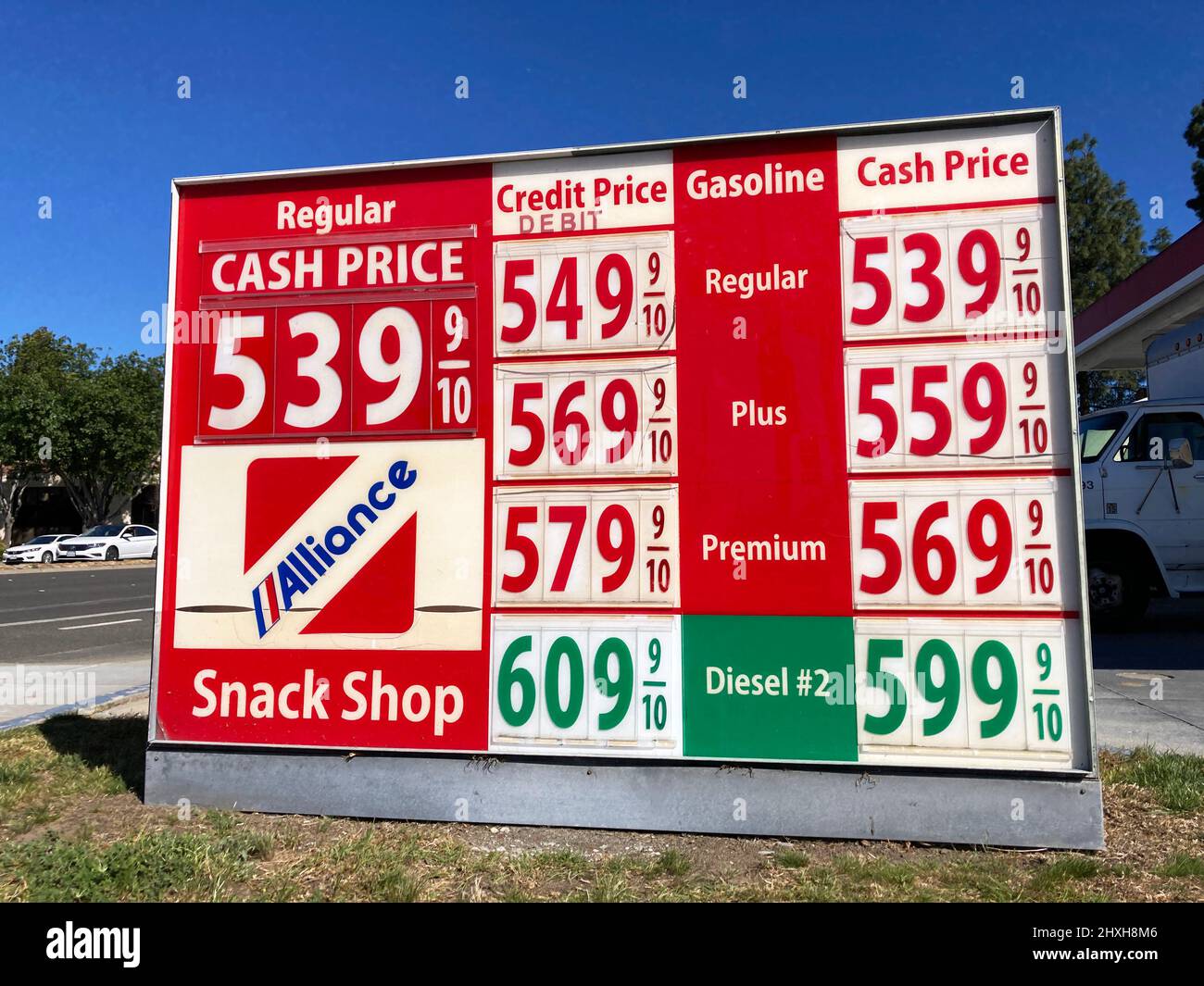
The logic of the waiver extension rests on the Service-Provision Bottleneck. If the U.S. were to abruptly terminate all exceptions, the immediate withdrawal of Western insurance and shipping services would remove approximately 2 to 3 million barrels per day (mb/d) from the global balance. Since global spare capacity is currently concentrated within a few OPEC+ nations—who have shown limited appetite for aggressive production increases—the resulting price surge would likely push Brent above $100. At that price level, even a sanctioned and discounted Russian barrel would yield higher net revenue for Moscow than a $60 barrel does in the current environment.
The Russian Oil Revenue Function
To understand the impact of the waiver extension, one must deconstruct the Russian oil revenue function ($R$):
$$R = V \cdot (P_{Brent} - D) - C_{ops} - C_{sanct}$$
Where:
- $V$: Volume of exports.
- $P_{Brent}$: Global benchmark price.
- $D$: The "Urals Discount" (the price reduction Russia must offer to attract non-Western buyers).
- $C_{ops}$: Standard lifting and extraction costs.
- $C_{sanct}$: The additional costs of circumventing sanctions (shadow fleet premiums, transshipment fees, and currency conversion losses).
By extending the waivers, the U.S. keeps $P_{Brent}$ stable. This forces Russia to compete on $D$ and $C_{sanct}$. The goal is not to bring $V$ to zero—which would destroy the global economy—but to ensure that after $D$ and $C_{sanct}$ are subtracted, the residual revenue barely covers $C_{ops}$ and basic state functions, leaving nothing for military reinvestment.
The Shadow Fleet Inflationary Pressure
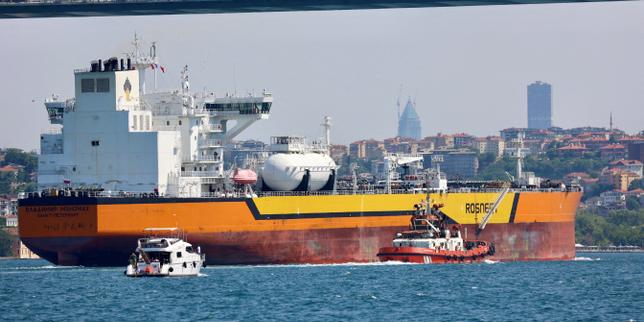
Russia has responded to the threat of sanctions by assembling a fleet of aging tankers, often lacking standard P&I insurance. This creates a "Risk-Externalization Problem." While these vessels bypass the $60 cap, they incur massive logistical inefficiencies.
- Freight Rate Spikes: Shipping Urals from Baltic ports to India instead of Europe increases the voyage duration from 5 days to 30+ days. This effectively reduces the global availability of tankers by locking them into longer transit cycles.
- Ship-to-Ship (STS) Transfer Risks: Russia frequently uses STS transfers in international waters to obfuscate the origin of the oil. This adds layers of cost and environmental risk that Western insurers refuse to touch.
- The Insurance Gap: Without Western "Gold Standard" insurance, Russian exporters must provide sovereign guarantees or use low-tier insurers. This increases the cost of capital for every barrel sold.
The U.S. waiver extension targets the compliant portion of the trade to ensure the shadow fleet remains a costly, inefficient alternative rather than the only option. If the "clean" route is closed, the shadow fleet expands, and the lack of oversight leads to a total loss of pricing transparency.
The Sino-Indian Arbitrage Advantage
A primary beneficiary of the waiver extension is the Asian refining sector, particularly in India and China. These nations have transitioned into the world’s primary "laundries" for Russian molecules. They purchase Urals at a steep discount ($D$), refine them into gasoline and diesel, and then export those products to the European and American markets.
This creates a Geopolitical Friction Point. While the U.S. objects to the revenue Russia receives, it relies on Indian refineries to keep the global middle-distillate (diesel) market supplied. If the U.S. were to apply secondary sanctions on Indian banks for processing Russian oil payments, the diesel crack spread (the difference between crude prices and refined product prices) would explode. This would paralyze logistics and agriculture in the West.
The waiver extension is, therefore, a quiet acknowledgment of the Refining Capacity Constraint. The West cannot afford to punish the buyers of Russian crude without punishing its own consumers at the pump.
Fiscal Sustainability vs. Military Capability
The effectiveness of the sanctions regime is often mismeasured by the total volume of Russian exports. The correct metric is the Net Fiscal Surplus. Russia’s oil and gas sector historically accounts for roughly 40% of its federal budget.
The extension of waivers allows the U.S. to manipulate the "Sanction Friction" without triggering a "Global Recoil." The strategy is one of attrition. By keeping the price cap in place and the waivers active, the U.S. ensures that Russia continues to export oil but at a margin that is insufficient to modernize its energy infrastructure.
- Upstream Decay: Without access to Western Tier-1 oilfield services (SLB, Halliburton, Baker Hughes), Russia struggles with pressure maintenance and horizontal drilling in mature fields.
- Refinery Obsolescence: Sanctions prevent the import of high-end catalysts and spare parts for sophisticated cracking units.
- Capital Flight: The high cost of the shadow fleet and the necessity of using CNY (Yuan) or AED (Dirham) for trade creates a permanent drain on the Russian Central Bank’s hard currency reserves.
The Strategic Recommendation for Energy Stakeholders
Market participants must view the waiver extension as a signal of long-term stability in the "low-intensity conflict" phase of energy sanctions. There is no immediate return to a pre-2022 market structure, but there is also no appetite in Washington for a scorched-earth policy that destroys the global economy.
- Monitor the Urals-Brent Spread: Any narrowing of this spread suggests Russia is successfully optimizing its shadow logistics, which may trigger a tightening of the waiver conditions or a "Targeted Sanction" on specific vessels.
- Evaluate Refining Margins in Non-Sanctioning Jurisdictions: The arbitrage opportunities in India and Turkey will remain robust as long as the waivers are extended. This is a structural shift, not a temporary blip.
- Risk Assessment of the Shadow Fleet: As the shadow fleet ages, the probability of a major maritime environmental disaster increases. Such an event would likely lead to an immediate, chaotic regulatory crackdown that could bypass current waiver structures.
The path forward is defined by Strategic Leakage. The U.S. allows just enough Russian oil to flow to keep the lights on globally, while ensuring the plumbing of the Russian state is slowly, but surely, rusting out from the inside.