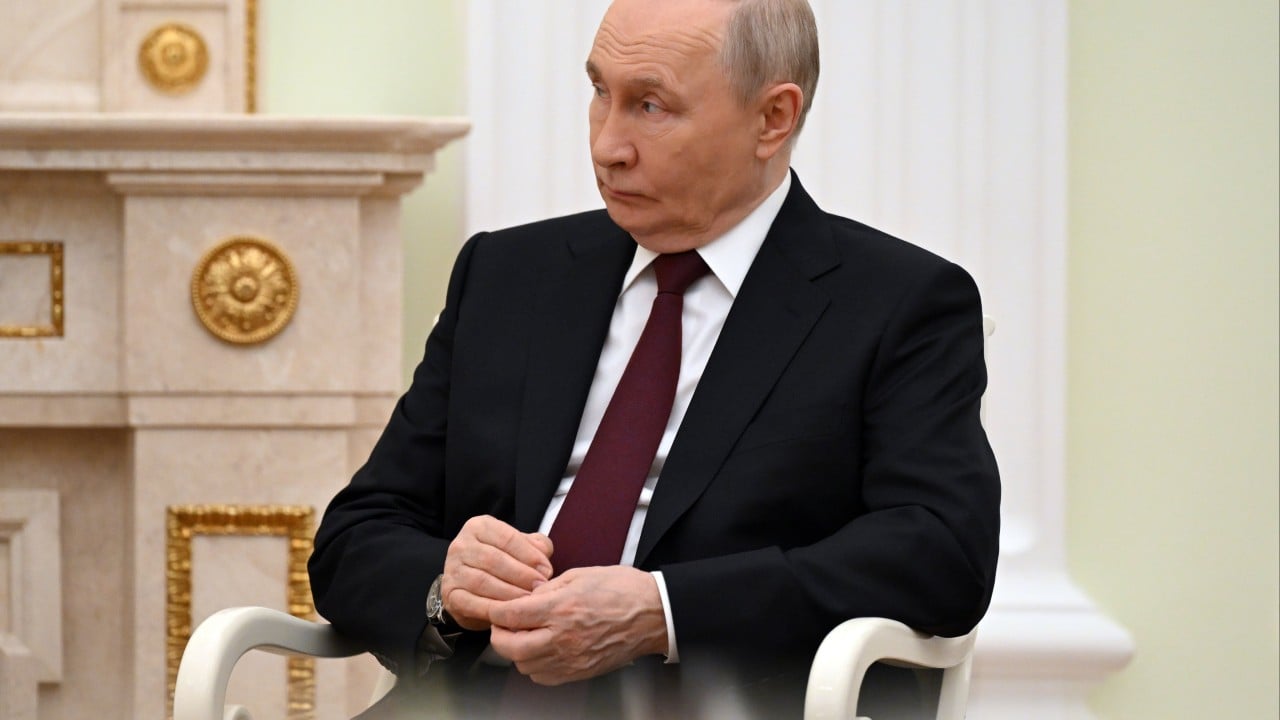
The internal stability of the Russian Federation relies on a specific information-management mechanism: the deliberate insulation of the executive branch from the direct fallout of systemic failures. When the Kremlin denies that Vladimir Putin is isolated from the country’s grievances, it is not merely issuing a PR rebuttal; it is defending the structural integrity of the "Good Tsar, Bad Boyars" political framework. This model functions as a risk-mitigation strategy where administrative failures are localized at the regional or ministerial level, preventing them from aggregating into a critique of the central leadership.
The recent friction between the Kremlin and the influential military blogger community (the voyenkory) highlights a critical stress test for this architecture. Unlike traditional state media, these bloggers operate within a feedback loop driven by frontline realities, creating a persistent tension between the state's top-down narrative and the bottom-up observations of a radicalized patriotic base.
The Triad of Information Control
To understand why the Kremlin must aggressively refute claims of isolation, one must analyze the three distinct pillars that sustain central authority during high-intensity geopolitical conflicts.
- Narrative Monopolization: The state must maintain the primary interpretation of reality. Any alternative source of truth—even from supportive nationalist quarters—represents a rival power center.
- Responsibility Delegation: Successes are centralized; failures are decentralized. If the executive is seen as "isolated," it implies he is no longer effectively managing the subordinates who are meant to take the blame for logistical or tactical errors.
- The Feedback Vacuum: A total disconnect from reality leads to strategic blindness. The Kremlin’s denial is an attempt to signal that the feedback loop is still functional, despite the widening gap between official reports and the "milblogger" critiques.
The criticism from nationalistic bloggers is particularly volatile because it originates from within the "pro-system" camp. While liberal opposition can be dismissed as foreign-aligned, the critique from war-supporting bloggers suggests a failure of the state to meet its own stated objectives. This creates a competence deficit that cannot be easily suppressed without alienating the most militant supporters of the current administration.
The Mechanics of Bureaucratic Deflection
The Kremlin’s communications strategy employs a specific set of maneuvers to neutralize reports of presidential isolation. This is not a simple denial but a sophisticated administrative shielding process.
The Buffer Zone Strategy
The Russian administrative structure is built with multiple layers of redundancy designed to absorb public anger. When military bloggers point to equipment shortages or tactical blunders, the Kremlin’s response is to redirect that energy toward the Ministry of Defense or regional governors. By maintaining a public distance from these specific "woes," the presidency preserves its status as the final arbiter rather than an active participant in the failure.
The Managed Pluralism of Dissent
The state allows a controlled degree of criticism from military bloggers to serve as a safety valve. By permitting certain figures to "speak truth to power" regarding low-level corruption or localized incompetence, the state gains two things:
- A sensor for actual problems that official reports might hide.
- An illusion of transparency that keeps the patriotic base engaged.
However, the threshold for this tolerance is reached when the criticism shifts from "how the policy is being implemented" to "the person setting the policy." The denial of isolation is the line in the sand—it asserts that the executive is fully aware, fully in control, and that any ongoing issues are part of a managed process rather than a loss of grip.
Analyzing the Feedback Loop Disruption
In a standard corporate or political hierarchy, a feedback loop functions as follows:
- Input: Real-world data (frontline losses, economic shifts).
- Processing: Analysis by middle management (ministers, generals).
- Output: Strategic adjustment by the executive.
The "isolation" narrative suggests a Processing Failure. If the executive is only receiving sanitized data, the Output will be disconnected from reality, leading to an eventual systemic collapse. The military bloggers are essentially attempting to bypass the Processing layer and deliver raw Input directly to the top. The Kremlin’s denial is a defensive posture to protect the integrity of the Processing layer—asserting that the formal channels are sufficient and the unofficial ones are redundant or misguided.
The Cost Function of Suppressing Loyalist Criticism
There is a measurable trade-off in how the state handles these criticisms. The Kremlin faces a binary choice with distinct costs:
- Option A: Co-option: Integrating bloggers into the state apparatus.
- Cost: Loss of the bloggers' perceived authenticity and their value as a "real" sensor of public mood.
- Option B: Suppression: Silencing the critics through legal or physical means.
- Cost: Risk of a "vacuum effect" where the state loses all visibility into the grievances of its most loyal and armed constituency, potentially leading to unpredicted radicalization.
The current strategy is a hybrid. By denying isolation while simultaneously "adjusting" the visibility of certain critics, the Kremlin is attempting to recalibrate the balance of power without triggering a full-scale internal revolt.
Structural Vulnerabilities in the Insulation Model
The "Good Tsar" model is not a permanent solution; it has inherent mathematical and psychological limits.
- The Scale of Failure: The model works for localized issues (a failing factory, a corrupt mayor). It begins to break down when the "woe" is systemic and national (high-intensity conflict, widespread economic sanctions). When the failure is too large to be blamed on a subordinate, it naturally gravitates toward the center.
- The Information Asymmetry: In the digital age, the speed at which frontline or economic data travels is faster than the state's ability to "decentralize" the blame. The lag time between a disaster and the official narrative is shrinking, making the presidency appear reactive rather than proactive.
- The Legitimacy Trap: If the Tsar is "all-knowing" (not isolated) but the situation does not improve, the only remaining logical conclusion for the populace is that the Tsar is either indifferent or incompetent. Both are lethal to the current power structure.
The Strategic Shift: From Management to Deflection
The denial issued by Dmitry Peskov regarding Putin’s isolation indicates a shift in the Kremlin's internal risk assessment. It suggests that the "isolation" narrative has gained enough traction to be considered a threat to the vertical of power.
The state is now forced to demonstrate "engagement" through highly publicized meetings with hand-picked "mothers of soldiers" or "working-class citizens." These are curated events designed to simulate a feedback loop. However, the military bloggers—who have actual skin in the game—see through these simulations. This creates a credibility gap that cannot be closed by press releases.
The second-order effect of this denial is the signaling to the Russian elite (the siloviki and the oligarchs). If the leader is perceived as isolated, the elite begin to hedge their bets, looking for alternative power centers or succession plans. By asserting that the leader is "fully informed," the Kremlin is primarily talking to its own inner circle, demanding continued fealty and discouraging any thoughts of a power vacuum.
The Logic of Selective Awareness
We must distinguish between Information Isolation (not knowing the facts) and Political Isolation (not having the power to act on them). It is highly likely the Russian executive has access to the raw data; however, the political cost of acting on that data—such as firing high-ranking loyalists or admitting strategic errors—is too high.
The Kremlin's "denial" is therefore a semantic shield. It addresses the appearance of knowing while maintaining the inaction required for political survival. The bloggers are not just complaining about lack of information; they are complaining about the lack of consequential action based on that information.
The Friction Point: The "Voyenkory" as a Parallel Intelligence Agency
The military bloggers have effectively created a parallel intelligence structure. This creates a data conflict:
- State Data: Emphasizes progress, heroic narratives, and managed costs.
- Blogger Data: Emphasizes logistical attrition, command failures, and tactical stagnation.
The Kremlin's denial of isolation is a claim of data superiority. It is an assertion that the state's view is the only "complete" view, and the bloggers' views are merely "fragmented" or "emotional."
Strategic Recommendations for Institutional Survival
To maintain the current equilibrium, the state must transition from a strategy of denial to one of controlled integration.
- Institutionalize the Critics: Instead of vague denials, the state should create formal advisory bodies for influential critics. This provides the appearance of "not being isolated" while binding the critics to the state's internal secrecy and loyalty rules.
- The Sacrifice Mechanism: To validate the claim that the executive "knows all," a high-profile "Bad Boyar" must eventually be held accountable. This restores the logic of the system: the leader knew there was a problem and has now solved it by removing the incompetent subordinate.
- Narrative Diversification: The state must move away from a singular "victory" narrative toward a "protracted struggle" narrative. This lowers the bar for success and makes localized "woes" appear as expected hurdles rather than evidence of central failure.
The core threat to the Kremlin is not the criticism itself, but the erosion of the administrative myth that the leader is the only person capable of holding the disparate parts of the Russian state together. If the bloggers successfully paint a picture of a leader "locked in a bunker" (metaphorically or literally), the myth dissolves, and the structural integrity of the state enters a period of terminal decline. The current denial is a frantic attempt to reinforce the walls of that myth before the cracks become irreversible.