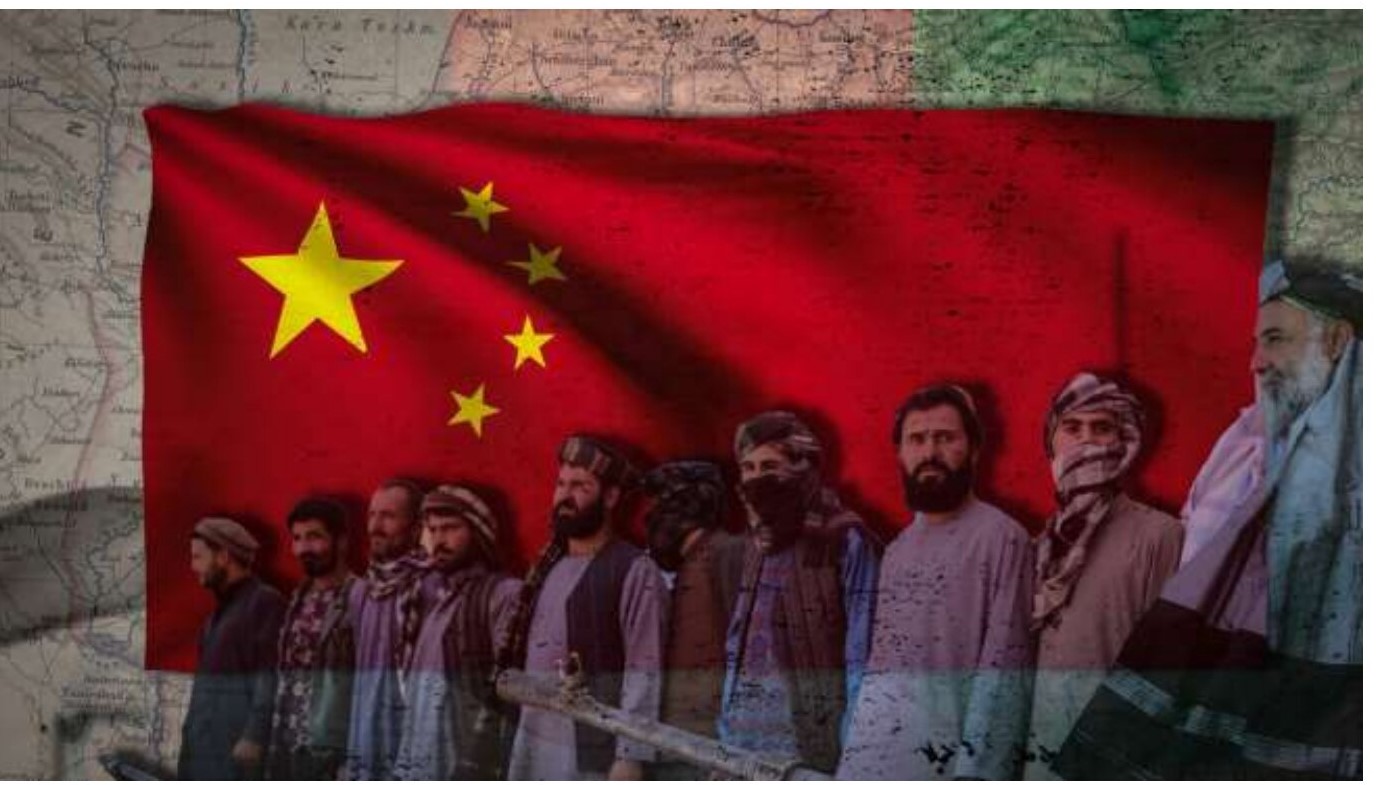
The failure of recent high-level diplomatic engagements in Islamabad marks a structural shift in Beijing’s mediation strategy, transitioning from a passive facilitator to an active architect of Middle Eastern security. The "Four-Point Peace Proposal" recently introduced by Xi Jinping is not merely a diplomatic overture; it is a calculated effort to mitigate the systemic risks of a direct US-Iran military confrontation that would physically sever China’s Belt and Road Initiative (BRI) arteries. This proposal functions through four distinct levers of influence: regional de-escalation, maritime security guarantees, nuclear non-proliferation through multilateralism, and economic integration as a deterrent to kinetic warfare.
The Structural Vacuum Left by Pakistan’s Failed Mediation
The breakdown of the Pakistan-brokered talks indicates a terminal decline in the "Middle Man" model of regional diplomacy. Traditionally, Pakistan served as a bridge between Riyadh, Tehran, and Washington due to its geographic proximity and shared religious or strategic ties. However, Pakistan’s internal economic volatility and its shifting prioritization toward domestic stability have rendered it an unreliable guarantor for such high-stakes negotiations.
When these talks derailed, the resulting power vacuum threatened to accelerate the timeline for a US-Iran kinetic engagement. China’s immediate intervention serves a dual purpose. It protects the $400 billion 25-year strategic agreement with Iran while preventing a surge in global energy prices that would cripple the Chinese manufacturing sector, which remains the world’s largest importer of crude oil.
Pillar One: Sovereign Integrity and the Non-Interventionist Framework
The first point of the proposal emphasizes the absolute sovereignty of regional actors, a direct critique of the US "maximum pressure" doctrine. Beijing’s logic here is rooted in Westphalian Sovereignty, asserting that stability is impossible if external powers attempt regime change or use extra-territorial sanctions.
China views the US-Iran friction as a "Zero-Sum Bottleneck." By advocating for a return to the Joint Comprehensive Plan of Action (JCPOA) frameworks—without the additional "sunsets" or ballistic missile constraints demanded by Washington—Beijing seeks to lower the temperature by validating the current Iranian political structure. This provides Tehran with the "Exit Ramp" it requires to de-escalate without losing domestic face or regional proxy credibility.
Pillar Two: The Maritime Security Architecture
A primary driver of US-Iran tension is the vulnerability of the Strait of Hormuz, where roughly 20% of the world’s total oil consumption passes daily. The Chinese proposal suggests a multilateral maritime security mechanism that replaces US-led naval coalitions with a regional-led cooperative.
The logic here follows the Common Security model. China recognizes that as long as the US Navy is the primary enforcer of maritime law in the Persian Gulf, Iran will use its asymmetric "A2/AD" (Anti-Access/Area Denial) capabilities—such as fast attack craft and sea mines—as a defensive hedge. By proposing a framework where China, Russia, and regional powers (including the GCC) manage security, Beijing aims to neutralize Iran’s need to threaten the shipping lanes as a bargaining chip.
Pillar Three: Comprehensive Nuclear Multilateralism
Xi Jinping’s third point focuses on the "indivisibility of security," a concept often cited in the context of European security but applied here to the nuclear standoff. The proposal moves away from bilateral US-Iran demands and toward a collective security treaty for the Middle East.
China’s strategy involves:
- Linking Iranian nuclear de-escalation to the security of neighboring Sunni states.
- Integrating the International Atomic Energy Agency (IAEA) as the sole technical arbiter, removing the political "trigger" for snapback sanctions held by individual Western nations.
- Providing Chinese-backed civilian nuclear technology as a substitute for enrichment programs that carry high proliferation risks.
This creates a Dependency Loop. If Iran accepts Chinese technical oversight and infrastructure, it becomes harder for Tehran to pivot back to military enrichment without losing its primary economic patron.
Pillar Four: Economic Development as a Pacification Tool
The final pillar is the "Security through Development" thesis. Beijing posits that the primary driver of Iranian aggression is its economic isolation. By integrating Iran into the BRI and the Shanghai Cooperation Organization (SCO) more deeply, China intends to raise the "Opportunity Cost of War" to an unsustainable level.
If the Iranian economy is woven into a regional network of high-speed rail, fiber-optic cables, and energy pipelines connected to China, any conflict with the US becomes a conflict with the global supply chain. This is not soft diplomacy; it is Economic Entrenchment. It forces Washington to consider whether a strike on Iranian infrastructure is effectively a strike on Chinese assets, thereby creating a de facto "Human Shield" of capital.
The Cost Function of Military Escalation
A quantitative analysis of a potential US-Iran conflict reveals why China is moving with such urgency. The "War Premia" on oil prices is estimated to cause a $20 to $30 per barrel increase almost instantly upon the commencement of hostilities. For the Chinese economy, which operates on thin margins for energy-intensive exports, this represents a potential 1.5% to 2% contraction in GDP growth.
Furthermore, the "Security Dilemma" is currently at its peak. As the US increases its footprint in the Middle East to deter Iran, it inadvertently creates an incentive for Iran to accelerate its nuclear program to achieve a "Deterrence Minimum." China’s four-point plan seeks to break this cycle by offering Iran economic survival in exchange for regional "Quietude."
Tactical Limitations and Friction Points
The Chinese proposal faces significant headwinds that Beijing’s analysts are currently attempting to mitigate.
- The Trust Deficit: Washington views Chinese mediation as a "Trojan Horse" designed to erode US influence in the region. There is no mechanism within the proposal that addresses the US requirement for a total cessation of Iranian proxy activities in Lebanon, Yemen, and Iraq.
- Proxy Autonomy: The proposal assumes Tehran has absolute control over its regional proxies. In reality, groups like the Houthis or Hezbollah often operate based on localized grievances that are not easily pacified by Chinese infrastructure projects.
- Israel’s Security Calculus: The four-point plan is notably silent on the specific security concerns of Israel. Without Israeli buy-in, the risk of a "Third-Party Trigger"—where a strike by a non-US actor forces a general war—remains high.
Strategic Forecast: The Shift Toward "Pax Sinica"
The success of this proposal depends on China’s ability to act as a "Lender of Last Resort" for Iran while maintaining a functional trade relationship with the United States. We are entering a phase of Bipolar Mediation, where the traditional US-centric security architecture is challenged by a Chinese-centric economic architecture.
The immediate strategic move for regional actors is to hedge. Saudi Arabia and the UAE are already signaling a willingness to participate in Chinese-led dialogues, not because they trust Beijing more than Washington, but because they recognize that China’s "Four-Point" logic offers a path to stability that does not require the total destruction of the Iranian state—an outcome that would create a catastrophic refugee and security crisis on their borders.
The "Four-Point" plan is a signal that China is willing to provide the "Security Goods" traditionally reserved for the hegemon. If the US fails to provide a viable diplomatic alternative to its current sanctions-heavy approach, the Middle East’s center of gravity will shift toward the "Developmental Peace" model proposed by Beijing. This would result in a regional order where the US provides the hard power, but China writes the rules of engagement.
The most probable outcome in the next 18 months is not a formal treaty, but a series of "Shadow De-escalations." Iran will likely slow enrichment in exchange for "unofficial" Chinese oil purchases that the US chooses not to enforce, creating a fragile but functional stasis. This "Gray Zone Peace" is exactly what the Four-Point proposal is designed to facilitate: a world where war is too expensive to start, even if the underlying animosities remain unresolved.