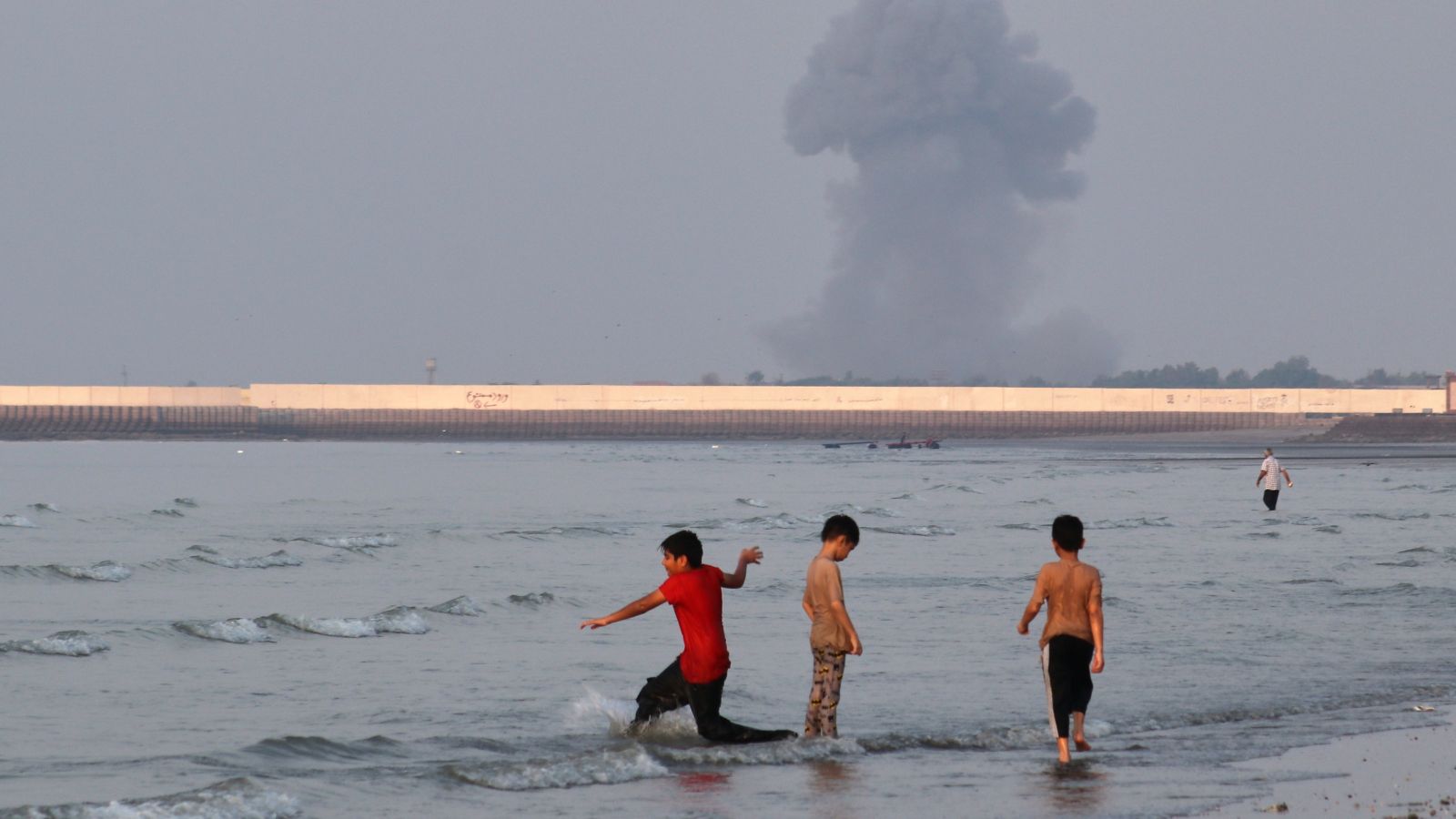
Mainstream news outlets live-blogging every minor skirmish in the Persian Gulf as a precursor to World War III are feeding you a diet of high-fructose geopolitical hysteria.
They want you to believe the Strait of Hormuz is a delicate glass tube. They claim Iran can snap it with a single missile, instantly plunging the world into a dark age of $300 oil and total economic collapse.
It is a great narrative for selling ads. It is an absolute lie for anyone who understands maritime logistics, historical precedent, and the hard, cold reality of physical energy flows.
The "imminent shipping blockade" is the most recycled ghost story in global trade. It is time to dismantle the lazy consensus.
The 1980s Reality Check: Tankers Do Not Just Sink
Let’s look at the actual historical baseline instead of relying on theoretical modeling from think tanks funded by defense contractors.
During the Iran-Iraq War in the 1980s, the two nations engaged in what was literally called the Tanker War. It was the most sustained, aggressive, and concentrated campaign against commercial merchant shipping since World War II.
For years, both sides threw everything they had at commercial vessels. They used:
- Anti-ship cruise missiles
- Sea mines
- Heavy caliber machine guns
- Air-dropped bombs
The result? Out of 411 commercial ships attacked, only a fraction actually sank.
More specifically, of the 239 petroleum tankers targeted, only 23% were completely sunk or declared a constructive total loss. The remaining 77% shrugged off the hits, patched up their hulls, and kept moving cargo.
Why? Because modern oil tankers are not fragile toys. They are massive, double-hulled, compartmentalized steel beasts designed to survive catastrophic accidents. An anti-ship missile designed to puncture a sleek, thin-walled military destroyer makes a messy dent in a supertanker, but it rarely penetrates the massive internal cargo compartments deeply enough to compromise the ship's buoyancy.
Even at the absolute peak of the 1980s conflict, less than 2% of the ships passing through the Persian Gulf were ever disrupted. The oil kept flowing. Global trade adapted.
If Saddam Hussein and the Ayatollah Khomeini could not shut down the Strait of Hormuz during an eight-year total war, a few localized retaliatory strikes today are not going to do it either.
The Geography Myth: You Cannot Block a Highway
Pundits love to show maps highlighting the "two-mile-wide shipping lanes" of the Strait. They use this visual to suggest that sinking a single container ship would block the entire channel, like a jackknifed semi-truck on a two-lane mountain road.
This shows a fundamental ignorance of basic bathymetry and maritime law.
                  THE STRAIT OF HORMUZ CROSS-SECTION

  [Oman Coast]                                      [Iran Coast]
       |                                                 |
       |=============   [Shipping Lanes]   ==============|
       |              \   2 miles wide   /               |
       |               \________________/                |
       |                       ||                        |
       |         Deep Water Channel: 200 - 330 ft        |
       |_________________________________________________|
The Strait of Hormuz is not the Suez Canal. It is not a narrow, dredged, dirt-walled trench. At its narrowest point, the strait is 21 miles wide.
Yes, the designated outbound and inbound shipping lanes used for orderly traffic management are two miles wide each. But the surrounding waters are deep—typically between 200 and 330 feet throughout the navigable sections.
If a ship sinks in the shipping lane, other ships do not get stuck behind it. They simply turn their rudders and sail around it. The idea of a physical blockade created by scuttling blockships is a fantasy that belongs in 19th-century naval manuals, not 21st-century reality.
The Economic Suicide of a Real Blockade
Let’s talk about Iran’s actual strategic calculus, independent of the scary rhetoric broadcast on cable news.
Iran’s economy is heavily dependent on the sea lanes. They export their own crude oil (even under heavy sanctions) and import food, medicine, and industrial goods through the very same waters.
Closing the Strait of Hormuz would mean:
- Immediate Self-Strangulation: Iran would instantly cut off its own economic lifeline, starving its regime of what little foreign currency it still manages to generate.
- Alienating Key Allies: Iran's primary oil buyers are not Western nations; they are Asian giants like China. If Tehran shuts the Strait, they do not just anger Washington—they directly threaten the energy security of Beijing, their primary diplomatic and economic shield on the global stage.
- Triggering Total War: A physical closure of the Strait is the one red line that would guarantee a unified global coalition, forcing a devastating military response that the Iranian leadership knows they would not survive.
Tehran is highly rational. They use the threat of disruption as diplomatic leverage because they know the West is hyper-sensitive to inflation and oil prices. The threat is infinitely more valuable to them than the action.
Once you actually pull the trigger and close the gates, you lose all leverage and inherit a shooting war you cannot win.
Who Actually Benefits From the Fear-Mongering?
If the threat of a total shutdown is a paper tiger, why does the media scream about it every time a drone is launched? Follow the money.
| Player | Motivation | Action |
|---|---|---|
| Wall Street Speculators | Volatility equals profit. | They bid up oil futures on the slightest rumor, making millions on paper before the physical oil market even registers a blip. |
| Defense Contractors | Budget justification. | Every headline about "resumed strikes" or "missile threats" is used to lobby for more naval funding, air defense systems, and escort deployments. |
| Media Networks | Ad revenue and engagement. | "Everything is Fine in the Persian Gulf" gets zero clicks. "World War 3 Live Updates" keeps millions glued to their screens. |
| Insurance Underwriters | Higher premiums. | Lloyd's of London syndicates declare the Gulf a "high-risk zone" and jack up war risk premiums. They pocket the cash because they know the actual rate of hull loss is astronomically low. |
I have worked with marine insurance risk analysts who will tell you privately over drinks what they will never say on camera: the Persian Gulf transit is one of the most profitable risk-assessment rackets on the planet. They charge massive premiums for a risk that is heavily mitigated by international naval presence and ship design, laughing all the way to the bank.
Stop Trading the Noise
The next time you see a flashing red banner on your screen announcing "breaking news" of a tanker hit by a missile in the Middle East, do not panic.
Do not sell your equities. Do not buy into the narrative that global supply chains are about to snap forever.
The playbook has not changed in forty years:
- A drone or missile strikes a tanker.
- The ship's crew extinguishes a localized fire.
- The ship continues to its destination under its own power.
- The media declares an imminent global supply crisis.
- Oil prices spike temporarily, then drift back down as physical inventory levels remain completely unchanged.
The Strait remains open, the theater continues, and the oil will keep moving. Turn off the live updates. Go touch some grass.