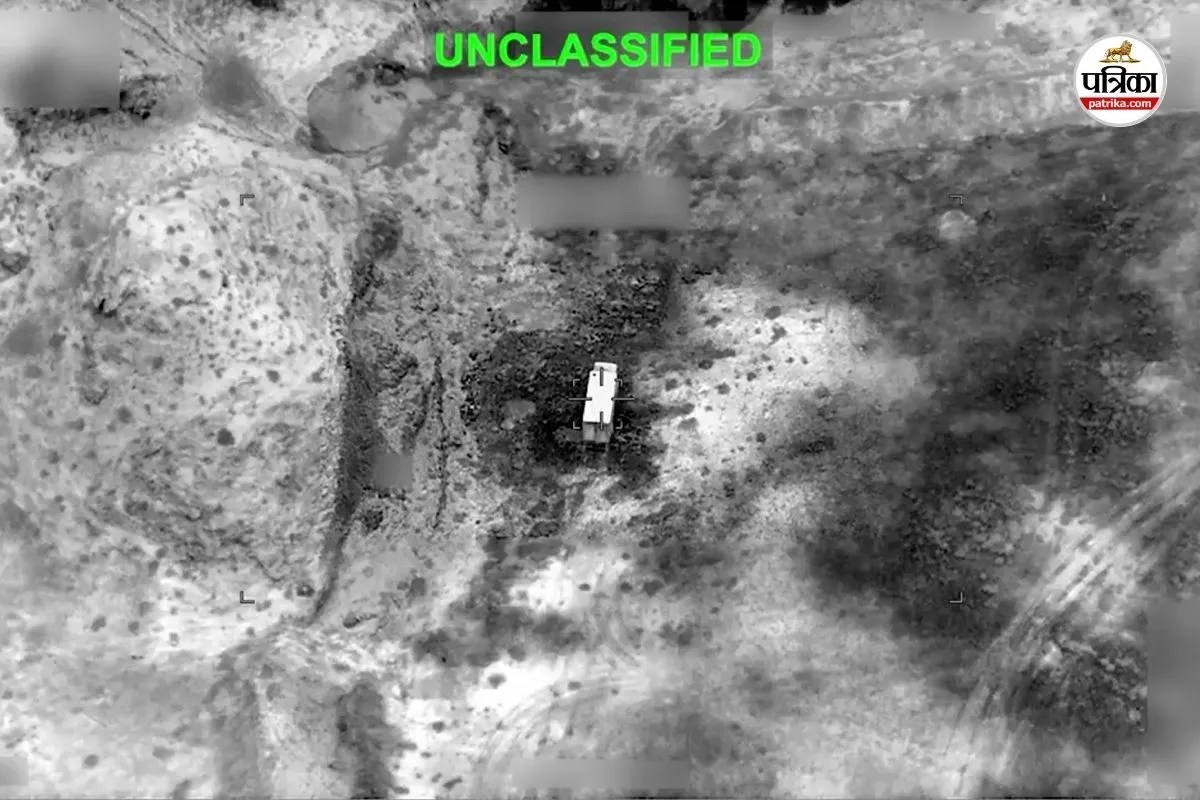
The United States military recently executed a ninety-minute targeted strike operation near the Strait of Hormuz, aiming to neutralize immediate aerial and maritime threats attributed to Iranian-backed forces. While initial Pentagon briefings framed the engagement as a surgical success designed to protect international shipping lanes, the reality on the water reveals a much more volatile calculation. This was not just a defensive reflex. It was a high-stakes chess move in a choke point that handles a fifth of the world's petroleum supply. The tactical success of the operation masks a deeper strategic vulnerability that Washington continues to ignore.
Military engagements in the Persian Gulf are rarely isolated events. They are symptoms of a long-festering geopolitical standoff. To understand why a ninety-minute skirmish matters, one must look past the immediate damage assessments and examine the structural realities of asymmetric warfare in the region.
The Choreography of a Ninety Minute Strike
Pentagon officials frequently utilize terms like measured response to describe these encounters. The timeline of the operation indicates a highly coordinated sequence of electronic jamming, drone interceptions, and precision missile strikes. Naval assets deployed in the area, including guided-missile destroyers and carrier-based aircraft, engaged multiple inbound targets within a tightly compressed window.
The primary objective was clear. The command sought to disable coastal radar installations and drone launch sites that have increasingly menaced commercial vessels. By limiting the operational window to exactly one and a half hours, planners aimed to achieve maximum disruption while minimizing the window for Iranian conventional escalation.
This window is critical. Tehran excels at utilizing proxy networks and low-cost loitering munitions to project power without triggering a full-scale declaration of war. The US response was tailored to match this asymmetry, using localized superiority to send a message without mobilizing for sustained conflict.
The tactical execution was flawless on paper. Yet, the underlying friction remains entirely untouched.
The Asymmetric Equation in the Choke Point
The Strait of Hormuz is a geographic nightmare for traditional naval doctrine. At its narrowest point, the shipping lanes consist of just two miles of navigable water for inbound and outbound traffic, separated by a two-mile buffer zone. This confinement strips away the primary advantage of a blue-water navy: space.
Iran understands this structural limitation perfectly. Over the past two decades, the Islamic Revolutionary Guard Corps Navy (IRGCN) has pivoted away from large, conventional warships. Instead, they have invested heavily in a doctrine of swarm tactics, mobile anti-ship missile batteries, and low-cost naval mines.
- Swarm Boats: Hundreds of fast attack craft armed with heavy machine guns, rockets, and short-range missiles.
- Loitering Munitions: Cheap, GPS-guided drones that can be launched from civilian trucks parked miles inland.
- Subsurface Threats: Small midget submarines capable of laying mines in shallow waters where US sonar efficiency drops significantly.
Consider the financial disparity of this confrontation. A standard American SM-2 interceptor missile costs over a million dollars. The drone it destroys often costs less than twenty thousand. This economic asymmetry means that even when the US military wins every tactical engagement, it faces a long-term war of attrition that drains resources and strains logistics.
The Mirage of Deterrence
Every administration over the past thirty years has attempted to establish a definitive line in the sand regarding Persian Gulf transit. Each kinetic action is accompanied by a press release stating that deterrence has been restored.
Deterrence is an abstract concept that rarely survives contact with ideological realities. For Tehran, the constant friction with Western naval forces serves a dual purpose. Domestically, it reinforces the regime's narrative of resistance against foreign intervention. Regionally, it demonstrates to Gulf neighbors that despite billions of dollars in American defense hardware, the global economy remains hostage to local instability.
When the US strikes a radar site, a new mobile unit is often operational within forty-eight hours. The infrastructure of asymmetric warfare is highly modular and easily replaced. Therefore, the ninety-minute operation did not degrade Iran's long-term capabilities; it merely reset the clock for the next inevitable confrontation.
Global Supply Chains on a Razor's Edge
The immediate consequence of these military exchanges is felt far from the Pentagon briefing rooms. Commodity markets react instantly to reports of gunfire near the strait. Maritime insurance underwriters routinely raise war risk premiums for tankers transiting the region following these engagements.
These costs are not absorbed by the shipping conglomerates. They are passed directly down the supply chain to energy consumers in Europe and Asia. A sustained closure or significant disruption of the strait would trigger an immediate spike in global crude prices, disrupting economic stability far more effectively than any conventional military blockade.
The international community relies heavily on the US Navy to act as the guarantor of free navigation. However, this reliance creates a moral hazard. Regional powers can afford to take risks, knowing that Washington will ultimately bear the financial and military burden of keeping the shipping lanes open.
The Flawed Architecture of Escalation Management
Washington prides itself on its ability to manage escalation. The theory dictates that by calibrating the force of a strike, an adversary can be coerced into compliance without crossing the threshold into total war.
This approach assumes that both sides share the same definition of rationality. In a highly volatile environment where communication channels are indirect and plagued by mistrust, the risk of miscalculation is extraordinarily high. A single errant missile hitting a high-value asset or causing significant casualties could instantly transform a controlled ninety-minute operation into a regional conflagration that neither side genuinely desires.
Relying on the precision of modern weaponry to prevent escalation is a dangerous gamble. Technology can guide a missile to a specific coordinate, but it cannot control the political chain reaction that follows the explosion. The strategic calculus must shift away from reactive kinetic strikes toward a sustainable long-term framework that addresses the root causes of regional maritime instability.