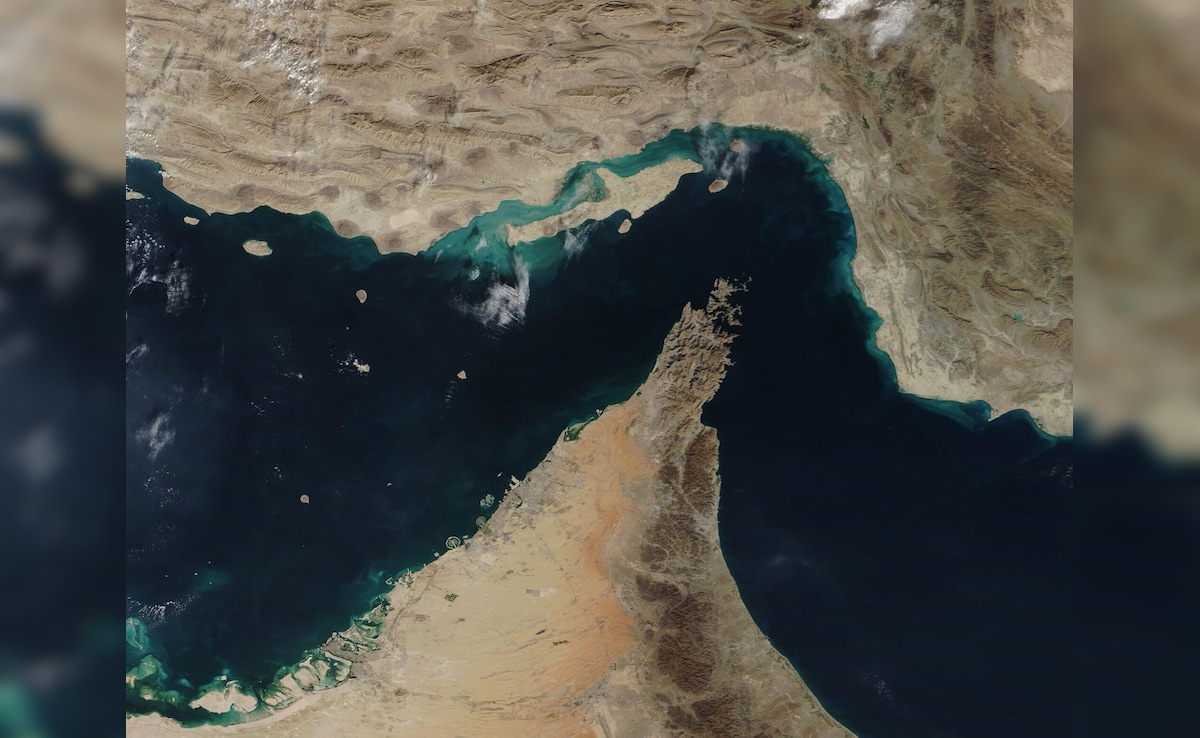
Tehran wants you to panic. Every time a headline flashes about a new Iranian committee, a fresh monitoring body, or a "real-time update" system for the Strait of Hormuz, Western markets dutifully spike oil prices, defense contractors polish their pitches, and media outlets copy-paste the same tired narrative of an imminent global economic chokehold.
It is a theater of intimidation. The recent announcement of a dedicated body to provide real-time updates on shipping traffic in the world’s most critical maritime chokepoint is not a tactical upgrade. It is a public relations stunt disguised as military surveillance. If you enjoyed this article, you should check out: this related article.
The lazy consensus among mainstream geopolitical analysts is that Iran is tightening its grip on the throat of global energy. They look at a map, see that the shipping lanes sit within Oman and Iran’s territorial waters, and assume total tactical dominance. They are asking the wrong question. They ask, "How will this new data body affect shipping security?" The real question is, "Why is Iran pretending that basic maritime tracking is a new weapon?"
The premise that Iran needs a new bureaucratic body to achieve real-time situational awareness in its own backyard is absurd. Anyone with an internet connection and a subscription to basic maritime intelligence platforms can track transponders in the Gulf. This is not about capability. It is about signaling. For another perspective on this event, see the recent coverage from TIME.
The Myth of the Data Monopoly
Let’s dismantle the operational reality. The Strait of Hormuz is roughly 21 miles wide at its narrowest point. The actual shipping lanes consist of two-mile-wide channels for inbound and outbound traffic, separated by a two-mile buffer zone. You do not need an advanced command-and-control apparatus to monitor this. You need a pair of binoculars and a shore-based radar station.
The mainstream press treats this announcement as a technical leap forward. I have spent years analyzing maritime risk and trade flows, and I can tell you that the shipping industry is already drowning in data. Lloyd’s List Intelligence, Kpler, and a dozen other private firms track every tanker, every barrel, and every destination with terrifying precision.
Iran’s "real-time update" body adds exactly zero net value to the global maritime awareness picture. What it does create is a centralized mechanism for information warfare. By establishing an official state mouthpiece for shipping updates, Tehran creates a tool to inject manufactured volatility into the market.
Imagine a scenario where a routine mechanical failure on a Liberian-flagged crude carrier is reframed by this new body as a "security intervention by the Islamic Revolutionary Guard Corps." The Western algorithms that scrape news feeds for trading signals do not wait for verification. They buy futures. The price of Brent crude jumps two percent in twenty minutes. Mission accomplished. Iran wins the economic skirmish without firing a single shot or risking a single fast attack craft.
The Flawed Premise of the Chokepoint Panic
Every "People Also Ask" block on Google regarding this topic is flooded with variations of the same terrified question: Can Iran permanently close the Strait of Hormuz?
The brutal, honest answer is no.
The narrative of a total blockade is a ghost story told to frighten energy traders. To understand why, you have to look past the political rhetoric and look at the physical and economic geography.
First, a total closure of the Strait requires physical or military denial of the waters. The moment Iran attempts a sustained, hard blockade, it ceases to be a maritime policing issue and becomes an existential war for the Iranian regime. The United States Fifth Fleet, headquartered just across the water in Bahrain, operates under a mandate to maintain the free flow of commerce. The global coalition that would mobilize to reopen the strait—including major Asian consumers who rely heavily on Gulf crude—would systematically dismantle Iran's coastal defense networks.
Second, and more importantly, closing the Strait is an act of economic suicide for Tehran. Consider the trade dynamics:
| Metric | Reality |
|---|---|
| Iranian Crude Exports | Dependent almost entirely on maritime routes through the Gulf to Asian markets. |
| Import Dependence | Iran relies heavily on the Persian Gulf hubs for consumer goods and refined products. |
| Symmetric Vulnerability | A closed strait locks Iranian wealth inside just as effectively as it keeps neighbors out. |
When you choke that lane, you choke your own lifeline. The Iranian economy is already brittle under the weight of international sanctions. They cannot afford to cut off their remaining buyers in Beijing just to prove a point to Washington.
The Battle Scars of Maritime Risk
I have seen corporate boardrooms panic over these exact announcements. Companies blow millions of dollars on inflated insurance premiums and redundant security consulting because they confuse posturing with power.
During previous periods of heightened tension in the Gulf, the cost of War Risk Insurance for tankers transiting the region skyrocketed. Shipping companies passed those costs down the line. But if you look at the actual data of vessel movements during those flashpoints, the ships did not stop moving. The crews did not mutiny. The oil flowed because the economic incentives to move the product will always outweigh the marginal, calculated risk of state-sponsored harassment.
The downside to this contrarian view is obvious: it requires nerves of steel. It means acknowledging that while Iran has the capability to launch asymmetric, one-off attacks—such as limpet mine placement or temporary vessel seizures—they lack the structural capacity for a sustained blockade. It means accepting that a headline from Tehran is almost always an exercise in domestic propaganda and foreign leverage, not an operational shift.
Re-Engineering the Risk Assessment
Stop evaluating Middle Eastern maritime security through the lens of traditional military balance sheets. This is not World War II Atlantic convoy warfare. This is high-stakes gray-zone conflict.
The new updates body is a psychological operations asset. Its purpose is to formalize ambiguity. If the international community treats this body as a legitimate source of maritime security data, it hands Iran the power to dictate the narrative of safety in the Gulf.
The correct response from global shipping majors and energy desks is aggressive apathy.
Do not integrate their "updates" into risk models. Do not let their announcements dictate supply chain routing. Treat the data coming out of this new entity with the same skepticism you would reserve for a press release from a cryptocurrency startup claiming it has revolutionized global finance.
The real threat in the Strait of Hormuz is not an Iranian blockade. The real threat is Western overreaction to an Iranian press release. The moment we price their bravado into the cost of doing business, they have already won the territory.