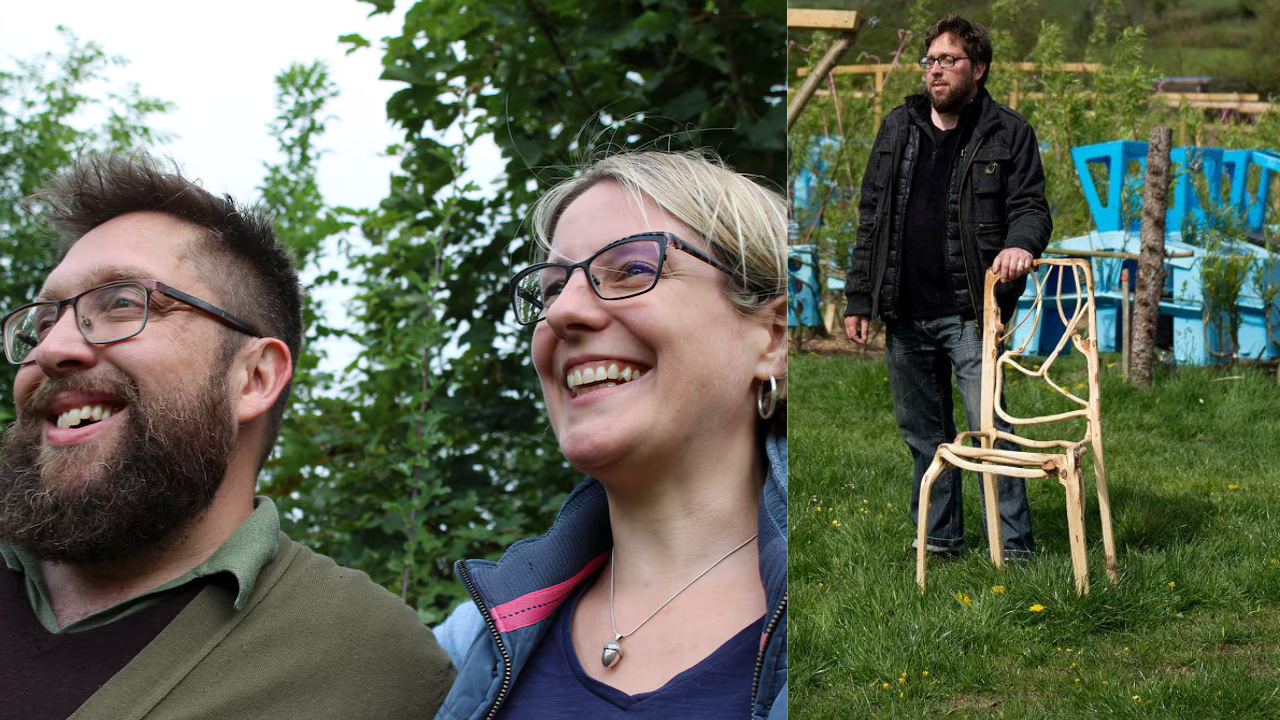
The internet loves a feel-good story about "natural" innovation. Currently, the darling of the design world is the concept of "growing" furniture—specifically, the UK-based project where trees are coerced into chair shapes over a decade of patient grafting and pruning. It sounds poetic. It looks like a prop from a high-budget fantasy film.
It is also a logistical nightmare and an environmental red herring that ignores the brutal reality of carbon cycles and material physics.
We are being told that "slow furniture" is the antidote to the "fast furniture" epidemic. The narrative suggests that if we just wait ten years for a tree to grow into a stool, we are somehow saving the planet. This isn't just inefficient; it is a fundamental misunderstanding of how we solve ecological crises at scale. We are trading industrial efficiency for a boutique hobby that serves the egos of the wealthy while doing nothing to fix the systemic rot of global manufacturing.
The Myth of the "Carbon Neutral" Heirloom
The argument for grown furniture usually starts with carbon sequestration. The logic follows that because the tree is alive while it becomes a chair, the carbon stays locked in.
Here is what the brochures omit: mortality rates.
In a traditional silviculture model, trees are grown in dense stands, managed for health, and harvested at peak maturity. When you force a tree—typically willow, ash, or sycamore—to bend into a 90-degree angle to form a seat-to-backrest transition, you are inducing massive physiological stress on the organism. You are creating structural weak points.
I have spent years looking at timber stress-test data. Wood is a composite material of cellulose fibers bound by lignin. Its strength comes from vertical alignment. When you manipulate a living sapling into a knot, you aren't "growing a chair"; you are creating a stressed, twisted piece of biology that is significantly more prone to disease, rot, and structural failure than a straight-grained board cut from a healthy, mature forest.
If that "grown" chair dies three years into its ten-year growth cycle because of a localized blight or a particularly harsh frost, that entire carbon investment is a wash. You’ve spent a decade of land use for a pile of kindling.
The Land Use Fallacy
Let’s talk about the math of "scaling" this trend.
To produce a single chair, you need roughly $4m^2$ to $6m^2$ of dedicated land for a decade. During those ten years, that land is locked. You cannot rotate crops; you cannot allow for natural biodiversity because you have to keep the area clear to prevent other plants from choking out your "furniture."
Compare this to a managed sustainable forest. In the time it takes to grow one designer chair in a field, a healthy forest ecosystem can produce the raw timber for twenty chairs, while simultaneously providing a habitat for thousands of species—something a manicured "furniture orchard" cannot do.
The "slow" movement implies that speed is the enemy of sustainability. It isn't. Waste is the enemy. By focusing on the novelty of the shape, we are ignoring the fact that we already have the technology to create zero-waste, modular furniture from fast-growing, non-stressed timber that can be recycled indefinitely.
The Luxury of Inefficiency
The current price tag for one of these grown chairs is upwards of $5,000 to $10,000.
This isn't a revolution in manufacturing. It is a signaling mechanism for the elite. It’s "greenwashing" in its most literal, botanical form. Buying a grown chair doesn't make you an environmentalist; it makes you a patron of an expensive, high-risk art project.
If we actually cared about the "life" of the object, we would be looking at Cross-Laminated Timber (CLT) or Mycelium-based composites.
- CLT allows us to build skyscrapers out of wood, locking away gigatons of carbon in the built environment.
- Mycelium can grow a structurally sound, biodegradable chair in a mold in less than two weeks using agricultural waste.
Why aren't these getting the same breathless coverage? Because they aren't "pretty" in a romantic, pastoral sense. They look like industry. But industry is the only thing that moves the needle on a planet of eight billion people.
The Engineering Disaster Nobody Mentions
Wood moves. This is the first lesson any apprentice carpenter learns. It expands and contracts with humidity.
When you mill a standard chair, you account for this by using joinery—mortise and tenon, dovetails, floating panels—that allows the wood to breathe without tearing itself apart.
A "grown" chair is a single, continuous piece of stressed grain. Because the "joints" are actually grafted living tissue, the internal tensions are astronomical. As that chair dries out once harvested, the drying is uneven. The "seat" will shrink at a different rate than the "legs" because of the direction of the vessels.
The result? Internal checking, warping, and cracks that no amount of oil can fix. You aren't buying a "forever" piece of furniture. You are buying a ticking time bomb of tension wood.
The High Cost of the "Natural" Look
The competitor's piece waxes poetic about the "collaboration between man and nature."
Let's call it what it is: Extreme Pruning.
To get a tree to look like a chair, you have to relentlessly torture it. You are cutting off its primary leaders, forcing its energy into lateral growth that it doesn't want to sustain, and binding it with plastic ties and metal frames. It is the bonsai technique applied with the heartlessness of a factory line.
If your goal is to be "at one with nature," leave the tree in the ground. Let it grow tall. Let it fall over in eighty years and feed the soil. Don't force it to spend its life mimicking a piece of IKEA catalog surplus just so you can have a conversation starter in your sunroom.
Better Alternatives for the Discerning Iconoclast
If you want to disrupt the furniture industry, stop looking at the shape of the tree and start looking at the supply chain.
- Direct-to-Consumer Regenerative Forestry: Support companies that use "thinning" wood—the small-diameter trees removed to prevent wildfires and improve forest health. These are usually wasted. Turning them into high-end furniture is a win for the ecosystem and the economy.
- Digital Fabrication: CNC routing and 3D printing with wood-fiber filaments allow for zero-waste production. You use exactly the amount of material required. No more, no less.
- The Resale Economy: The most sustainable chair is the one that already exists. A 1950s Eames chair has already "paid" its carbon debt. Buying a new "grown" chair is still adding new demand to a planet that is already over-leveraged.
The Brutal Truth About "Grown" Furniture
We love these stories because they offer a fantasy where we don't have to change our consumption habits—we just have to wait longer. It suggests that nature will provide for our comfort if we just "guide" it.
Nature doesn't care about your lumbar support.
When we prioritize the aesthetic of "natural" over the science of "sustainable," we lose. We spend a decade growing a chair that will crack in fifteen years, while the forests we should be protecting are cleared for cattle or palm oil.
Stop falling for the pastoral grift. If you want a chair, buy one built with integrity and engineered for longevity. If you want a tree, plant one and leave it the hell alone.
Design should solve problems, not create expensive, fragile monuments to our own sentimentality.
The future of furniture isn't in the field. It’s in the lab, the reclaimed warehouse, and the circular economy. Everything else is just landscaping with a high markup.