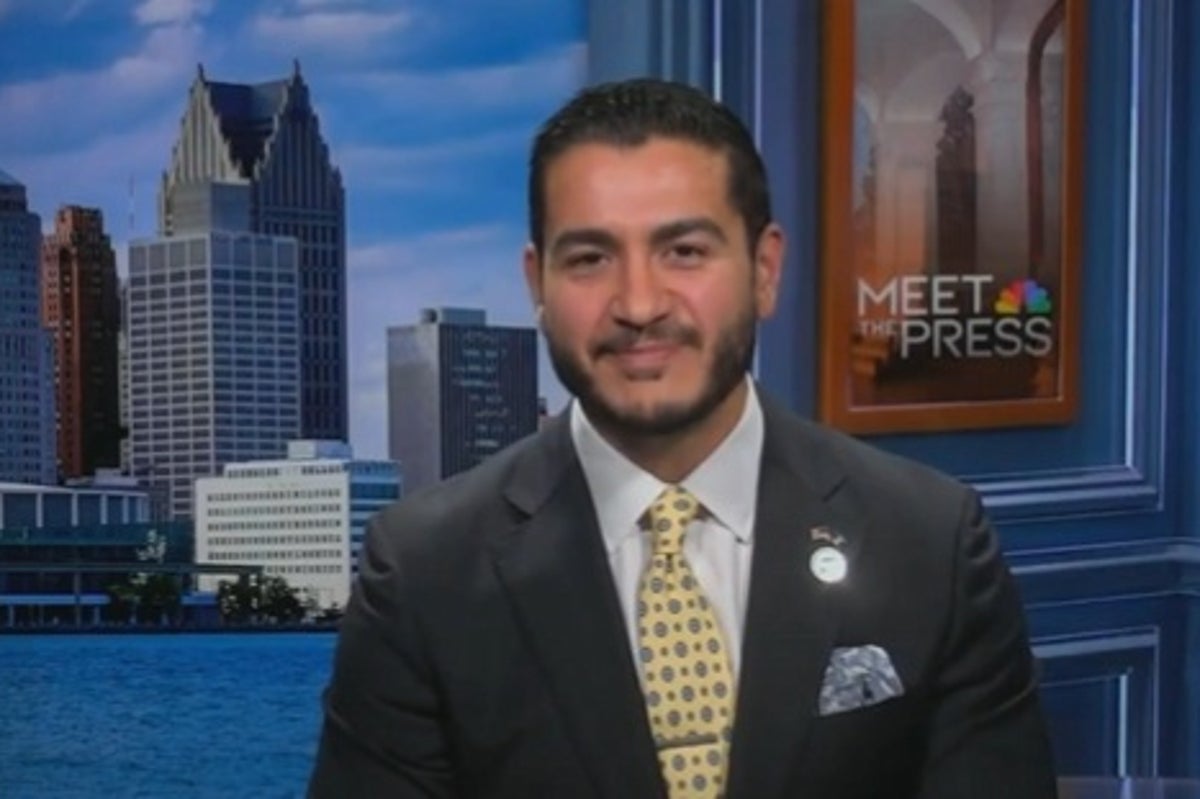
The media circus surrounding Abdul El-Sayed, Mehdi Hasan, and the digital megaphone of Hasan Piker reveals a systemic rot in how we process political discourse. When a mainstream television host cornered a progressive politician with audio clips and gotcha soundbites, the lazy consensus was predictable. Pundits wrung their hands over optics, party purity, and the perils of digital association. Everyone missed the actual story.
The real scandal is not that a leftist streamer said something inflammatory or that a politician refused to excommunicate him fast enough. The scandal is that our entire political and media apparatus treats speech as a purity test rather than a weapon of mass distraction.
I have spent years watching political operatives and television producers manufacture outrage cycles. I have seen campaigns hemorrhage millions of dollars trying to sanitize their associations, chasing an impossible standard of ideological sterility while the actual mechanics of power continue to grind untouched in the background. The entire premise of the Sunday morning interrogation was flawed from the jump. It assumes that political figures must act as hall monitors for every independent creator on the internet.
Let us clear up the basic mechanics here. Hasan Piker is not a policy advisor. He is an entertainer operating in the attention economy. Abdul El-Sayed is a public health advocate and politician. Tying them together is a cheap rhetorical trick designed to force a false choice: condemn your allies or face excommunication from polite society.
The lazy consensus says politicians must master every online interaction or risk destruction. That is a coward's game.
The Performance of Outrage
Look at how the mainstream press handles accountability. It is entirely cosmetic. When a host demands a yes-or-no answer on whether a controversial statement deserves condemnation, they are not seeking truth. They are hunting for a clip. They want the blood of a soundbite that can be repurposed across social media feeds for forty-eight hours of manufactured fury.
This is where the debate fails. We treat internet commentary as if it carries the weight of legislation. A streamer says something edgy to an audience of teenagers and twenty-somethings, and suddenly Washington acts like a national security directive has been issued.
Imagine a scenario where politicians simply refused to play the game. Imagine an elected official looking at a loaded question about an internet personality and saying, "I am focused on healthcare policy, not Twitch chat logs."
The establishment cannot handle that response because their business model depends on perpetual escalation. Conflict drives ratings. Purity tests drive engagement.
The Economics of Digital Reach
Let us look at the data on how modern political influence actually works. Traditional cable news audiences skew older, wealthier, and increasingly irrelevant to the demographic shifts defining modern elections. Independent creators command millions of young, disaffected voters who do not watch Sunday morning talk shows and do not care about insider media palace intrigue.
When a mainstream anchor tries to shame a politician for crossing paths with these creators, they are demonstrating a profound misunderstanding of media economics. They are trying to apply twentieth-century gatekeeping to a twenty-first-century decentralized ecosystem.
El-Sayed tried to navigate this trap by pivoting back to substance, but the trap itself is the problem. The media wants every public figure to bend the knee to traditional institutional norms. Those norms are dying. They deserve to die. When an institution loses its monopoly on information, its primary defense mechanism is moral policing.
The Downside of the Contrarian Exit
I will be completely transparent about the risk here. My argument—that we should stop policing political associations with online commentators—has a glaring downside. It opens the door for bad-faith actors to launder genuinely toxic ideologies under the guise of free speech and independent media disruption.
If we stop caring about who talks to whom, we risk normalizing extremism. That is the trade-off. But the alternative—the current system of mandatory ideological background checks and pearl-clutching interviews—is worse. It produces a sterile, risk-averse political class that cannot speak a plain truth to save their lives because they are too busy calculating how a sentence will play on a morning talk show.
The current system gives us politicians who are safe, uninspiring, and completely incapable of addressing actual systemic crises because they are terrified of a clip reel.
The Question Nobody is Asking
People keep asking: "How can politicians distance themselves from radical online voices without alienating the base?"
That is the wrong question.
The right question is: "Why do we allow multi-billion-dollar media conglomerates to dictate the boundaries of acceptable political coalition-building?"
The obsession with Hasan Piker and the subsequent grilling of El-Sayed is a symptom of a dying industry trying to assert relevance over a culture that has already left it behind. The media wants to be the bouncer at the club, but the club is outdoors, and everyone left through the back gate years ago.
Stop demanding purity. Stop weaponizing out-of-context soundbites. And stop pretending that a television host cornering a guest is an act of journalism rather than theater.
If you want better politicians, stop rewarding the people who treat politics like a reality TV audition.


