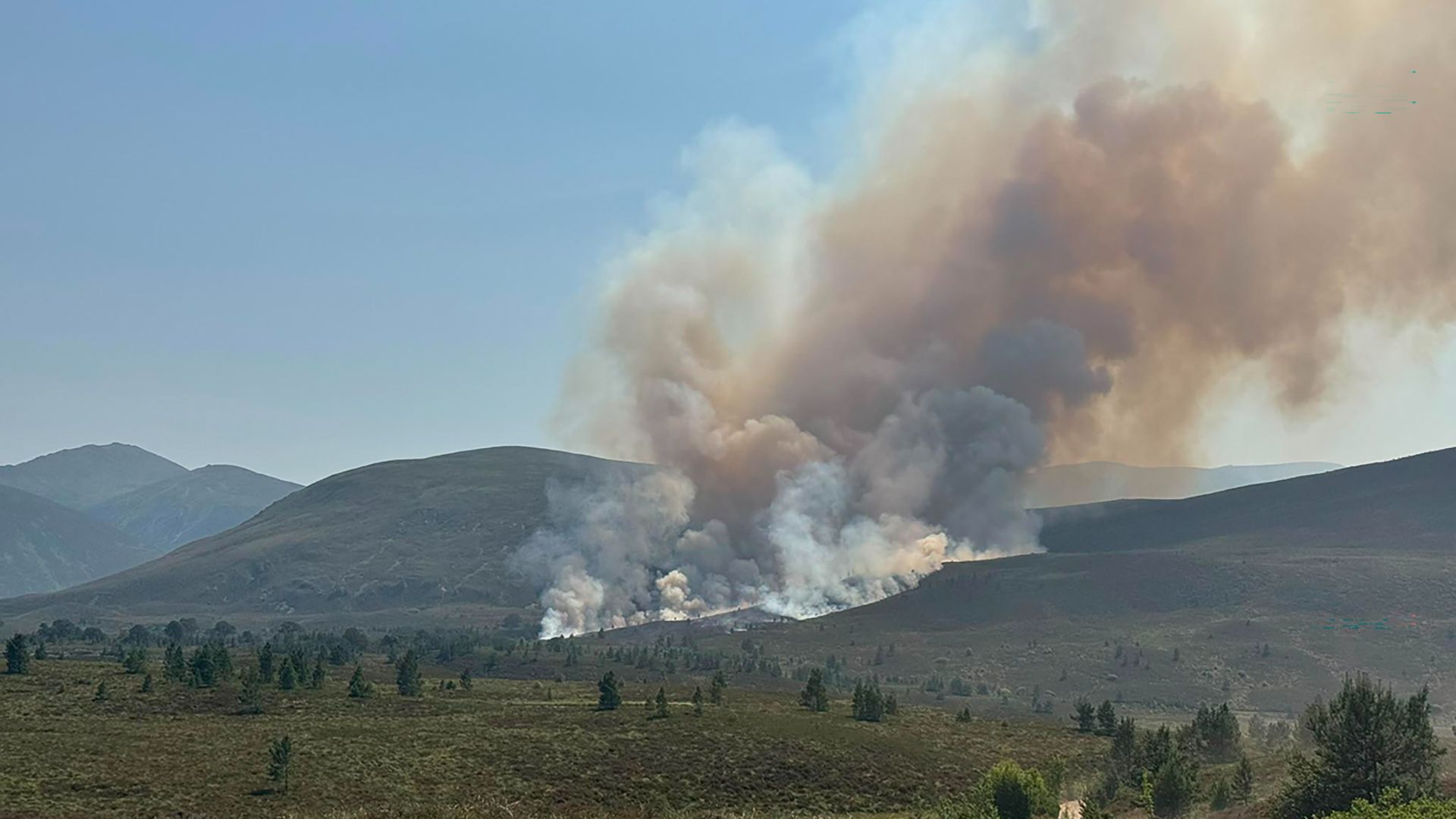
The headlines practically write themselves every spring and summer. Fire engines line the narrow tracks of the Scottish Highlands. Plumes of smoke rise over the ancient pines of the Cairngorms. Terrified onlookers speak of a "scary" situation that got out of hand "very quickly." National park officials issue stern warnings, politicians tweet their thoughts and prayers, and the public demands immediate, aggressive action to ban fire from the countryside forever.
It is a gripping, highly emotional narrative. It is also completely wrong.
The frantic rush to suppress every single flame in the UK’s largest national park is not saving the ecosystem. It is priming it for a catastrophe. By treating fire exclusively as a climate-induced enemy to be eradicated, we are setting up the Highlands for the exact kind of high-intensity, uncontrollable megafires that ravage the western United States.
The lazy consensus insists that a healthy national park is a completely unburned one. The ecological reality is far more complex, and far more dangerous to ignore.
The Illusion of the Pristine Wilderness
The Cairngorms National Park is not a wild, untouched garden that suddenly began burning because of modern carbon emissions. It is a highly managed, historically shaped habitat. For thousands of years, the flora and fauna of these uplands co-evolved with fire.
When the media broadcasts images of charred hillsides, the immediate reaction is grief. But ecological grief is often misplaced. The dominant plant across these moors is Calluna vulgaris—common heather. Left to its own devices, heather does not grow into a beautiful, permanent carpet. It goes through a distinct four-stage life cycle: pioneer, building, mature, and degenerate.
By the time heather reaches the degenerate stage, it becomes a woody, dry, highly flammable mass. The lower stems lose their leaves, the center of the bush collapses, and a thick layer of dead wood accumulates at the base.
[Pioneer Stage] ---> [Building Stage] ---> [Mature Stage] ---> [Degenerate Stage (Tinderbox)]
When we adopt a policy of total fire suppression, we are not preserving nature. We are stockpiling fuel. We are turning millions of hectares of Highland terrain into a massive, contiguous tinderbox waiting for a single spark—be it a discarded disposable barbecue, a lightning strike, or a spark from a train line.
The Muirburn Ban Is a Public Safety Threat
For generations, land managers and gamekeepers in Scotland have practiced "muirburn"—the controlled, rotational burning of small patches of heather during the colder, wetter months of autumn and spring. The goal is simple: burn off the old, degenerate canopy to encourage fresh, nutritious green growth for livestock and wildlife, while simultaneously breaking up the fuel continuity.
Yet, muirburn has become a political punching bag. Urban campaigners and well-meaning environmental groups have successfully lobbied for severe restrictions, framing the practice as an outdated, destructive hobby of grouse estates.
I have spent years analyzing land management policies and working alongside rural estates. The data is clear: where controlled burning is banned or heavily restricted, the intensity of unplanned wildfires skyrockets.
When a controlled burn is executed in March, the ground is damp. The fire moves quickly across the top of the canopy, consuming the dry tips of the heather but leaving the underlying peat and moss completely untouched. It is a "cool" burn. The soil temperature barely rises, the seed bank remains intact, and the carbon stored in the peat is protected.
Compare this to an unplanned wildfire in June. The air is dry, the wind is high, and the fuel load is immense because no rotational burning has taken place. The resulting fire burns incredibly hot. It does not just skim the canopy; it consumes the dry moss layer, bakes the soil, and ignites the peat beneath.
A peat fire can smolder underground for weeks, releasing massive amounts of stored carbon and destroying the seed bank so thoroughly that nothing grows back for decades.
By restricting the tool of controlled burning, policy-makers are directly manufacturing the conditions for the high-intensity summer wildfires they claim to fear.
Why the "Firefighting First" Strategy Fails
We have fallen into the trap of thinking we can fire-fight our way out of this crisis. We cannot.
The Scottish Fire and Rescue Service is incredibly skilled, but they are trained for structural firefighting and localized incidents. When a wildfire takes hold in the deep peat and steep terrain of the Cairngorms, traditional firefighting infrastructure is laughably inadequate. There are no fire hydrants on the mountain ridges. Water must be flown in via helicopters at astronomical expense, or pumped through miles of temporary hose.
The hard truth that nobody wants to admit is this: Once a wildfire reaches a certain scale in dry, degenerate heather, human intervention is largely symbolic.
You do not stop a major wildfire by throwing water at the flames. You stop it by running out of fuel. If we do not create artificial fuel breaks through controlled burning or mechanical cutting beforehand, the fire will only stop when it hits a loch, a road, or a change in the wind.
The obsession with suppression over prevention is a financial and ecological black hole. We spend millions of pounds putting out fires that could have been mitigated for a fraction of the cost through proactive land management.
Dismantling the Ignorant Questions
Do wildfires protect peatlands?
No, uncontrolled summer wildfires destroy peatlands. However, the assumption that all fire is bad for peat is demonstrably false. The James Hutton Institute and various upland ecology groups have shown that low-temperature, managed burns do not damage the wet peat layer underneath. In fact, by removing the heavy woody canopy, controlled burns allow light to reach the ground, encouraging the growth of Sphagnum moss—the very plant responsible for building peat and keeping the bog wet.
Why can't we just use sheep to graze down the fuel?
This is a favorite suggestion of armchair ecologists. While grazing can manage vegetation, sheep are highly selective eaters. They prefer young, tender grass and heather shoots. They will not touch the tough, woody, degenerate heather that constitutes the primary wildfire fuel load. To get sheep to clear mature heather, you would have to overstock the hills to a degree that would cause massive erosion and soil compaction, exchanging one ecological disaster for another.
Isn't rewilding the ultimate solution to wildfires?
The idea is that if we plant native deciduous trees, they will create damp, shaded woodlands that do not burn. While oak and birch woods are generally less flammable than heather moors, this transition takes decades, if not centuries. During the transition phase, unmanaged regenerating scrub creates an incredibly dense, highly flammable fuel layer. Simply walking away from the land and calling it "rewilding" without managing the transitional fuel load is an invitation to a catastrophic burn that will wipe out the very saplings you planted.
The Cost of the Safe Option
Admitting that we need to burn the hills to save them is a tough sell in a media environment that demands simple, black-and-white narratives. It is far easier for politicians to pass bans, look tough on carbon emissions, and praise the heroism of firefighters.
But the "safe" political option of total fire suppression has a devastating cost.
We are systematically stripping rural communities of the tools they need to manage their own safety. We are ignoring the practical expertise of gamekeepers and shepherds who have kept these hills green for centuries, replacing their knowledge with bureaucratic checklists drafted in Edinburgh and London.
If we continue on this path, the Cairngorms will burn. Not with the gentle, regenerating smoke of a controlled spring burn, but with the destructive, sterile fury of a summer inferno that leaves nothing behind but sterile soil and empty promises.
Stop treating fire as a tragedy. Start treating it as a tool.