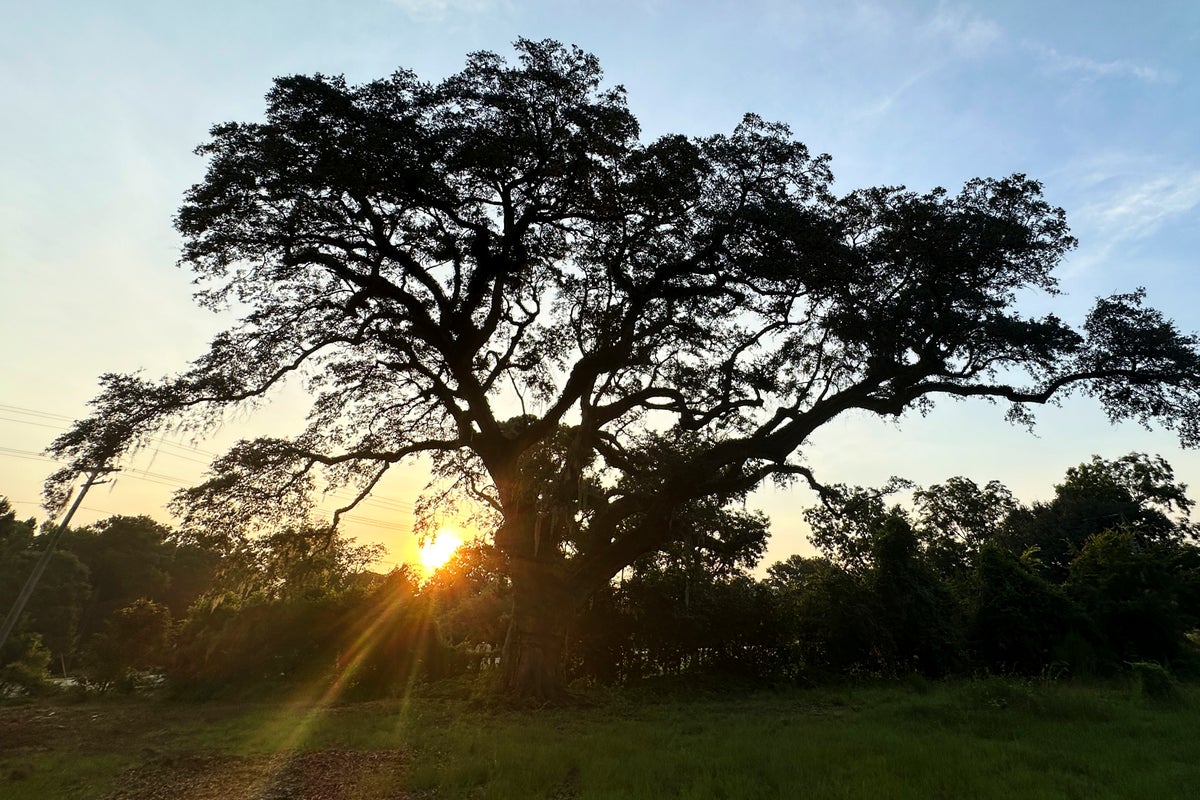
We have a bizarre cultural fetish for keeping botanical zombies on life support just because a musket ball grazed their bark two centuries ago. Conservationists are throwing thousands of dollars at centuries-old "witness trees", surgically removing rusted chains, injecting custom nutrient cocktails, and treating dying live oaks like geriatric royalty.
It is an emotional waste of resources, a misunderstanding of natural succession, and a monument to historical sentimentality over ecological reality.
The Romantic Fallacy of the Battlefield Relic
Every few years, a heritage foundation panics because a tree that stood during a Revolutionary War or Civil War skirmish is choking on its own hardware. Take the famous southern live oaks in South Carolina or the battered sycamores near Antietam. Half a century ago, well-meaning arborists wrapped heavy steel cables and iron chains around them to survive lightning strikes or structural splits. Now, those chains have fused into the trunk. The bark has grown around the metal. The circulation is cut off.
The media treats this like a tragic drama. Headlines scream that the historic sentinel is fighting for its life.
Let's look at the actual biology instead of the poetry.
A three-hundred-year-old tree at the edge of its biological lifespan is already functioning on borrowed time. In a natural forest, a tree of that age would have dropped its limbs, fed the soil organisms, made space for a dozen saplings, and completed the cycle of life. By spending tens of thousands of taxpayer and donor dollars to yank out embedded bolts, decompact soil, and pump synthetic fertilizers into a dying root zone, we are not practicing conservation. We are performing taxidermy on wood.
Imagine a Scenario Where We Let Nature Actually Do Its Job
Imagine a scenario where a historic park service steps back and accepts that artifacts can be inanimate objects. Monuments are made of stone, bronze, and text. Trees are living organisms subject to decay, fungi, windthrow, and death.
When we fight tooth and nail to preserve a single biological organism past its expiration date, we rob the ecosystem of a vital phase: the snag and the fallen log. A decaying giant supports more biodiversity in its death than it ever did standing as a pristine monument to a skirmish in 1781. Wood-boring beetles, fungi, cavity-nesting birds, and nutrient-recycling microbes rely on the collapse of old timber.
By wrapping a tree in modern armor, we turn a dynamic piece of land into a museum display case. We freeze the landscape in amber.
The Myth of Permanent Preservation
The underlying premise of the witness tree obsession is that physical continuity equals historical authenticity. If the tree dies, the history dies with it. This is flatly false.
History happened at Eutaw Springs and Gettysburg because of human choices, tactical blunders, and bloodshed. The dirt remembers. The topography remembers. A specific cluster of xylem and phloem cells does not hold the ghost of Nathanael Greene. Treating a tree as an irreplaceable historical document creates a fragile point of failure. A single severe hurricane—like Hugo—can wipe out centuries of sentimental arboriculture in four hours.
If your entire educational strategy for a battlefield relies on one specific organism staying upright, your historical interpretation is dangerously brittle.
What We Should Do Instead
Stop funding emergency plastic surgery for trees that want to fall down.
- Document and Release: When a witness tree reaches the end of its structural integrity, let it transition gracefully. Map its location, take cuttings or clones if genetic preservation is truly the goal, and let the original specimen fall to feed the ground it once shaded.
- Shift Funds to Landscape Archaeology: Invest the money saved from endless cabling into ground-penetrating radar, artifact recovery, and clear trail markers that explain the terrain. Teach visitors how to read the landscape topography—the ridges, the creek beds, the defensive lines—instead of staring blankly at a chained-up trunk.
- Embrace Botanical Succession: Plant a successor tree twenty feet away twenty years before the old one dies. Allow the next generation to take root naturally in the shadow of the old guard, mirroring how forests actually survive millennia.
Nature does not care about our anniversaries. It cares about continuity through change. Stop choking trees with the heavy chains of our own nostalgia.