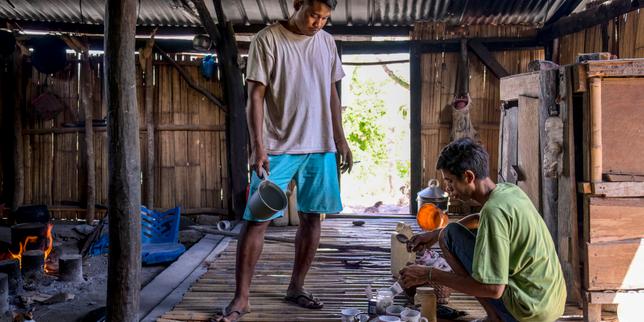
Every travel blogger with a drone and a Wi-Fi connection loves a tragic myth. Drop them anywhere off the beaten path in the Indonesian archipelago, and they instantly start hunting for ghosts to make their Instagram captions pop.
For years, the lazy travel press has lazily branded Sumba as the island of slaves. They throw around sensationalist headlines about ancient bondage, feudal remnants, and a dark historical undercurrent that supposedly defines every waking moment on the island. It is lazy, it is flatly wrong, and it fundamentally misunderstands how Marapu culture, local property dynamics, and traditional social stratification actually function in the twenty-first century.
I have spent months sitting on verandas in Waikabubak and trekking through the limestone hills of West Sumba, watching tourists arrive with pocket guides full of colonial-era fiction. They expect to find chains. Instead, they find complex kinship systems, multi-generational households, and a social contract that bears almost no resemblance to Western chattel slavery.
Let us dismantle the fiction right now.
The Myth of Chattel Slavery in the East
To understand why the slave narrative is pure intellectual laziness, you have to look at how Western writers project their own historical guilt onto societies that operate under entirely different operating systems.
When outsiders point to the ata class in traditional Sumbanese society and translate it directly into English as slaves, they commit an act of translation terrorism. They take a complex system of reciprocal obligations, clan dependency, and ancestral debt and cram it into a box built for transatlantic plantations.
Sumbanese society traditionally divides into distinct strata: the ruling nobility (maramba), the freemen (kabihu members or commoners), and the ata. But calling an ata a slave is like calling a modern equity partner an indentured servant because they do not own the building.
Historically, an ata was often integrated into the noble household, participated in rituals, married within extended family lines under specific conditions, and enjoyed protection that a migrant laborer in a modern Jakarta garment factory could only dream of. Does exploitation exist? Absolutely. Power imbalances exist in every human hierarchy from Manhattan boardrooms to feudal villages. But reducing an entire island's sociological complexity to a catchy historical horror story erases the agency and reality of the people living there.
The people writing these breathless exposes have never negotiated a bridewealth (pasola or belis) payment in their lives. They have never sat through a days-long council where elders debate lineage rights down to the square centimeter of ancestral pastureland. They see a hierarchical society, panic because it does not look like a Scandinavian social democracy, and slap a historical label on it that stopped being accurate generations ago.
The Economy of Tradition Versus the Tourism Trap
Let us talk about what Sumba actually is today: an island caught in a violent collision between ancient pastoral economics and the modern luxury resort complex.
If you read the mainstream travel guides, Sumba is famous for two things: hyper-exclusive luxury resorts charging five figures a night, and desperately poor villagers living in thatched-roof huts who supposedly need rescuing by enlightened Westerners.
This is the white savior industrial complex at its finest. It frames the local population as helpless relics of a barbaric past waiting for modern hospitality groups to save them with sustainable tourism jobs.
Let me share what I saw behind the PR gloss of those billionaire-backed eco-resorts. I watched local land councils outmaneuver international investors who thought they could buy ancestral beach frontage with a handshake and a stack of rupiah. The Sumbanese are not waiting for your charity. They are master negotiators playing a long, high-stakes game against land grabbers, government bureaucrats, and naive influencers who treat sacred megalithic burial sites as backdrops for fashion shoots.
The real conflict on Sumba is not between masters and slaves. It is between a subsistence-plus-livestock economy and a predatory global tourism market that wants to freeze the island in a perpetual state of primitive photogenic poverty.
What the Travel Guides Get Wrong About Pasola
You cannot talk about Sumba without someone bringing up the pasola—the ritual spear-fighting tournament held annually on horseback.
The standard media narrative frames the pasola as a bloodthirsty remnant of tribal warfare where exploited peasants beat each other bloody to appease angry spirits for the harvest. It makes for great television. It gets picked up by National Geographic and travel documentaries looking for adrenaline porn.
It is also an insult to the philosophy behind the ritual.
Pasola is not a riot. It is a calculated, deeply spiritual mechanism for conflict resolution. Anthropologists who actually spend time studying the mechanics of the ritual—rather than just showing up with a telephoto lens for the two hours of action—know that blood spilled on the earth during pasola is viewed as a payment to the cosmos to ensure agricultural fertility. More importantly, historical blood feuds between clans are literally fought out and settled on that dusty field through blunt-tipped wooden spears.
It is a substitute for total war, institutionalized centuries ago by societies smart enough to realize that endless vendettas destroy communities. Calling it a savage slave ritual ignores the sophisticated legal and diplomatic machinery holding Sumbanese clans together.
The Uncomfortable Truth About Modern Sumba
If you want to understand Sumba, you have to abandon the urge to categorize everything through a Western ideological lens.
Sumbanese youth today are navigating smartphones, Christian missions, traditional Marapu animism, Indonesian nationalism, and global capitalism all at once. They are lawyers, politicians, university students, and entrepreneurs. They are also fiercely proud of their ancestry and protective of their land rights.
When outsiders label their home an island of slaves, they commit an act of epistemic violence. They strip living, breathing human beings of their contemporary complexity and reduce them to props in a tragic white-savior narrative.
Stop looking for chains where there are only kinship ties. Stop looking for victims where you should be looking at master strategists protecting their ancestral sovereignty. Sumba does not need your pity, and it certainly does not need your lazy history lessons.