Every few years, archaeology gets hijacked by sentimentality.
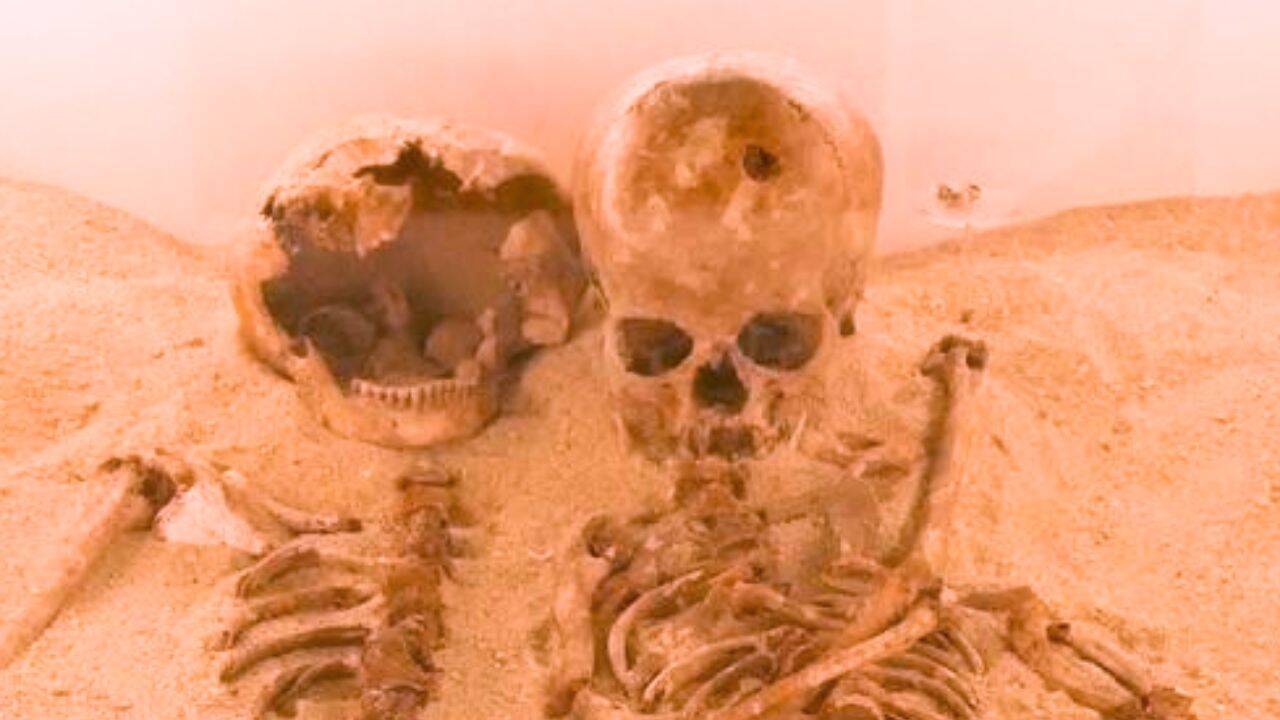
A paper drops about a joint burial from twelve thousand years ago in Italy, featuring an adult female and an adolescent. Instantly, the headlines write themselves. The public gets a cozy, cinematic narrative about a mother and her cherished daughter, locked in an eternal embrace from the Late Upper Paleolithic. It makes for great weekend reading. It fits nicely into our contemporary obsession with nuclear domesticity.
It is also almost certainly a lazy projection of modern anxieties onto Ice Age corpses.
For decades, biological anthropology has suffered from a chronic lack of imagination, defaulting to modern kinship models the second two bodies are found in a single pit. We find two skeletons close together, and we immediately assume biological maternity and nuclear affection. We ignore taphonomic processes, secondary burial practices, demographic realities, and the sheer violence of survival in a post-glacial world.
Let us dismantle the comforting fiction.
The Fallacy of Biological Maternity
Look at the methodology behind these sensationalized kinship claims. Often, assumptions of direct parentage rely on spatial proximity and biological age gaps alone, long before ancient DNA extraction can even confirm a first-degree relation. Even when a genetic link is established, a crucial distinction gets buried in the press release: shared DNA does not equal modern motherhood.
In a demographic landscape where life expectancy rarely stretched past forty and maternal mortality rates during childbirth were staggering, infant and child-rearing was a communal enterprise. The biological mother might have been dead, incapacitated, or entirely peripheral to the social upbringing of an adolescent. To label every adult-juvenile pairing a mother-daughter bond is to completely misunderstand Pleistocene social organization.
We are forcing hunter-gatherer bands into suburban sitcom boxes.
Think about how high-stress environments actually operate. When resources crater and mobility is mandatory, childcare is distributed across the entire collective. Aunts, older siblings, non-biological alloparents, and even unrelated elders shoulder the load. Projecting a modern, isolated nuclear family structure onto a Gravettian or Epigravettian burial site is bad science driven by emotional convenience.
What the Data Actually Tells Us
When we look past the emotive journalism and study the actual osteological data from prehistoric Italy, a far more complex picture emerges.
Burial contexts from sites like those in Liguria or the wider Italian peninsula are rarely simple snapshots of a single tragic moment. They are often multi-stage rituals. Bodies were manipulated, re-arranged, and interred with grave goods that spoke to status, group identity, or ritual necessity rather than personal domestic grief.
If you look at the pathology on these skeletons, you find brutal markers of physical stress. These people were working engines of survival. Bone remodeling, trauma, and nutritional deficits tell a story of endurance, not domestic comfort. When an adult and a younger individual are buried together, the positioning might represent political alliance, ritual sacrifice, shared status within a lineage clan, or an acknowledgment of spiritual debt, rather than a domestic cuddle.
To assume sentimentality is to ignore the harsh calculus of deep history.
Modern Myth: Joint burial = Nuclear family affection
Pleistocene Reality: Joint burial = Complex socio-political ritual or alloparental alignment
We must stop treating prehistoric humans like modern people wearing leather. Their brains were structurally modern, yes, but their institutional reality, their cosmology, and their survival imperatives were entirely alien to ours.
The Danger of Comforting Narratives
Why does this matter? Because bad anthropology infects our understanding of human evolution as a whole.
When we insist on finding our own reflection in the archaeological record, we blind ourselves to the actual evolutionary strategies that allowed our species to conquer the globe. The secret to Homo sapiens survival was never the nuclear family. It was hyper-flexible, hyper-cooperative social networks that could scale up or down depending on environmental collapse.
By flattening twelve-thousand-year-old burial practices into a Hallmark card about mothers and daughters, we erase the messy, radical ingenuity of Paleolithic social structures. We turn a fascinating window into ancient ritual into a mirror for our own contemporary lifestyle choices.
It is time to grow up and accept that our ancestors did not live like us, love like us, or die for the same reasons we do. Stop looking for your own family tree in a pile of Ice Age bones.
The past is a foreign country. They do things differently there. And they certainly did not care about your domestic ideals.