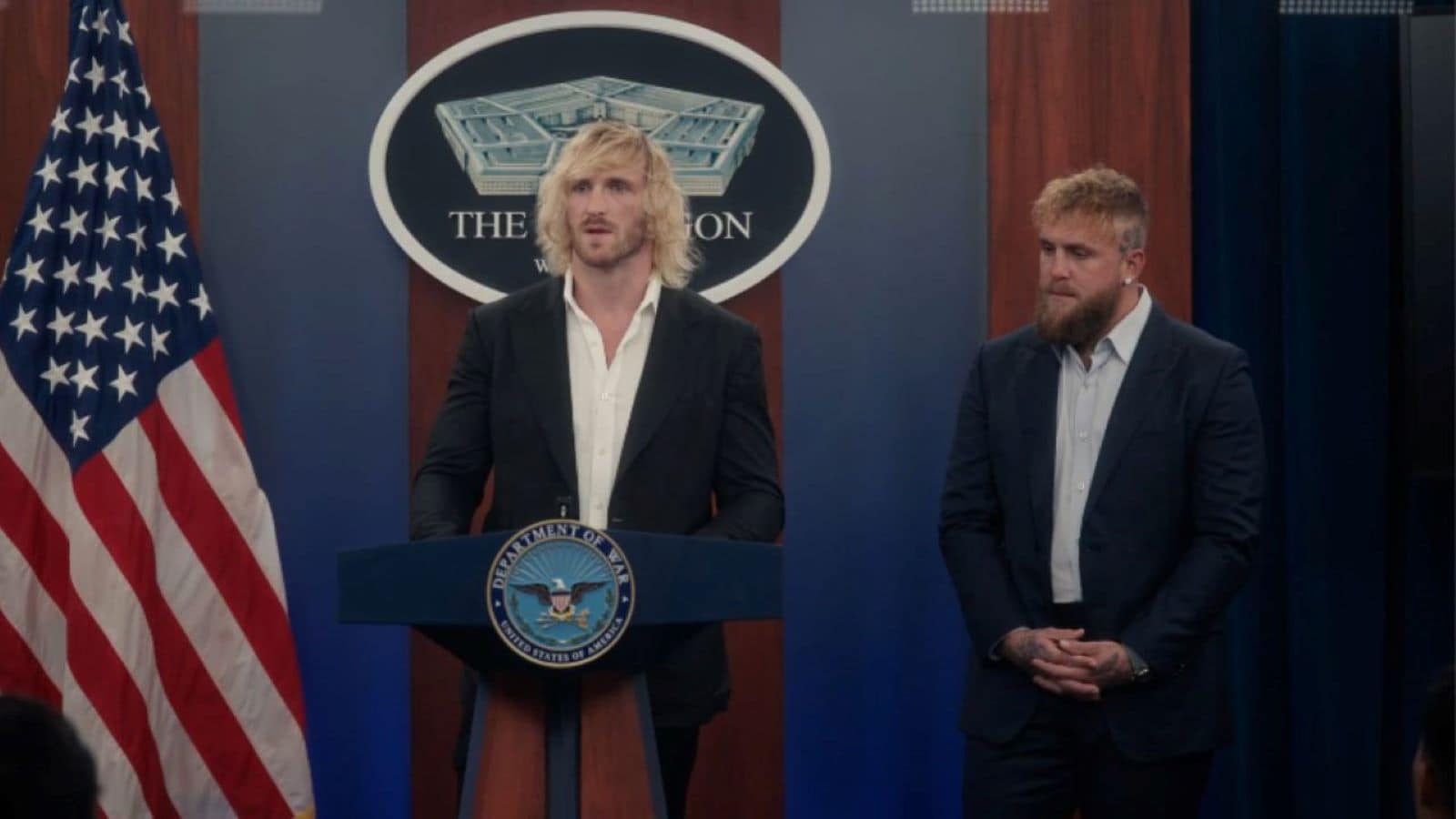
The pearl-clutching across social media was predictable down to the second. When footage dropped showing Logan and Jake Paul walking through the corridors of the Pentagon to meet United States troops, the timeline erupted in performative shock. Journalists, washed-up pundits, and terminally online critics scrambled to type out the same tired refrain: How low has national security sunk? Why are digital hucksters and energy-drink peddlers touring the nation's military command center?
They are missing the plot entirely.
While the internet rolled its eyes and framed the visit as a bizarre publicity stunt or a desperate recruitment Hail Mary, the reality is far more calculated. The Pentagon did not invite two of the most polarizing content creators on earth for a photo op because they ran out of traditional recruiting brochures. They invited them because the architecture of modern power has shifted completely away from legacy institutions and directly into the hands of algorithm-wielding monopolists of attention.
If you think this visit is a joke, you do not understand who actually commands the minds of the demographic the military needs to survive.
The Death of the Traditional Recruitment Pipeline
Let us start with the lazy consensus that dominates media coverage: that this was a clumsy, cringe-inducing PR move designed to trick teenagers into enlisting through association with internet celebrities.
That theory collapses under basic scrutiny. The military recruitment crisis is real, structural, and brutal. Traditional marketing—thirty-second television spots during football games, glossy billboards, and school career fairs—no longer registers with a generation that has ad-blockers hardwired into their psychological makeup. Gen Z and Generation Alpha do not watch cable television. They do not read newspapers. They live inside algorithmic feeds where trust is decentralized, hyper-personal, and entirely divorced from institutional authority.
When a teenager looks at a standard military recruitment ad, they see corporate propaganda. When they look at Logan or Jake Paul, they see a familiar digital neighbor, warts and all.
I have watched corporate boards and state agencies blow millions of dollars trying to manufacture authenticity through legacy channels, only to watch their campaigns die in absolute silence. The state-level PR apparatus realized a terrifying truth years ago: you can either adapt to the new distribution channels of human attention, or you can watch your institutions wither into irrelevance. The Paul brothers command hundreds of millions of direct eyeballs across platforms that government agencies struggle to penetrate organically.
Inviting them inside isn't a degradation of military dignity. It is a textbook recognition of where the battlefield of perception actually resides.
Attention Is the Only Currency That Matters
To understand why this meeting happened, you have to abandon emotional distaste for these creators and look at raw distribution economics.
Attention is finite. There are only twenty-four hours in a day, and human beings are spending an increasingly massive share of them staring at vertical video feeds. Traditional statecraft used to rely on gatekeepers—anchormen, editors, politicians—to shape the narrative. Those gatekeepers are gone. In their place stand individual creators who bypass traditional filtering entirely.
When the Paul brothers broadcast a visit to a military base, they do not just reach an audience; they flood it. They dictate the narrative frame to millions of young people who would otherwise never think about national defense, military logistics, or geopolitics unless a drone strike trended on TikTok.
Critics whine that these creators lack the gravity or moral standing for such a visit. This critique misunderstands the nature of modern influence. Moral standing is a currency of the old world. In the attention economy, reach is the only metric that scales. The military industrial complex did not survive centuries by being pure; it survived by being ruthlessly pragmatic. If partnering with hyper-monetized controversy magnets secures access to a demographic pool that is otherwise entirely checked out from civic duty, the calculation is remarkably straightforward.
The Uncomfortable Truth About Statecraft and Spectacle
Let us address the downside of this approach, because any real analysis must acknowledge its own vulnerabilities. This strategy carries a massive reputational tax.
By opening the doors to creators whose brands are built on spectacle, provocation, and commercial hustle, the Pentagon risks cheapening its own brand image. It blurs the line between serious geopolitical deterrence and entertainment-driven spectacle. It turns national defense into content.
Yet, clinging to dignified obscurity is a luxury the modern state can no longer afford. The alternative to engaging with influencer culture is not maintaining an aura of untouchable prestige; it is complete invisibility to the next generation of citizens. If you are entirely absent from the digital ecosystems where cultural norms are forged, your power ceases to exist in the minds of the governed.
Statecraft has always relied on spectacle. In the nineteenth century, it was military parades and grand architecture. In the twentieth century, it was televised presidential addresses and Hollywood partnerships. Today, it looks like two loud YouTubers filming a walk-through of a command center for an audience of millions who treat traditional news as a foreign language.
The Real Question You Should Be Asking
The internet spent hours asking why the Pentagon hosted them. That is the wrong question.
The question you should be asking is why you are still surprised that the traditional arbiters of power have surrendered to the algorithm.
The meeting between the military and internet royalty is not an anomaly. It is the new baseline. Every institution—from global banks to intelligence agencies to political campaigns—is waking up to the reality that power belongs to those who control the feed.
You can clutch your pearls, mock the production value, and complain about the degradation of serious discourse. It will not change the math. The algorithms do not care about your refined sensibilities, and neither do the architects of state power.
Stop looking for dignity where only leverage remains.