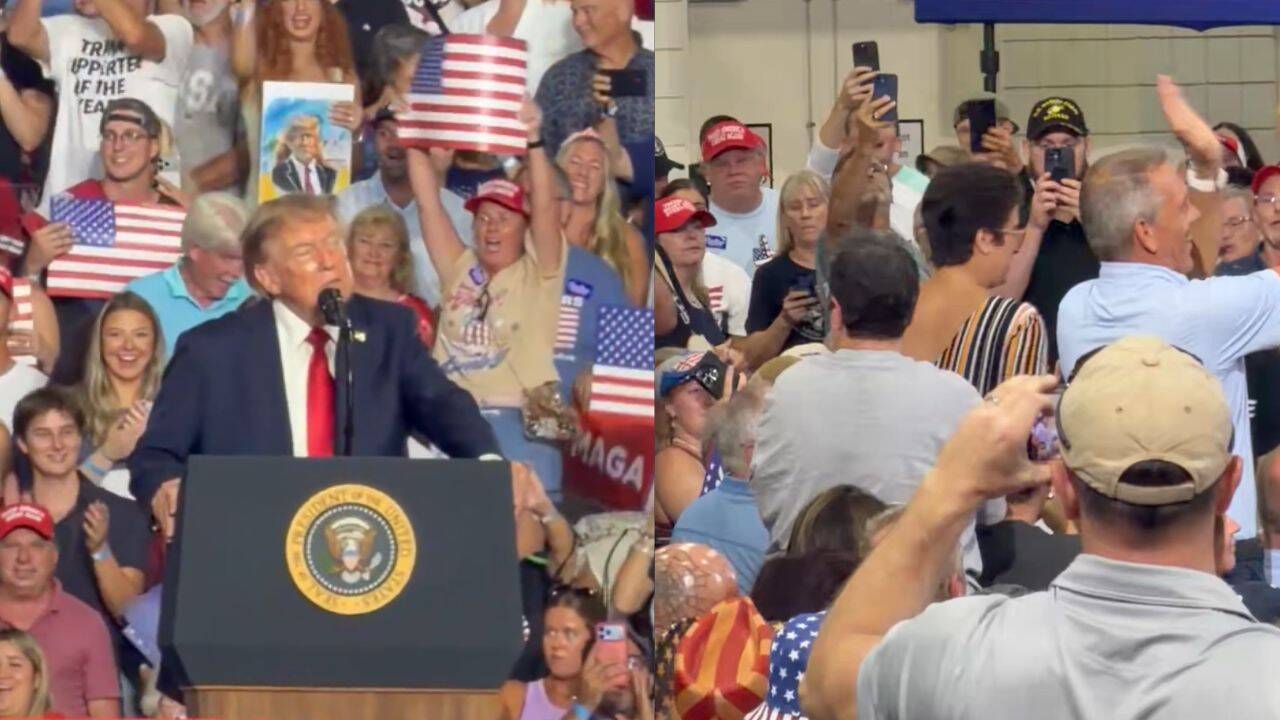
The lazy consensus in modern political journalism treats campaign rallies as spontaneous pulses of the electorate. Pundits obsess over every quip, every heckler, and every staged confrontation as if it reveals a profound national truth. This is a manufactured illusion. When a candidate cracks a joke about a mother in the crowd while a protester gets hauled out, the media machine treats it like unscripted theater. It is not. It is a highly optimized product designed for algorithms and cable news blocks.
I have watched campaigns burn millions of dollars on staging, crowd curation, and media diversion tactics. The core misconception is that the energy inside a packed gymnasium represents organic momentum. It does not. Crowd management firms and local party apparatuses pre-screen attendees, choreograph interruptions, and engineer viral moments weeks before the candidate steps onto the stage.
The Mechanics of Manufactured Chaos
Let us dismantle the core premise that a rally is a barometer of public sentiment. A campaign event is an echo chamber built to withstand outside reality. When a disruption occurs, the reaction is rarely improvised. Security teams train for specific contingencies to maximize television airtime for the candidate while minimizing the disruption's actual message.
Consider the economics of media coverage. A standard policy speech gets ignored by assignment editors. A confrontation with a protester gets prime real estate on evening broadcasts and millions of algorithmic impressions across social feeds. Campaigns do not tolerate disruptions by accident; they invite them by design because conflict captures attention.
Why the Pundit Class Misses the Point
Political analysts waste endless hours debating whether a candidate's sharp retort to a heckler helps or hurts their image. This misses the broader structural reality. The average voter watching a thirty-second clip on a phone is not performing a deep moral evaluation of the candidate's wit. They are consuming entertainment.
When media outlets report on these events as hard news rather than high-stakes performance art, they fail their audience. The real power dynamic of a modern campaign has nothing to do with the person holding the microphone or the protester shouting from the back row. It belongs entirely to the producers who decide which fragments of manufactured drama deserve your attention.
Stop treating staged political theater like a democratic town square. It is a closed-loop commercial enterprise.
The next time a viral rally moment dominates your screen, ask yourself who paid for the ticket.